

























































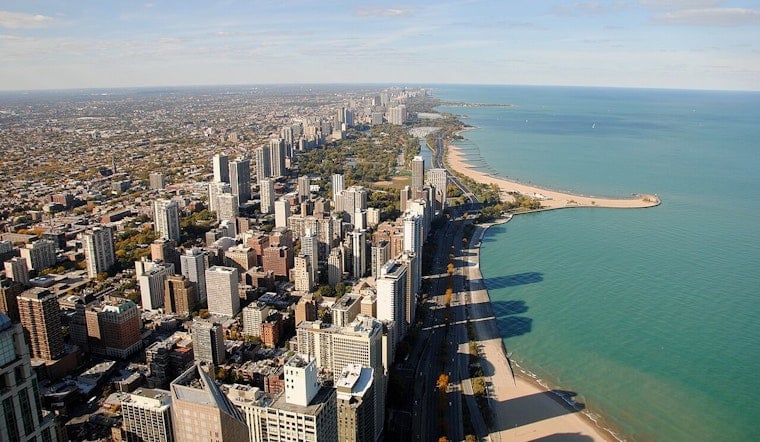
A person was pulled from Lake Michigan in critical condition Saturday evening near the 1800 block of North DuSable Lake Shore Drive, close to Burnham Harbor, according to Chicago fire officials. The rescue happened as choppy water and rough conditions battered the city's shoreline over Labor Day weekend, adding yet another emergency to a summer that has already seen a string of fatal and near-fatal incidents along Lake Michigan.
Fire officials confirmed the person's critical condition following the pull from the water, according to ABC7 Chicago. ABC7 meteorologists reported wave heights around 3.5 feet on Saturday, conditions the station described as part of a broader pattern of dangerous water this weekend along Lake Michigan. Holiday weekends, the station's report notes, tend to bring significant spikes in water-related incidents across the lakefront.
The location of Saturday's rescue sits near one of the harshest stretches of Chicago's shoreline. Burnham Harbor, Chicago's largest municipal harbor with more than 1,100 slips, is lined with concrete breakwalls and steep drop-offs into deep water near the Museum Campus, according to Go Guides. Those engineered seawalls can prevent a struggling swimmer from climbing back out without a life ring or outside help.
A Weekend Already Under Warning
Chicago police and fire officials had already been sounding alarms before Saturday's rescue. On Thursday, officials held a briefing emphasizing that Lake Michigan functions as an uncontrolled environment demanding constant vigilance from holiday visitors, as reported by WTTW News. That warning came against the backdrop of a summer already marked by tragedy along the shoreline.
The same outlet notes that Chicago police detectives opened multiple death investigations along the lakefront in the weeks leading up to Labor Day, including the recovery of a 22-year-old man near Belmont Harbor on August 26 and the death of a man who fell into the lake near 31st Street Beach on August 17. Hoodline previously reported on both incidents, in coverage of the Belmont Harbor recovery and the 31st Street Beach fall.
Lake Michigan Leads a Deadly Regional Trend
The danger extends well beyond Chicago's shoreline this year. As of late August, the Great Lakes Surf Rescue Project had recorded 58 total drownings across all five Great Lakes in 2026, with Lake Michigan accounting for the majority at 31 fatalities and one critical-condition rescue. The organization attributes Lake Michigan's outsized toll to heavy beach visitor traffic combined with wind-driven currents that can overpower even strong swimmers.
Chicago Park District rules permit public swimming only at designated beaches while lifeguards are on duty, from 11 a.m. to 7 p.m. daily through Labor Day, and strictly prohibit swimming at non-beach shoreline locations. The city operates 23 official beaches spanning 26 miles of open shoreline, but stretches along concrete breakwalls, like the area near Burnham Harbor, fall outside that lifeguard coverage entirely.
The Scale of a Chicago Water Rescue
When Chicago Fire Department crews respond to a lake rescue, the effort is substantial. A typical response mobilizes roughly 40 personnel across 11 specialized companies, using rescue craft equipped with Advanced Life Support capabilities so medical treatment can begin before a victim even reaches land, according to CBS News. The department's Marine and Dive Operations units keep specialized craft on call year-round across 28 miles of city shoreline.
CFD dive teams operate under a strict 90-minute window for active underwater search and rescue before an incident shifts from a rescue attempt to a recovery operation, the same report states. Divers rotate every 20 minutes while wearing nearly 100 pounds of gear, a protocol designed to manage the extreme physical fatigue that comes with working in Lake Michigan's deep, cold water.
Enforcement Ramps Up Over the Holiday
State law adds another layer of protection, at least on paper. The Illinois Lake Michigan Rescue Equipment Act of 2022 requires public and private piers, beaches, and shoreline drop-off points to maintain life rings, safety gear, and warning signs, with city fines of $300 to $800 for tampering with that equipment. Illinois lawmakers passed the mandate after multiple shoreline drownings where bystanders had no life ring available to throw to a struggling swimmer.
Federal authorities are also watching the water more closely this holiday weekend. On September 2, U.S. Coast Guard Station Chicago partnered with state and local marine units at Navy Pier to launch joint Labor Day patrols targeting uninspected commercial charter operations and boating safety violations. Under federal maritime regulations, boat owners caught running uninspected commercial charters on Lake Michigan face civil penalties exceeding $42,000 per day, along with potential license revocation.
It remains unclear how the person rescued Saturday near Burnham Harbor ended up in the water, whether a boat or charter operation was involved, or whether any citations will follow from the Chicago Police Marine Unit or the Coast Guard. Fire officials have not released the person's identity or further condition updates beyond confirming the critical status reported by ABC7 Chicago.



_(2).jpg)