

























































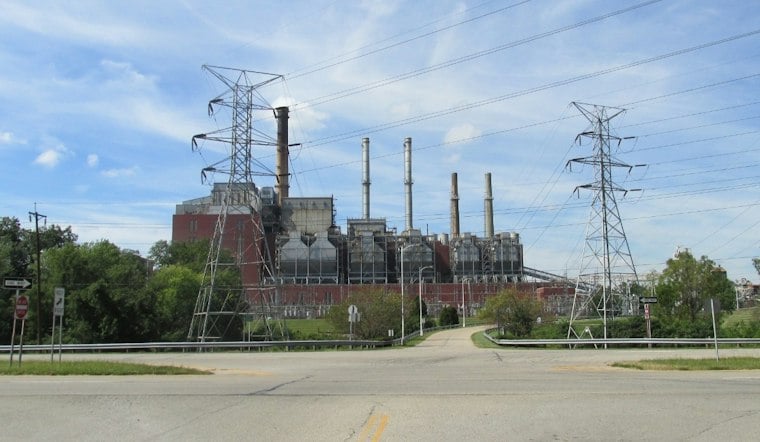
Pierce Township’s immediate question is not whether Crane Data Centers can begin construction, but whether the company’s 300-megawatt concept can advance at all before local officials finish writing data-center rules. The township’s moratorium remains in effect through May 31, 2027, and officials say projects cannot receive zoning permits while the freeze is active, according to WVXU.
Crane presented the concept to the Pierce Township Zoning Commission on September 1. The San Francisco-based developer is considering about 300 acres of wooded, industrial-zoned land near U.S. 52, across from the former Walter C. Beckjord Generating Station. The plan calls for three buildings between roughly 200,000 and 300,000 square feet, according to WCPO.
A concept, not an approved project
That distinction matters. Crane’s presentation is not the same as a filed, approvable development application, and the township’s regulatory work is unfinished. Officials are preparing standards for issues including water use, electricity demand, noise and setbacks; the zoning commission is scheduled to discuss the proposed restrictions at its October 6, 2026 meeting, WVXU reported.
Trustee Allen Freeman said the township is not currently entertaining data centers, according to WCPO. Crane representatives, meanwhile, described possible measures including closed-loop cooling, a new electrical substation, on-site solar, rainwater collection and noise controls. Those are developer proposals, not conditions approved by the township or independently verified performance results.
Why the power question extends beyond Pierce Township
The proposed 300-megawatt load would ultimately have to be evaluated within the regional electric system. PJM’s 2026 forecast expects summer peak demand across its territory to increase by about 85,000 megawatts over the next 15 years, reaching more than 241,000 megawatts. PJM also says near-term large-load additions require firm commitments, while longer-term projects are treated as non-firm and reduced to reflect uncertainty, according to its 2026 load forecast and related planning guidance.
That regional forecast does not establish that Crane’s project will be built or that Pierce Township lacks electric capacity. It does show why the township’s planned review of power demand is part of a broader planning problem: large-load proposals must be distinguished from firm commitments before utilities and grid planners can rely on them.
A larger Ohio comparison
A separate proposal in Adams County illustrates the scale of the uncertainty without being a direct equivalent. WCPO reported that an AES Ohio filing dated February 3 described a data-center request near the former J.M. Stuart power plant that could begin at 100 megawatts in 2028 and rise to 1,300 megawatts by March 2032, with grid review potentially taking up to two years. That request is substantially larger and at a different stage than Crane’s unfiled Pierce Township concept, according to WCPO.
The Beckjord complication
The proposed campus would sit across the highway from a former coal plant whose site remains environmentally contentious. Duke Energy closed Beckjord in 2014 and sold the roughly 1,400-acre property in 2018, according to WCPO. Reporting has described coal ash stored in unlined ponds in the Ohio River floodplain near Clermont County drinking-water wells; those environmental concerns are allegations and risks reported by the county and news organizations, not a finding that Crane’s separate site is contaminated, as detailed by WCPO.
For now, the practical outcome is limited: Crane has introduced a major industrial concept, but Pierce Township has not approved it, the moratorium remains in place, and the zoning commission still has to define the standards that would govern any future application. Until that process is complete, the project’s final design, utility arrangements, environmental review and construction timetable remain unresolved.





