

























































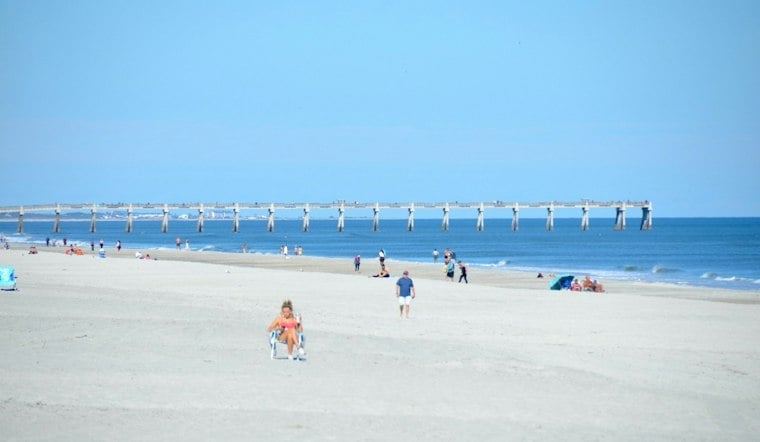
An 11-foot hammerhead shark tested the arms and patience of two anglers near Mickler's Landing in Ponte Vedra Beach, taking more than an hour to bring to shore before it was released back into the Atlantic. Will Egan and Ethan Zehr caught the shark, according to the account.
According to a post from Zehr detailed by News4JAX, Egan and Zehr spent over an hour reeling in the shark before landing it on Jacksonville Beach, where they measured it at 11 feet long. The pair then released the animal safely, according to the same report. Egan works for Egan's Landscaping, per the News4JAX post, and Zehr, who goes by Zehrman online, shared the catch on his TikTok account.
Why the Shark Had to Go Back in the Water
Whatever the size of the catch, state rules required the anglers to release the shark once they identified it as a great hammerhead. Great hammerheads are prohibited from harvest in Florida waters and must remain in the water with their gills submerged, according to the Florida Fish and Wildlife Conservation Commission.
FWC rules also spell out that prohibited sharks must be handled with their gills submerged during capture and release. The requirement means the shark must remain in the water while it is being released.
Shore-Based Shark Fishing Rules
Shore-based shark fishing in Florida comes with rules before a line ever hits the water. Gear matters too, with anglers expected to follow regulations when targeting sharks from shore.
Those handling rules apply when a great hammerhead is fighting for its life on a line. The shark must remain in the water with its gills submerged during capture and release.
A Critically Endangered Predator in Local Waters
The stakes behind that single catch stretch well beyond one Ponte Vedra beach. The International Union for Conservation of Nature lists the great hammerhead as Critically Endangered globally. The species has also experienced population decline.
Florida's shark regulations include prohibited species, and identifying hammerheads requires attention to distinctions among them.
The encounter unfolded near Mickler's Landing in Ponte Vedra Beach. Great hammerheads inhabit shallow coastal waters and inlets and may move into those areas during warmer months, with the species reaching about 18 or 19 feet.
Should Beachgoers Be Worried?
Despite their intimidating profile, hammerheads pose little real danger to people in the water. Hammerhead sharks have been linked to unprovoked bites worldwide. Great hammerheads prey on stingrays and bony fish.
The Ponte Vedra catch stands apart in one key way: this hammerhead, according to the anglers' account, swam away alive.




