

























































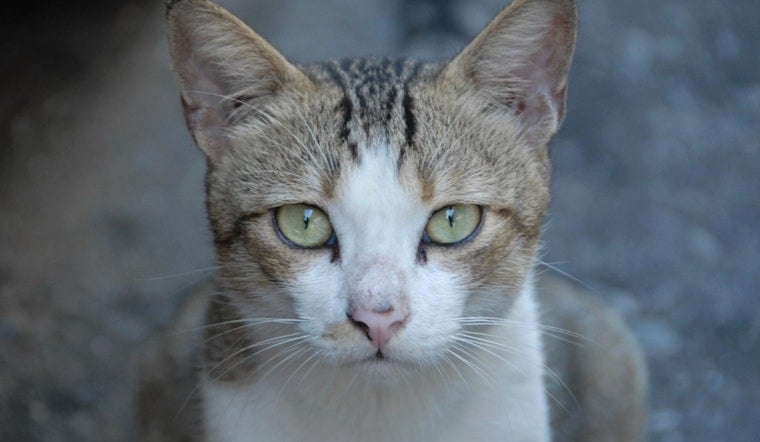
Fifty-five cats are living inside a Port Orange mobile home that once belonged to Candace Park, a well-known figure in Volusia County's trap-neuter-return community who died following a battle with breast cancer. Now volunteers are racing against time to find every one of those cats a new home or a safe place to land.
Coordination of the emergency rescue and rehoming effort is being led by Central Florida non-profit Furry Nation Salvation, whose volunteers have taken over daily feeding and litter care for the cats Park left behind. As reported by WKMG, Park left behind a final rescue mission involving all 55 animals after her death this month.
Rescuers say the situation, while heartbreaking, is not a sterilization crisis. All 55 cats had already been spayed or neutered and vaccinated by Park before she died. The complication is behavioral rather than medical: roughly 20 of the cats will need sanctuary placement rather than standard home adoption, according to the station's report, because they lack the socialization needed to go straight into a typical household.
Shelters and Cat Cafes Step Up Across the Region
By early September, regional partners including Edgewater Animal Shelter, DeLand Cat Cafe, and Daytona Beach's PURe JOY Cat Cafe had stepped up to take in dozens of Park's cats for adoption placement, per Furry Nation Salvation's ongoing updates. Edgewater Animal Shelter alone agreed to take in five of the cats, adding to a year that has already stretched the shelter thin — it previously took in animals from other high-profile Volusia County neglect cases, including a starving dog named Olive pulled from a New Smyrna home in a case Hoodline covered earlier this year.
Central Florida's growing network of cat cafes has increasingly become a key adoption pipeline for local rescues, helping place hundreds of animals annually outside traditional shelter walls. Hoodline detailed how venues like Altamonte Springs' cat café function as cage-free meet-and-greet spaces, a model now helping absorb Park's cats through DeLand Cat Cafe and PURe JOY Cat Cafe.
A Rescue That Ran Up Against City Rules
Fifty-five cats under one roof also runs headlong into Port Orange's own municipal code. Under Sec. 10-12 of the city's ordinances, residential dwelling units are generally restricted to a maximum of four adult cats or dogs, making Park's collection a significant regulatory overshoot even though the animals arrived through legitimate rescue work. The city separately requires, under Sec. 10-19, that all dogs and cats over six months old be spayed or neutered unless the owner holds an unaltered animal permit — a rule Park's own sterilization practices had already satisfied.
Port Orange has also built a formal structure for exactly the kind of community cat work Park was known for. Ordinance No. 2020-9 established a municipal Trap-Neuter-Return program requiring feral cat colony caregivers to register with the Police Department's Animal Control Unit and complete four hours of mandatory training. That framework mirrors a broader county effort: Volusia County Animal Services reported that its free countywide Trap/Neuter/Return program sterilized more than 1,100 community cats in just the first eight months of 2026, according to the county government.
Part of a Broader Pattern in Volusia County
Volusia County has built something of a reputation on progressive feline welfare measures. In June 2022, it became the first county in Florida to ban elective cat declawing, enacting fines of up to $500 for non-therapeutic procedures — a policy Hoodline noted is now being eyed for statewide expansion by a Palm Beach lawmaker.
What happened at Park's mobile home also points to a vulnerability that runs through grassroots rescue work generally: a single caregiver managing dozens of animals with no formal succession plan in place. When that caregiver is suddenly gone, the entire operation depends on how fast a volunteer network can mobilize. In this case, Furry Nation Salvation, Edgewater Animal Shelter, and the region's cat cafes moved quickly, but rehoming 55 cats — including 20 that need sanctuary rather than adoption — remains a significant logistical and financial undertaking for the non-profits involved.


