

























































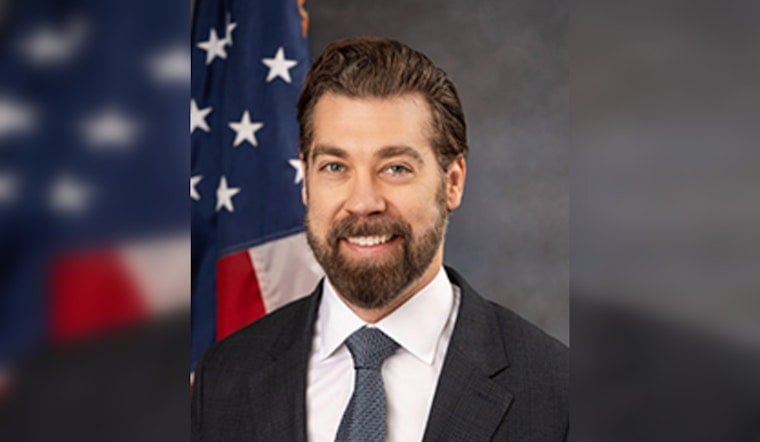
A Florida lawmaker is preparing to revive a long-dormant push to outlaw elective cat declawing statewide, arguing the procedure is painful, outdated and unnecessary for most pet owners. State Representative Rob Long says he plans to introduce legislation banning the practice across Florida during the 2027 legislative session, while still allowing veterinarians to perform the procedure when it is genuinely medically necessary.
Long, who represents District 90 in Palm Beach County, told WPTV that declawing is still widely misunderstood by many pet owners, many of whom don't realize the procedure amputates the last bone of a cat's toes rather than simply removing the nail. He said the surgery should be reserved for cases of true medical necessity, not human convenience. Long added that an irreversible amputation should be performed because an animal medically needs it, not for the sake of convenience.
The lawmaker has personal experience with rescue cats that informs his position. Long and his wife have three rescue cats of their own, he regularly fosters rescues, and his mother-in-law also fosters rescue animals, according to the station's report. He has also cared for community cats, volunteered with Peggy Adams, and worked with the Animal Rescue Force.
A Shelter Visit That Shaped the Bill
Long's push was shaped in part by a visit to Palm Beach County Animal Care and Control, where he saw firsthand how the facility accommodates declawed cats. Per the same account, the shelter provides litter that does not irritate declawed cats' sensitive paws, along with retreat spaces that don't require large distance leaps, and works with local adopters and rescues focused on special-needs animals. Long said he learned of a cat adopted from the shelter that was later returned after being declawed.
Janet Steele, director of Palm Beach County Animal Care and Control, said declawing can affect how cats interact with people and other animals, and that declawed cats often need extra litter and environmental accommodations. The shelter's experience reflects a broader pattern described in the same report: Palm Beach County Animal Care and Control has experienced overcrowded shelters during the height of cat season, a strain Long has linked to the rising cost of living pushing more animals into abandonment or surrender.
Veterinary Groups Have Shifted Their Stance
Long's proposal is consistent with a broader shift among veterinary organizations. The American Veterinary Medical Association discourages medically unnecessary declawing, a policy the organization revised to strongly discourage veterinarians from performing onychectomy or tenectomy unless it is medically necessary, recognizing scratching as natural feline behavior and declawing as an acutely painful amputation, according to the American Veterinary Medical Association. The American Animal Hospital Association similarly discourages the procedure when it isn't medically necessary, and both VCA and Banfield do not support elective declawing.
The Feline Veterinary Medical Association goes further, describing elective declawing as an amputation of the third phalanx, or P3, toe bone, and recommending non-surgical alternatives such as regular claw trimming, temporary synthetic nail caps, and synthetic pheromone diffusers, per the Feline Veterinary Medical Association. A survey of more than 1,200 feline veterinary practitioners published by the American Veterinary Medical Association found 51% reported they do not perform declawing at all, and a majority of respondents supported legislative bans on the procedure. WPTV also reports declawing can lead to biting or swatting toward people or other pets, litter box problems, urinating or defecating outside the box, difficulty using certain litters, withdrawal from social activities, and long-term physical and behavioral issues.
Florida's Earlier Attempt Died in Committee
Florida has tried this before. Long said his bill would revive and update legislation first introduced in 2020 by then-state Sen. Lauren Book, which would have imposed civil penalties of up to $1,000 for non-veterinarians and up to $5,000 plus Board of Veterinary Medicine discipline for licensed vets who performed non-therapeutic declawing, according to Florida Politics. That bill passed the Senate Agriculture Committee on a 4-1 vote but died later in the session.
Since then, momentum has built at the local level rather than the state level. Volusia County became the first Florida county to ban elective cat declawing in June 2022, setting fines of up to $500 for veterinarians who perform the procedure without medical necessity, as reported by the Tampa Bay Times. Seminole County followed in June 2026, updating Chapter 20 of its county code to become the second Florida county to prohibit the procedure, according to LocalLens.
Florida Would Join a Growing List of States
Nationally, Florida would not be the first state to take this step. As of 2026, six states — New York, Maryland, Virginia, Massachusetts, Rhode Island and California — along with Washington, D.C., have enacted statewide prohibitions on non-therapeutic cat declawing, per the ABA Journal. New York was the first, in 2019. California became the largest state to join that list when Governor Gavin Newsom signed Assembly Bill 867 into law in October 2025, banning the practice starting this January.
The Paw Project, an advocacy group focused on ending declawing, has reported that declaw bans have been followed by declining shelter cat intake numbers in every jurisdiction where data is available, and that there is no evidence such bans result in cats losing their homes. The group has pointed to Los Angeles, which saw a 43.5% decline in cat shelter intake after banning declawing, and noted that ten Canadian provinces have also banned the practice.
Florida's animal welfare laws have expanded on other fronts in recent years as well. Additional protections took effect in 2026, including Dexter's Law establishing a statewide animal cruelty database and Trooper's Law making pet abandonment during natural disasters a felony, according to FindLaw. Long's declawing bill would add to that trend when lawmakers convene for the 2027 session.


