

























































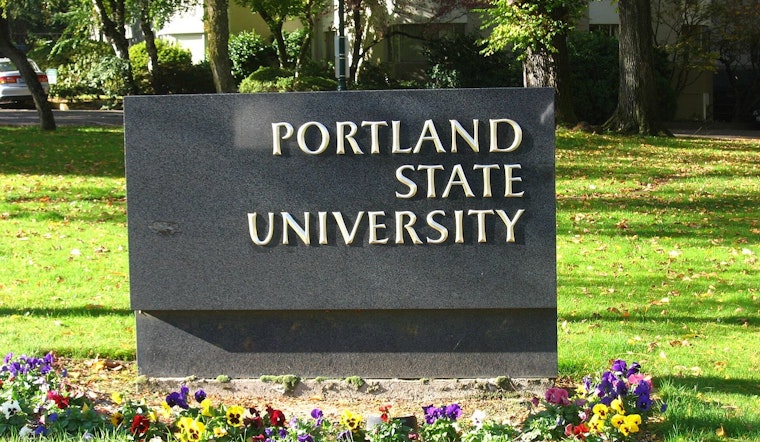
Natalie Delgado entered Oregon's foster care system at age 10, separated from her parents and younger sister, and endured repeated abuse in her early childhood. Now she is a senior at Portland State University, on track to earn a bachelor's degree in social science this December, and living independently as the legal caregiver for her sister.
Delgado is a first-generation college student, according to KPTV, which reported that FOX 12 is partnering with Youth Villages Oregon to share her story. The station reports that Delgado has met monthly for four years with specialists from LifeSet, a Youth Villages program, who helped her navigate FAFSA paperwork, scholarships, housing, and enrollment at PSU.
“Having genuine people that I can go to and ask questions really helped me be able to start school and support myself,” Delgado said, per the station's report. Rogelio Larios, her LifeSet specialist and a first-generation college graduate himself, helps her stay on track with tuition and prepare for life after graduation.
A National Gap Delgado Is Bucking
Delgado's progress runs against steep national trends. Only 3% to 4% of former foster youth in the United States earn a four-year college degree, compared to roughly 33% to 36% of the general population, according to data compiled by Youth Villages and the National Working Group on Foster Care and Education. The barriers often start earlier: Oregon Department of Education figures reported by Oregon Public Broadcasting show fewer than half of Oregon foster students graduate high school on time, with the class of 2017 recording a foster youth graduation rate of just 35%, the lowest among reporting states nationwide.
Larios, who works with Delgado through the LifeSet program, said the difference one steady adult can make is significant. “Just having one person who doesn't give up on you can help you accomplish your goals,” he said, per the same KPTV report.
How Oregon and Federal Aid Fit Together
State and federal programs have helped clear some of the financial hurdles that keep foster youth out of college. Under Oregon Revised Statutes 350.300, former foster youth who spent at least 180 cumulative days in state custody between ages 14 and 21 are eligible for a tuition and fee waiver covering remaining costs at public Oregon universities, including PSU, according to Oregon Student Access and Completion. Separately, the federal Chafee Educational and Training Voucher program, administered in the state by the Higher Education Coordinating Commission, provides up to $5,000 a year for non-tuition costs like housing, transportation, and books, and those grants are exempt from reducing the state waiver's value.
Delgado entered care at age 10, younger than the waiver statute's current minimum qualifying age of 14. Oregon lawmakers introduced Senate Bill 738 in the 2025 legislative session to lower that entry-age threshold to 10 and extend the maximum age for receiving benefits from 25 to 40, according to BillTrack50, an effort aimed at reaching foster youth who entered the system earlier in childhood or are returning to school later in life.
A Program Built to Catch Kids Before They Fall
The LifeSet model that paired Delgado with Larios has operated since 1999 and has served nearly 35,000 young adults across 23 states and Washington, D.C., per Youth Villages. In Oregon, the program helps about 200 young people transition out of foster care. Internal performance data from Youth Villages for fiscal years 2023 through 2025 shows that 97% to 98% of LifeSet participants are enrolled in school or employed a year after finishing the program, while 88% to 90% maintain independent housing.
Portland State's own ties to Oregon's child welfare system run deep. The university's Child Welfare Partnership, founded in 1993 alongside Oregon Child Welfare, has trained more than 120,000 caseworkers and caregivers and supported over 200 agency professionals pursuing social work degrees. PSU researchers also developed the Better Futures peer-coaching model, which pairs foster youth with near-peer mentors who share lived experience in the system, aimed at helping high school and college-age foster youth complete postsecondary education.
Passing the Support Forward
The long-term stakes behind programs like LifeSet go beyond the classroom. A Northwest Foster Care Alumni Study by Casey Family Programs, examining 659 former foster youth who were in state care in Oregon and Washington between 1988 and 1998, found that adult foster alumni experienced post-traumatic stress disorder at rates comparable to U.S. war veterans — a finding that underscores the long-term toll of aging out of the system.
Delgado said she plans to use her own experience to encourage other foster youth, and intends to become a LifeSet specialist with Youth Villages after graduation. “I just want to be able to give that support to somebody else,” she said, according to KPTV's report. Youth Villages will host its annual fall celebration on September 24, an event offering more information on donations and how the community can get involved.



