

























































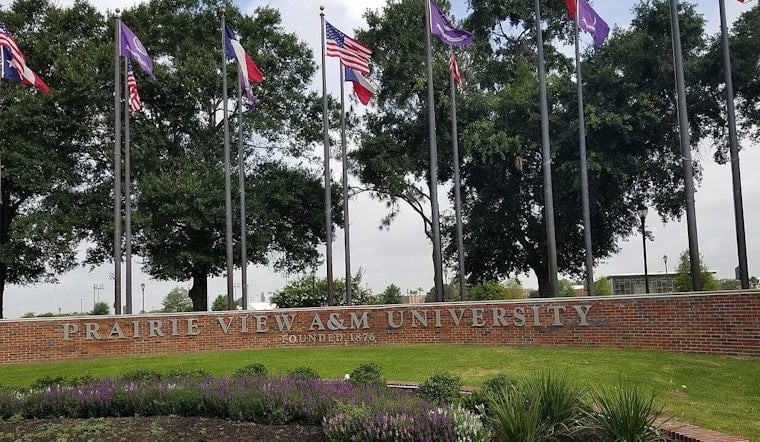
Prairie View A&M University, the oldest public HBCU in Texas, is marking its 150th year, and a new multidisciplinary stage production premiering Friday and Saturday at the Wortham Theater Center's Cullen Theater is using dance, visual art and spoken word to explain exactly why that milestone matters. The show, called Dear Prairie View, was created by Harrison Guy, a former Prairie View student who spent three years digging through campus archives before staging a full account of the university's journey from a Reconstruction-era plantation to a modern research institution with more than 10,000 students.
The production began as a 25-minute concept before Performing Arts Houston commissioned it as part of the organization's New Now programming and expanded it into the full-length show opening this weekend, according to The Houston Defender. Guy conducted much of his research at the African American Library at the Gregory School in Houston, and he previously created the 2024 production Colored Carnegie, which explored the city's first public Black library, as reported by the Houston Chronicle. Guy, who also founded the Houston-based Urban Souls Dance Company, attended Prairie View for three years but did not graduate, per the same account.
A University Born on a Former Plantation
Prairie View A&M was established by the Fifteenth Texas Legislature on August 14, 1876, after the state authorized purchasing 1,388 acres of the Alta Vista Plantation from Helen Marr Kirby, widow of Confederate officer Col. Jared Ellison Kirby, land where enslaved Black Americans had worked, according to Prairie View A&M University. The school opened on March 11, 1878, with eight Black students who are now remembered as the Unknown Eight, since their individual identities remain unknown. It was originally named Alta Vista Agriculture & Mechanical College of Texas for Colored Youth and stood as the first public college for Black students in Texas, making it the state's second-oldest higher-learning institution overall, the Chronicle's report notes.
The university, located in Waller County on the rural outskirts of Houston along U.S. Highway 290, has educated leaders in Houston and across the country over the past century and a half. The Chronicle's report frames the anniversary as recognition owed to both the school's complicated history and its immense legacy.
The Fight for the Right to Vote
In the 1970s, Waller County denied ballots to Prairie View students on the grounds that they were not technically residents of Prairie View, Texas, prompting students to sue over the denial of their voting rights. The case became Symm v. United States, the U.S. Supreme Court's sole ruling on Twenty-Sixth Amendment protections, which struck down the county's discriminatory voter residency questionnaires, according to the Zinn Education Project. The high court affirmed the lower court's injunction against the county tax assessor-collector in a four-word opinion reading, “The judgment is affirmed.”
The Supreme Court ruled in favor of the Prairie View students, cementing the university's outsized role in national youth voting rights litigation stemming from student activism in Waller County.
A Midnight Performance Before Tragedy
On March 18, 1968, the Prairie View A Cappella Concert Choir was in Memphis on a spring concert tour and delivered an impromptu midnight performance for Dr. Martin Luther King Jr. at the Lorraine Motel, a Black-owned establishment, while the city's sanitation workers were on strike. The choir became the last college choir to perform for the civil rights leader, who was assassinated at the same motel weeks later, according to CBS News.
Record Growth and Historic Philanthropy
Dear Prairie View arrives as the university posts its strongest numbers in its history. Prairie View A&M reached a record enrollment of 10,106 students in fall 2025, a striking leap from its founding cohort of eight, per Prairie View A&M University. That same period brought a historic $63 million gift from philanthropist MacKenzie Scott in November 2025, following her initial $50 million donation in 2020, bringing her total giving to the school to $113 million, the largest single gift in its history. The university has said the funds support need-based scholarships, faculty research and the institutional endowment.
The school's academic ambitions have continued to expand under President Tomikia P. LeGrande, who took office in June 2023, succeeding Dr. Ruth J. Simmons, and later launched the Journey to Eminence: 2035 strategic initiative focused on student success and research growth. As Hoodline previously reported, Prairie View and Texas Southern University joined 13 other institutions this spring to form the Association of HBCU Research Institutions, a coalition aimed at boosting member campuses toward Carnegie R1 research status, with LeGrande serving as the group's vice chair.
Documenting a Complicated Legacy
Under Simmons, the university established the Ruth J. Simmons Center for Race and Justice in 2021, launching the Epa Committee on the Legacy of Slavery to research the Alta Vista Plantation and the HBCU Voting Rights Lab to archive student activism, according to the university. The center is named for Simmons, the school's eighth president, and reflects an institutional effort to formally document the history that Dear Prairie View now brings to the stage.
That history includes cultural traditions still celebrated on campus today, including the Marching Storm, Prairie View's marching band, which traces its roots to the 1890s and includes the Black Foxes dance group. The band was featured in the 2022 eight-part CW docuseries MARCH and has performed at major national parades and bowl games, per the Defender's earlier coverage. Dear Prairie View closes with a celebration of HBCU culture broadly, including marching bands, Greek-letter fraternities and sororities, and the student-alumni camaraderie that defines campus life.
Guy has said he wants audiences to know Prairie View's full story and its legacy of activism, not just the plantation origins or the record-setting philanthropy, but the throughline connecting the Unknown Eight to the students who fought in court for their right to vote. Dear Prairie View explores all 150 years of that history across its two performances this weekend at the Wortham Center.





