

























































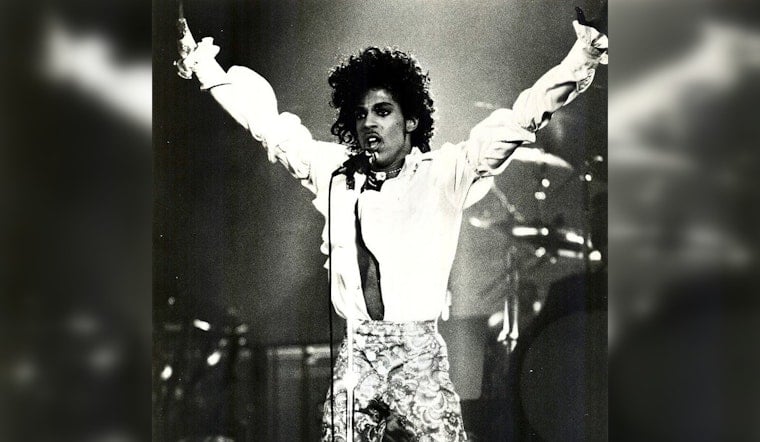
Prince died in April 2016 without a will, and a decade later his estate is facing a fresh revolt from the very fans who kept his vault music alive. The Prince Estate released Timeless on August 28, a 10-track collection billed as the first compilation to span every decade of his career, from 1977 to 2016. Within days, the record was engulfed in accusations that the estate secretly altered one of the songs after Prince's death.
The flashpoint is Calabama, a hornless track recorded in 2003 that originally had a synthesizer filling the horn space on its archived multitrack, according to the Star Tribune. Prince's own vocal calls for horns twice at the song's bridge, but no horns were ever recorded there while he was alive. The controversy ignited when former New Power Generation trombonist Greg Boyer posted on Facebook that he had added trombone to the track earlier this year, as reported by The Second Disc.
That revelation forced Prince Legacy co-chair Charles Spicer Jr., who serves as co-principal of Prince Legacy LLC, to walk back an earlier claim. Per the Star Tribune's reporting, Spicer had previously stated that nothing had been edited or added to Calabama, and he later apologized for that statement once Boyer's post surfaced.
The Estate's Defense of the Overdubs
Prince's management team posted an explanation of the Calabama horns on Instagram in September, arguing that Prince himself had called for horns on the bridge and that the estate was simply completing what he asked for, according to The Mirror. The statement confirmed that Greg Boyer, Adrian Crutchfield, and Lynn Grissett added the new brass lines, and it maintained that no other track on Timeless received posthumous overdubs or AI manipulation.
The Star Tribune's reporting adds texture to how those overdubs came together. Producer Chris James reportedly contacted saxophonist Adrian Crutchfield, who joined Prince's New Power Generation in 2012 and is credited in the Calabama liner notes, to add to the previously recorded track. Crutchfield told the outlet he was unsure whether his saxophone actually appears in the final mix, but said he understood the fan reaction, telling the paper that people are upset for the right reasons. Trombonist Michael B. Nelson, who had performed on the 2012 track Bestest Friend, was also contacted by James but declined the invitation to add overdubs to old Prince recordings.
A Petition and Accusations of Broken Trust
The backlash has taken organized form. Hungarian Prince fan Kares Balogh started a petition in 2026 calling for Spicer and fellow manager L. Londell McMillan to step down from the Prince Estate, and the petition has garnered more than 250 signatures. Fans quoted by the Star Tribune were blunt in their assessments; one commenter identified as Nichole said the music Prince left behind should not have been tampered with, while Baltimore lawyer Donny English called the situation a breach of trust and, in his words, a debacle.
Music critics have piled on as well. Longtime AllMusic editor Stephen Thomas Erlewine, writing in his So It Goes Substack column, argued that modifying archival multitracks and applying modern production techniques compromises the historical integrity of Prince's unreleased vault recordings, and said the estate's approach made Prince seem boring. Rolling Stone critic Michaelangelo Matos described Timeless as lacking dynamism or flair, and Andrea Swensson, who previously hosted the official Prince podcast tied to posthumous releases, also reviewed the album for The Current radio station. Overall, Timeless has drawn largely negative reviews from critics, per the Star Tribune's account.
Part of a Longer Pattern of Estate Control
This is not the first time the Prince Estate has drawn fire for how it manages the artist's unreleased work. In February 2025, the estate blocked Netflix from releasing a completed nine-hour documentary directed by Oscar winner Ezra Edelman, after acquiring editorial control and arguing the film contained factual inaccuracies that could cause generational harm to Prince's legacy, according to The Guardian. The Star Tribune notes that the estate also failed to deliver its own promised documentary. Separately, a stage musical adaptation of Purple Rain that reportedly failed during a 2025 Minneapolis trial run is now being revamped by a new creative team ahead of a spring Broadway opening, with SEC filings showing capitalization costs as high as $29.5 million, according to BroadwayWorld; the Star Tribune separately reported the musical's cost at $26.5 million.
Underlying all of it is a governance structure born from years of litigation. Prince died at 57 from an accidental fentanyl overdose, and with no will in place, his $156 million estate was tied up in probate court for six years before splitting evenly between Primary Wave and Prince Legacy LLC in August 2022, as reported by The Guardian. Primary Wave had acquired its 50% stake in August 2021 by purchasing the expectancy rights of three of Prince's half-siblings. Prince Legacy LLC has co-managed the estate alongside Primary Wave for four years, and in July 2024 a Delaware Court of Chancery ruling upheld McMillan and Spicer's broad management authority over Prince Legacy LLC, rejecting efforts by several heirs to remove them, according to MPR News. For fans now circulating Balogh's petition, the Calabama overdubs look less like an isolated misstep than the latest chapter in an eight-year struggle over who gets to decide what Prince's legacy sounds like.





