

























































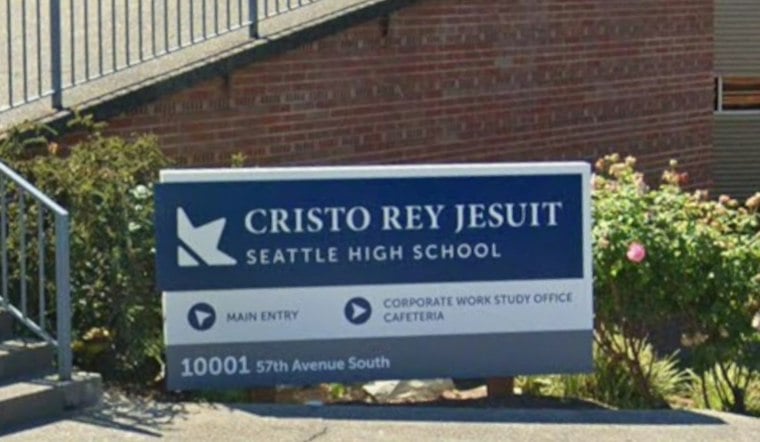
A South Seattle high school built around a distinctive work-study model is expanding, with plans to grow its Rainier Beach campus to accommodate hundreds of new students. Cristo Rey Jesuit Seattle is planning a campus expansion to support the school's growth beyond its founding class.
The expansion, approved by the Vatican under a deal reported by bizjournals.com, will allow the school to accommodate hundreds of new students beyond its current footprint. A family bulletin posted on Cristo Rey Jesuit Seattle's website includes a September 18, 2026 event listing. The school opened with its first class in 2024, meaning its inaugural students are entering their junior year in the 2026-27 school year.
Cristo Rey Jesuit Seattle sits in the Rainier Beach neighborhood and serves families across Seattle, including students with limited access to private college-preparatory education. As reported by KOMO News, students split their weeks between four days in the classroom and one day working at major companies across the Seattle area, a structure central to the school's mission of making a private Jesuit education more accessible to working families.
How the Work-Study Model Actually Works
That one weekday of work isn't an internship on the side — it's baked into how the school funds itself. Cristo Rey's Corporate Work Study program places every student in a professional job for one full day a week during school months, all four years of high school, according to the Cristo Rey Network. Students earn a significant portion of their own education costs through that work, while corporate partners pay an annual service fee to the program to help cover the students' college-preparatory schooling. Legally, students are employees of the Corporate Work Study program itself rather than of the companies where they're placed, and the school handles transportation to and from job sites, per Cristo Rey Jesuit Seattle's own explainer on how the program works.
The school's president's blog identifies partners across the region, including Microsoft, Costco and Alaska Airlines. The work placements give students professional experience alongside their academic education. The school's own inaugural-year report backs up the results: 98% of students met or exceeded expectations in their Corporate Work Study jobs, and every student passed their semester classes, with most earning As and Bs, according to a post on the president's blog.
A Student's View From the Job Site
Meron Keleta, a student interviewed by ARC Seattle/KOMO, discussed his experience with the school's work-study program.
That kind of workplace feedback loop isn't just anecdotal — it's backed by network-wide data. Students who earn strong ratings from their Corporate Work Study supervisors are 32% more likely to graduate college, according to research highlighted by the Cristo Rey Network. The research highlights the connection between workplace skills and college completion, with the network describing the program as connecting classroom learning to career preparation while giving employer partners early access to young talent.
Funding a No-Cost Model for Families
None of this comes cheap for families to opt out of — except at Cristo Rey Jesuit Seattle, the school serves students with limited economic resources and charges monthly tuition ranging from $40 to $250. That's possible in part because of how the funding model is structured: schools in the Cristo Rey Network are expected to draw roughly 50% of funds from the Corporate Work Study program at full enrollment, 40% from fundraising, and just 10% from family contributions, per the school's own how-it-works page.
Separately, the Washington State Board of Education is considering changes to graduation requirements, changes that proposed reforms aim to give students greater flexibility after high school.
For now, the school's growth is reflected in its planned expansion in Rainier Beach. As the Class of 2028 enters its junior year, the opening of the Norcliffe Academic Center is set to mark a new chapter for a school still building its track record — one work day, and one new classroom, at a time.





