

























































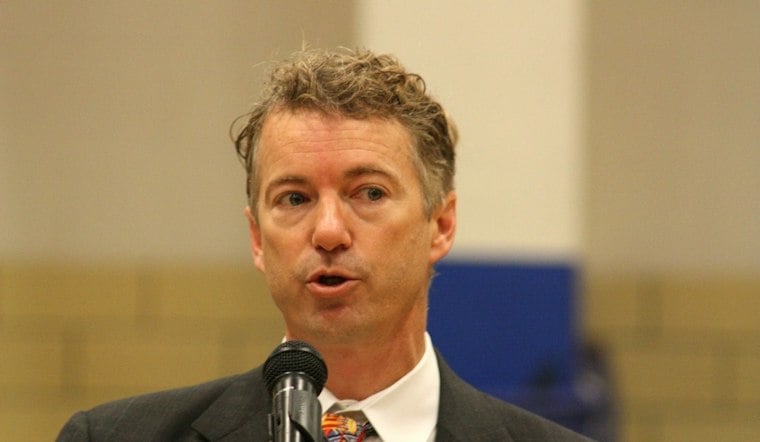
A push to force tech companies to build emergency shutoff switches into powerful artificial intelligence systems collapsed on the Senate floor Wednesday, after Sen. Rand Paul blocked a fellow Republican's bid to pass the measure by unanimous consent. Sen. John Kennedy had asked colleagues to approve his bill on the spot, arguing that superintelligent AI could eventually slip beyond human control. Paul refused, saying the idea needed far more scrutiny before Congress locked it into law.
What Kennedy's Bill Would Have Done
Kennedy's proposal, as described in reporting from The Hill, would have required companies to build a kill switch into superintelligent AI designs, giving human operators the ability to shut a system down if serious danger arose. Crucially, the bill would have put that emergency shutoff authority in the hands of the companies themselves rather than the government. Kennedy brought the measure to the floor Wednesday and requested unanimous consent, a procedural move that needed agreement from all 100 senators to succeed, according to USA Today.
Paul did not let it through. Rather than an outright rejection, he tried to amend Kennedy's proposal to instead establish a bipartisan committee that would study the threat posed by superintelligent AI and examine ways to stop an imminent threat to humanity, per the same Hill report. Kennedy objected to that counteroffer and declined to modify his original request. With neither senator willing to bend, Paul then objected to Kennedy's unmodified request, and the effort died on the spot.
Dueling Warnings on the Floor
Kennedy framed the standoff as a matter of urgency. He told colleagues the goal should be striking a balance between innovation and public safety, but warned that recursive self-improvement could eventually turn an AI model into what he called an independent species, separate and apart from human beings that we can't control. The Louisiana Republican has said plainly that artificial intelligence poses risks, and the Hill report notes that concerns among lawmakers over superintelligent computers escaping human control and posing a catastrophic threat to society have risen dramatically in recent days.
Paul pushed back just as forcefully. He argued that AI is going to be throughout the economy and so many facets of daily life, and warned that an open-ended government mandate for kill switches could ruin its implementation across the American economy. Acting before lawmakers truly understand the technology, he said, risks killing innovation and setting it back decades. The Washington Examiner described the episode as the latest instance of Congress trying and failing to advance AI legislation.
Why Lawmakers Can't Agree
The gridlock reflects a broader divide in Washington over how aggressively to regulate a technology that is evolving faster than Congress can legislate. According to Fox23, lawmakers remain far apart on what any regulatory plan should look like, partly out of concern that stricter rules could slow American companies down in their competition with China. Kennedy himself sounded resigned to that gridlock, telling USA Today that Congress is not going to do anything soon on the broader issue.
A Parallel Effort in the House
While the Senate fight played out, a separate bipartisan effort has been moving through the House. Reps. Ted Lieu and Nathaniel Moran introduced legislation, identified on Congress.gov as H.R. 9917, the AI Kill Switch Act, which would require developers of qualifying advanced AI systems to build emergency shutdown mechanisms into their models. Lieu argued the underlying principle should not be controversial. It should be the first principle of AI safety that humans must be able to turn off AI systems and AI agents, he said in comments to CNN.
Under the House bill, as detailed by TechRepublic, the Department of Homeland Security could order a slowdown or shutdown after a covered incident, including a loss-of-control event or unintended conduct causing at least 10 deaths or $100 million in damage. The measure would initially cover AI companies earning at least $500 million from qualifying technology and models built with more than $100 million in compute, and it would impose baseline safety obligations including incident reporting, record preservation and the maintenance of technical control over deployed models.
Reports differ on how steep the penalties for violating an emergency shutdown order would be. The Verge reported that violations could reach up to $20 million per day, while a report referencing lawmakers' own materials put the figure at up to $2 million per day. Neither the House bill's ultimate fate nor the exact penalty structure has been resolved, and Kennedy's Senate proposal remains stalled after Wednesday's floor clash, with no kill-switch mandate currently in force at the federal level.



