

























































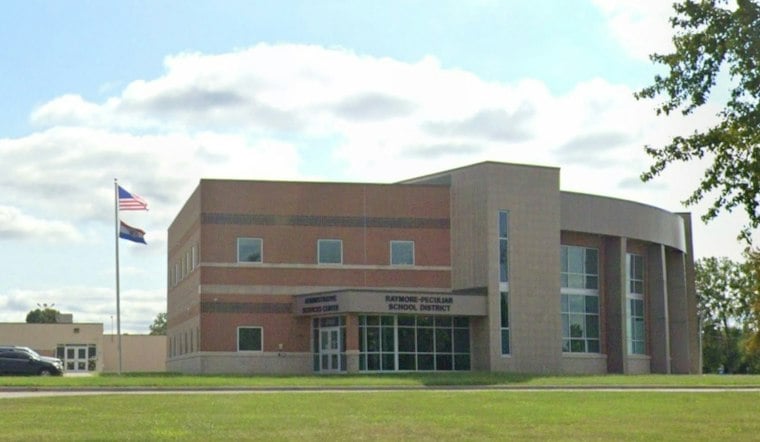
The Raymore-Peculiar Board of Education is scheduled to review transportation concerns at a 6 p.m. work session Thursday in the board chambers. The session is open to the public, but it is not a regular board meeting and does not include an open forum for public comment, according to KSHB 41.
Transportation is listed as a discussion item, with no supporting documents attached to the agenda. That leaves the board’s review as the next public opportunity to clarify how the district and its contractor, First Student, handle route changes, stop assignments, drop-offs and reports of mistakes.
Route changes set the backdrop
Before the 2026–27 school year, the district said it reviewed routes with First Student and changed stops in many neighborhoods. Some stops were consolidated at community locations such as intersections and corners, changes the district said were intended to improve reliability, align stops with state transportation guidelines and eliminate shuttle transfers involving the Ninth Grade Center, according to the Raymore-Peculiar School District.
Consolidating stops can alter the walking path or distance for individual students, but the available information does not establish that the route changes caused the reported incident. The Missouri Department of Elementary and Secondary Education says school-bus stops should be established at least 500 feet apart; that spacing guidance alone does not determine whether a particular stop or route complied with all applicable requirements, according to DESE.
What prompted the review
The scheduled discussion follows a report that a Ray-Pec bus driver left Jonathan Eckers’ 5-year-old daughter at the wrong stop during a period of extreme heat. Eckers told KSHB 41 that a neighbor found the girl near the family’s property while he was at work.
The report did not establish the precise drop-off location, how far the child traveled or whether the driver’s account has been independently confirmed. KSHB reported that Eckers wants the contractor to fire the driver and is seeking broader accountability; those claims and the incident details come from KSHB’s reporting rather than independent reporting by this publication.
The district said families should be able to depend on safe, reliable transportation and apologized for the concern caused when expectations are not met. It said it was working with First Student on recent concerns, while KSHB reported that the contractor had not responded to its request for comment at publication.
Questions for the board
The work session could help establish what information is recorded when a student boards or leaves a bus, how drivers receive revised stop information, how families are notified of route changes and what escalation process follows a reported wrong-stop incident. DESE says its Student Transportation Section provides technical assistance to school administrators and bus contractors on the statutes and regulations governing public student transportation, but the available state material does not identify a specific statewide procedure that resolves the facts of this case.
The board may also address how the district evaluates the tradeoff between fewer or more centralized stops and the walking routes those changes create. That is a policy question distinct from determining what happened on the individual bus run.
Staffing pressures complicate, but do not explain, the case
School Transportation News reported that districts preparing for the 2026–27 school year were expanding recruitment amid persistent driver shortages, with families facing possible canceled routes, longer rides and service interruptions. Fox Business, citing an Economic Policy Institute analysis, reported that school-bus-driver employment was 9.5% below 2019 levels in August 2025 even as inflation-adjusted hourly wages rose 4.2% over the previous year.
Those figures describe an industry-wide labor problem, not staffing conditions at Ray-Pec and not the cause of the reported drop-off. They do, however, provide context for why route reliability and contractor oversight may be part of the board’s broader discussion.
Crash data offer only a limited benchmark
The available statewide safety benchmark is historical rather than a current comparison. The Missouri State Highway Patrol Statistical Analysis Center reported that 0.7% of Missouri traffic crashes involved a school bus in 2010; school-bus crashes that year killed five people and injured 465.
Those numbers concern traffic crashes, not wrong-stop reports, and they do not provide a recent or Cass County-specific measure of transportation reliability. They therefore cannot show whether incidents like the one reported at Ray-Pec are becoming more or less common. The immediate unanswered questions remain what happened on the bus route, how the error was reported and what safeguards the district and First Student will use going forward.



