

























































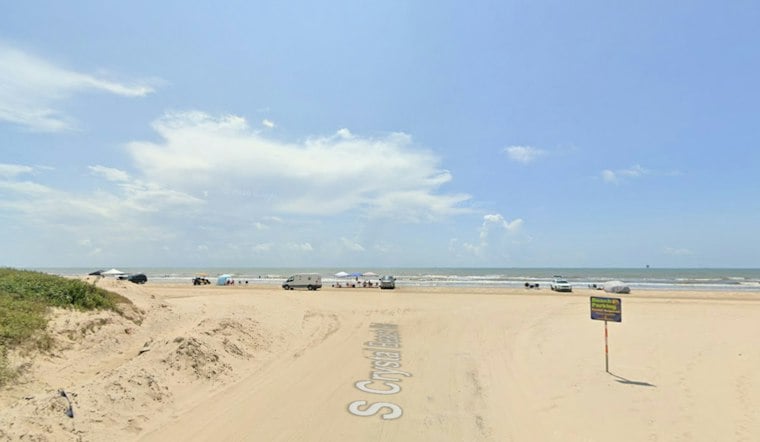
Thousands of dead Gulf menhaden have washed ashore on Bolivar Peninsula beaches over the past several days, and beachgoers near Crystal Beach have been coughing in the sea air as a red tide bloom takes hold along the Galveston County coast. Texas Parks and Wildlife Department officials confirmed Saturday that red tide had been detected in Gulf waters near the Bolivar Peninsula in Galveston County, with water samples indicating a moderate concentration of the toxic algae.
The trouble first surfaced on September 8, when the Galveston County Parks Department alerted the Texas Parks and Wildlife Department's Kills and Spills Team to beachgoers coughing and mass die-offs of forage fish along Bolivar Peninsula, according to ABC13 Houston. Follow-up water sampling conducted by the agency between September 7 and September 11 confirmed moderate to high concentrations of Karenia brevis algae, the organism responsible for red tide, and found that the bloom had expanded well beyond Crystal Beach to multiple locations across Galveston Island, according to the Texas Parks and Wildlife Department.
Red tide occurs when concentrations of the microscopic Karenia brevis algae rise sharply in coastal waters, turning dense patches of ocean a reddish hue. The algae is not caused by human activity, and experts say the exact combination of factors that triggers a bloom remains unknown. Karenia brevis produces a toxin that paralyzes fish, binding to voltage-gated sodium channels in nerve cells and shutting down the central nervous system so the fish can no longer move water across their gills, according to research published in MDPI. That mechanism is why forage fish like menhaden, which filter-feed and are especially vulnerable to algal toxins, wash up dead on Gulf beaches during blooms.
Forecast Warns Winds Could Push Toxins Onto Beachgoers
NOAA's National Centers for Coastal Ocean Science issued a 36-hour forecast Saturday warning that beaches across Galveston County face a moderate to high risk of respiratory irritation, particularly when onshore or alongshore winds blow aerosolized brevetoxin onto land. The same toxins that kill fish can be carried inland by coastal winds; research from wildlife disease specialists documented in the Journal of Wildlife Diseases found that storms and high winds during blooms can transport aerosolized brevetoxins up to a kilometer inland, causing respiratory distress in frogs, squirrels, and coyotes.
Beach visitors who spend time in or near red tide water may experience eye and skin irritation, including redness and itching, according to the Texas Department of State Health Services. Long-term exposure can also produce symptoms that surface hours or even days after leaving the water, though the agency notes that symptoms from short-term exposure usually go away on their own. The state health agency advises people not to swim or wade in red tide-affected waters.
Shellfish Rules and Pet Safety During the Bloom
The Texas Department of State Health Services maintains mandatory shellfish monitoring that automatically triggers commercial and recreational closures of affected bay areas when Karenia brevis counts climb, because brevetoxins accumulate in filter-feeding mollusks and can cause Neurotoxic Shellfish Poisoning, an illness that cooking or freezing cannot prevent, according to the Texas Parks and Wildlife Department. Legally marketed molluscan shellfish sold commercially remain safe to eat, officials say, but shellfish gathered directly from red tide water are unsafe even if they look normal and are cooked thoroughly. Fish, shrimp, and crabs caught alive and behaving normally can still be eaten, though people should never eat fish or shellfish that wash ashore sick, dead, or found floating belly-up, per Texas DSHS guidance.
Pet owners face their own set of risks. Dogs can suffer fatal brevetoxin poisoning by eating washed-up fish carcasses or by licking salty, algae-laden water off their paws and fur, according to the CDC. With thousands of dead menhaden currently littering Bolivar Peninsula beaches, veterinary guidance urges owners to keep dogs well away from the shoreline and any washed-up fish during the bloom.
Early-Warning Sensors and a Patchy, Shifting Threat
Texas A&M University at Galveston scientists operate automated FlowCytobot submersible imaging sensors, funded by NOAA, that continuously sample coastal water using lasers and optical imaging to identify Karenia brevis cell surges before blooms reach the beach, according to the National Centers for Coastal Ocean Science. That early-warning network is designed to give state health authorities a jump on tracking blooms as they develop.
Red tide is an isolated, patchy phenomenon that does not blanket every stretch of coastline, meaning severe conditions on one beach do not necessarily signal danger on the next one over. Officials say the current bloom still leaves generally miles of safe, clean water available to the public, and experts advise travelers to follow Texas DSHS guidance and draw their own conclusions before heading to Gulf beaches. Texas red tide events have historically appeared anywhere from August through February, and the state's last confirmed occurrence was in October 2023, when the Texas Parks and Wildlife Department documented localized fish kills along the Upper Coast before cell counts at monitoring stations in Port O'Connor and Port Aransas dropped back below background thresholds.
Red tide is not a new phenomenon for the Texas coast. State historical records show it was first documented near Mustang and Padre Islands in 1935, when residents initially blamed the resulting fish kills and coughing on an underwater volcanic eruption before scientists identified Karenia brevis as the actual cause in 1947, according to Texas Saltwater Fishing Magazine. Nearly a century later, the same naturally occurring organism is once again testing the balance between beach tourism and public health along Galveston County's shoreline.





