

























































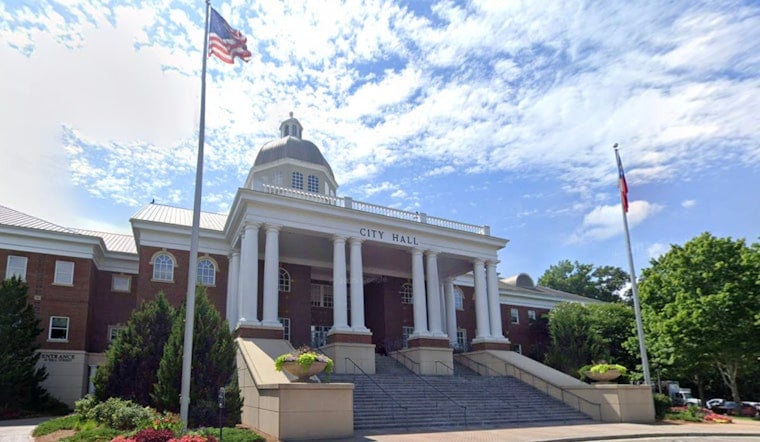
Roswell homeowners could see their city property tax rate jump by about 56 percent under a proposal that would take effect for 2026, marking the largest single-year increase the city has seen in at least a decade. A homeowner with a $575,000 house would pay roughly $1,778 in annual city property taxes under the new rate, up from years of frozen bills under the previous administration.
The proposal would raise Roswell's overall property tax rate from 4.949 mills to 7.732 mills, according to The Georgia Sun. One mill represents $1 of tax for every $1,000 of taxable property value, and the new rate breaks down into a 6.549-mill portion for day-to-day city services like police, fire, emergency dispatch, parks, roads and city administration, plus a 1.183-mill portion dedicated to bond debt repayment. Of that $1,778 annual bill on a $575,000 home, about $272 would go toward repaying voter-approved bonds.
For tax years 2023, 2024 and 2025, Roswell held its overall rate steady at an identical 4.949 mills — 4.049 mills for maintenance and operations plus 0.900 mills for bond debt service — and the rate stayed below 5.5 mills for more than a decade, per the same report. City officials had previously noted that the 4.049-mill M&O portion in 2025 was the lowest it had been in 17 years, according to Roswell Connections. Hoodline covered that earlier stability in a 2024 report on frozen rates.
A New Mayor Frames the Case for Higher Taxes
Mayor Mary Robichaux, who took office in January after winning a December 2025 runoff succeeding former Mayor Kurt Wilson, said the proposed millage rate would give uniformed personnel the tools they need to keep Roswell safe, per the Georgia Sun's report. She said the decision to raise taxes followed a thorough review of the city's near- and long-term needs.
Wilson served as mayor from 2022 through 2025, a period during which city leaders emphasized keeping tax rates low, according to biographical background on Mary Robichaux. Roswell's overall property tax rate generally declined or stayed stable for more than a decade before this year's proposal, the Georgia Sun's report notes.
Bonds, a Parking Deck and a Budget Squeeze
Roswell voters approved $179.6 million across three bond referendums in November 2022: $107.6 million for parks and trails, $52 million for public safety capital projects, and $20 million for a downtown parking deck, according to the city's own bond materials. Those bonds are funding a new parking deck, a public safety headquarters, an e-911 center and parks projects, the Georgia Sun reports, and they passed with majorities ranging from 57 percent to 74 percent.
The city officially opened its new 394-space downtown parking deck on Alpharetta Street in May, built with the $20 million bond, according to WSB Radio. Parking there was initially free while surrounding streetscape construction continued. Roswell City Council later voted 4-2 in March to enact a pilot paid parking program downtown, aiming to cover the deck's estimated annual operating expenses of hundreds of thousands of dollars, as reported by WSB-TV; council members cited ongoing maintenance and elevator upkeep as needing dedicated funding.
Why the Rate Has to Go Through Public Hearings
Because the proposed rate exceeds Georgia's rollback millage baseline, the increase triggers requirements under the state's Property Taxpayer's Bill of Rights, which mandates local governments hold three public hearings before adopting a rate above that threshold, per the Georgia Department of Revenue. The law is designed to keep local governments from collecting automatic revenue windfalls as property values rise without formal public notice.
Roswell has scheduled the first public hearing for September 14 at 7 p.m. at Roswell City Hall, 38 Hill Street, followed by a town hall on September 16 from 6 p.m. to 7:30 p.m. at Eagles Nest Church, 2342 Holcomb Bridge Road. A second public hearing follows on September 21 at 6 p.m., again at city hall, before the council's scheduled vote on September 28 at 7 p.m. Residents can weigh in at all three hearings and the town hall before that vote, the Georgia Sun's report notes.
What It Means for a Homeowner's Total Bill
City property taxes make up only about 15 to 16 percent of a Roswell resident's total annual property tax bill, while Fulton County Schools account for roughly 54 to 55 percent and Fulton County government makes up about 29 to 31 percent, according to the City of Roswell. Each taxing jurisdiction sets its own millage rate independently, so even a 56 percent jump in the city's portion translates into a smaller increase in a homeowner's combined bill.
Roswell homeowners with active tax exemptions would pay less city property tax under the proposed rate than those without one, the Georgia Sun reports. The city also offers a local floating homestead exemption that caps annual inflationary increases in assessed property valuation for owner-occupied primary residences, though qualifying residents must occupy the property as of January 1 and apply by June 1, per the city's finance department.
The proposed rate hike comes as Roswell's all-funds municipal budget for fiscal year 2026 was set at $233 million, including a $21.5 million capital program for road resurfacing, building repairs and public safety personnel expansions, according to Citizen Portal AI. City leaders under Robichaux have also been weighing other infrastructure and growth pressures this year, including a data center application moratorium extended in June to give staff time to study utility capacity, water demand and zoning rules.
Roswell residents seeking more detail on the proposal can find additional information at roswellgov.com/property-taxes ahead of the council's vote later this month.




