

























































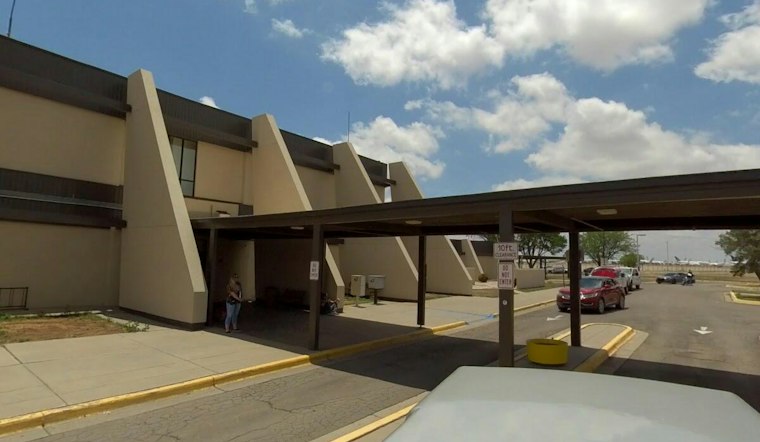
The National Championship Air Races are back in Roswell, New Mexico, with all seven competition classes racing together at Roswell Air Center for the first time. The 2026 field includes Jet, Unlimited, Sport, Formula One, Biplane, T-6 and STOL Drag competition, expanding on the venue’s inaugural 2025 event. AVweb reported that Sport and Unlimited are making their Roswell debuts this year, bringing both high-performance homebuilts and World War II-era warbirds to the New Mexico course.
The event combines conventional closed-course racing with the distinctive stop-and-go format of STOL Drag, in which aircraft take off side by side, race down the runway, stop, turn and return. KOAT reported that spectators can also view aviation exhibits, walk among the aircraft and meet competitors during race week.
A course built for the fastest class
Organizers introduced an 11-mile layout known as the Mach Course for qualified Jet Class aircraft, which can reach speeds of up to 600 mph, according to AVweb. Sixteen jet competitors entered the 2026 event, making Jet the largest class listed in that report. The new layout is a change in race infrastructure, not evidence by itself of any broader shift in aircraft performance or event safety.
The 2026 program also includes the Unlimited Class, whose modified warbirds are among the event’s most recognizable aircraft, and the Sport Class, which features fast homebuilt planes. The return of those divisions gives Roswell a broader competitive program than it had in 2025, while the airport’s long runways and extensive aviation facilities provide the physical setting for multiple forms of racing.
Why the site search mattered
Roswell became the races’ new home after organizers sought bids from six Western communities in 2023. The Reno Air Racing Association said candidates included Casper, Wyoming; Buckeye, Arizona; Pueblo, Colorado; Roswell; Thermal, California; and Wendover, Utah. The organization identified open land, suitable runways, ramp and hangar space, administrative and security facilities, and access to hotels, airports and restaurants as factors in evaluating a host, according to the National Championship Air Races.
Those criteria help explain the practical demands of the event without establishing why Roswell was chosen over every other bidder. Chaves County describes Roswell Air Center as the former Walker Air Force Base and says its existing infrastructure supports maintenance, round-the-clock operations and aircraft storage. Those are documented characteristics of the facility; the available sources do not establish that any one feature alone determined the selection.
The safety history behind the venue change
The races’ relocation also places the Roswell event in the longer safety history of air racing. On September 16, 2011, an experimental P-51D crashed into the spectator box area during an Unlimited Class race at Reno-Stead Airport in Nevada, killing the pilot and 10 people on the ground and injuring at least 64 others, according to the National Transportation Safety Board.
The NTSB’s investigation and a subsequent investigative hearing led to 10 safety recommendations covering aircraft modifications, spectator protection, course design, high-G pilot training and inspection procedures. The recommendations are historical evidence of the issues examined after the Reno crash; they do not, by themselves, demonstrate that the 2026 Roswell event has adopted a particular procedure or that its current risk level is higher or lower.
A separate comparison illustrates why event type and geography matter. On August 22, 2015, a Hawker Hunter crashed onto a public road during the Shoreham Airshow in the United Kingdom, killing 11 road users and bystanders, the United Kingdom’s Air Accidents Investigation Branch reported. That was an airshow accident involving a public area outside the organizers’ control, rather than a National Championship Air Races crash at Roswell, so it is a limited comparison rather than evidence about the New Mexico event.
Race operations affect the local airport
Race week changes ordinary flight operations around Roswell. The National Championship Air Races organization says general-aviation pilots planning to attend must arrange advance parking through its FBO partner, Avflight, and cannot arrive or depart while active FAA race-airspace waivers are in effect. Those restrictions show that the event’s footprint extends beyond the spectator grounds to nearby airport users and air-traffic management.
The current coverage documents the restrictions and the competition schedule, but it does not establish the event’s final attendance, economic impact or long-term effect on Roswell Air Center. Those outcomes remain separate questions from the 2026 field itself.
A broader program in Roswell
The races continue through the week, with the U.S. Air Force Thunderbirds scheduled to perform Friday through Sunday and gates opening at 7:30 a.m., according to KOAT. Organizers are also preparing a digital extension: the Commemorative Air Force reported that an official National Championship Air Races expansion for Microsoft Flight Simulator 2024 is scheduled to launch October 13.
For Roswell, the significance of the 2026 meet is therefore concrete but still developing: the city is hosting the races’ first complete seven-class program at the venue, including its fastest jets and Unlimited warbirds, while operating within the logistical and safety requirements that have shaped the event’s history. The available evidence supports that description; it does not yet resolve how the new venue will perform over multiple years.



