

























































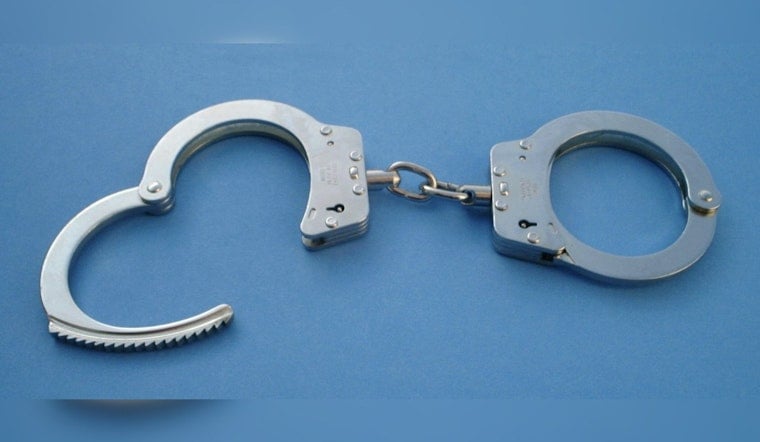
A man once known only as the “Route 91 Bandit” learned his fate Tuesday in Hartford federal court: 90 months in prison for a bank robbery spree that stretched across four New England states and netted more than $137,000 before a discarded energy drink can at a Massachusetts casino brought the whole scheme crashing down. U.S. District Judge Sarala V. Nagala sentenced 44-year-old Taylor Dziczek, formerly of Chicopee, Massachusetts, to the 7.5-year term along with three years of supervised release and $82,567 in restitution.
The sentencing closes out a case that began unfolding in September 2021, when a masked robber started hitting banks and credit unions across Connecticut, Massachusetts, Vermont and New Hampshire, according to the Department of Justice. Federal prosecutors say Dziczek's spree ultimately spanned 15 targeted locations, including branches of Arrha Credit Union, American Eagle Credit Union, People's United Bank, Webster Bank, Liberty Bank and TD Bank, before it ended in August 2022. Court filings cited by FOX61 put the total stolen across the 14 completed robberies and one attempted robbery at $137,388.
Investigators say Dziczek took deliberate steps to avoid getting caught. According to the same Department of Justice account, he disabled his cellphone and removed his getaway vehicle's license plates before each robbery, then entered the targeted banks wearing a baseball cap, surgical mask and hooded sweatshirt. He routinely claimed to have a gun or displayed what appeared to be a black handgun while passing tellers notes demanding cash in large denominations, the agency says.
A Note in Plainville, a Break at the Casino
One of those robberies happened on May 26, 2022, at a Peoples United Bank branch in Plainville, according to the seed facts underlying the case, where Dziczek allegedly handed a teller a note reading, “I have a gun. Don't call 911. Don't set off any alarms,” while pulling what appeared to be a black firearm from his sweatshirt and demanding all the money. Plainville detectives later collected paper money wrappers the robber left behind, preserving them as evidence, the justice department's account of the investigation notes.
The break in the case came months later, at a casino more than 20 miles away. On October 21, 2022, FBI special agents surveilling Dziczek at the MGM Casino in Springfield, Massachusetts, retrieved a discarded drink can and straw he had used, and DNA extracted from them matched genetic material recovered from the Plainville robbery evidence, per the Department of Justice. FBI agents and local police then arrested Dziczek without incident at his Chicopee home on December 1, 2022, following a joint investigation involving the FBI's New Haven, Boston and Albany field divisions, as reported by Boston 25 News. Dziczek was held without bail after his initial Hartford court appearance and remained in federal custody through his sentencing.
From a $10,000 Reward to a Guilty Plea
Before investigators had a name to attach to the case, the robberies themselves had already become notorious. In February 2022, after 11 regional bank robberies were linked to the same perpetrator, the FBI officially dubbed the unknown suspect the “Route 91 Bandit” — a nod to the Interstate 91 corridor connecting all four states where the robberies occurred — and offered a $10,000 reward for information leading to an arrest, according to Newsweek.
Nearly three years after his arrest, Dziczek formally pleaded guilty on September 26, 2025, to three counts of federal bank robbery, admitting to five specific robberies in Connecticut and New Hampshire, according to The Maine Wire. Though investigators had tied him to 14 completed robberies and one attempted robbery across four states, he did not formally admit to the Vermont allegations as part of his plea, the outlet reported.
As reported by the New Haven Register, U.S. Attorney for the District of Connecticut David X. Sullivan announced the restitution order alongside the prison sentence. Under Title 18, Section 2113(a) of the U.S. Code, federal bank robbery by force, violence or intimidation carries a statutory maximum of up to 20 years in prison per count, according to the Department of Justice — meaning Dziczek's negotiated 90-month term fell well below the maximum exposure he could have faced.
A Rare Crime in a Shrinking Category
Cases like Dziczek's have become increasingly unusual nationally. FBI Bank Crime Statistics cited by MarketPulse show federal bank robbery violations fell 83% nationwide, from a peak of 9,540 in 1992 down to 1,362 in 2023, a decline attributed to enhanced security technology, lower cash reserves at branches and the broader shift toward digital payments. Physical bank stickups have grown rarer even as they continue to draw significant law enforcement resources and carry high solve rates, according to that data.



