

























































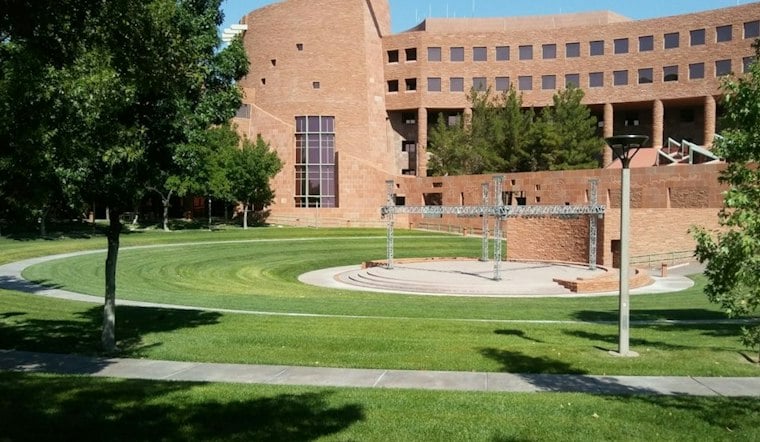
A mural celebrating Chicano and Indigenous culture was unveiled at Southside Park's amphitheater in Sacramento this week as part of Hispanic Heritage Month, drawing hundreds of people to a free community event featuring traditional dancers, special guests and dignitaries. Local artist Richard Alcala created the mural. The ceremony highlighted Indigenous lives lost, and organizers say the mural can now be viewed at the park anytime.
The unveiling came weeks after the project suffered a setback when vandals struck the artwork before it was ever formally celebrated. The Latino heritage mural project was discovered vandalized, with gray paint splattered across multiple sections, including a panel featuring the Mexican flag. Sacramento police investigated the incident and took a bias-vandalism report.
A bias-vandalism report is not, by itself, a determination that a crime was motivated by bias. California defines a hate crime as a crime against a person, group or property motivated by a victim’s actual or perceived protected characteristic, including race, ethnicity or national origin. The state’s 2024 tally recorded 689 single-bias offenses involving destruction or vandalism statewide, placing property damage among the categories tracked by the attorney general.
The Artist's Role
Richard Alcala served as project manager on the mural. The damaged parts had mostly been painted over.
At the ribbon-cutting event, the ceremony highlighted Indigenous lives lost, a theme that included recognition of Cole Brings Plenty, a young actor from the Yellowstone spinoff 1923 who was reported missing and later found dead. His family traveled to Sacramento to honor his memory and advocate for justice, saying their son was going to be a true leader of their people and that they want to bring people together rather than cause division. Leticia Ordaz helped emcee the event and had her name featured on the mural itself.
Part Of A Decades-Long Tradition
The Southside Park unveiling fits into a much longer history of Chicano public art in Sacramento. Chicano murals across the city serve as powerful expressions of cultural identity, according to New Times Magazine, celebrating the historical contributions of Chicano and Latino artists and activists. The tradition traces back to the Royal Chicano Air Force, co-founded by Sacramento State art professors Esteban Villa and José Montoya along with their students during the Chicano Movement of the 1960s and 1970s.
The Royal Chicano Air Force’s roots at Sacramento State reach back to the late 1960s, when art professors José Montoya and Esteban Villa organized students and community artists around culture and activism. The collective used posters and murals to support farmworkers and bring Chicano history and identity into public view. Its work connected campus art-making with neighborhoods across Sacramento, making public art a tool for community expression as well as a visual record of the movement.
Villa's own Washington Neighborhood Center mural, created between 1969 and 1970, is considered both the oldest Chicano mural in Sacramento and the first to include the word “Chicano,” the magazine notes. Southside Park itself already carries that legacy forward: one of artist Juanishi Orosco's mural panels there includes the “Ojo de Dios,” or eye of God, a symbol that originated with the Huichol people of Mexico. Elsewhere in the city, the traveling Poderosas Mural Project features portraits of nine modern-day Chicana and Latina women and is currently on display at Sacramento City College's Learning Resource Center.
Southside Park’s new mural joins an earlier, large-scale work at the same site: the Royal Chicano Air Force’s 1977 park mural, restored in 2001. The 14-by-110-foot mural was painted by several artists, whose panels combine Chicano youth imagery with Indigenous and pre-Columbian references. One panel uses the “Ojos de Dios” motif, while others incorporate imagery including a moon cycle and monarch butterfly—an artistic legacy that makes the park a longstanding public canvas for cultural stories.
KCRA covered the vandalism before the mural was completed. Visitors can view the mural at Southside Park anytime.



