

























































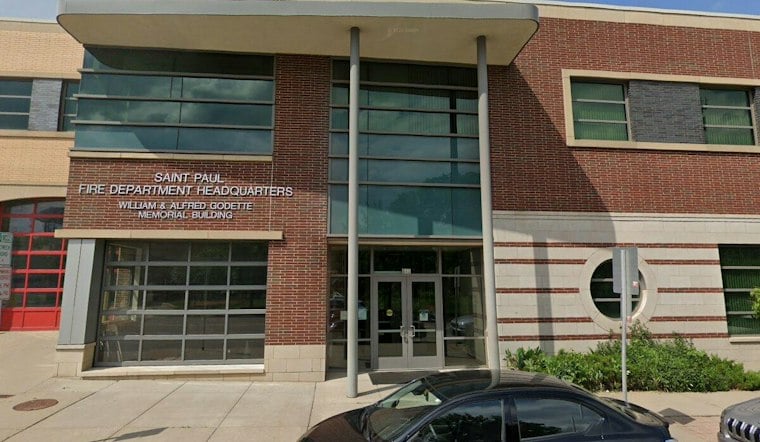
A shooting victim, a stabbing victim, and a person whose dialysis fistula ruptured have all received blood from Saint Paul firefighters before ever reaching a hospital, under a new program that put transfusions in the hands of first responders about a month ago. All three patients survived after getting blood at the scene instead of waiting for an ambulance ride to deliver them to it.
The Saint Paul Fire Department began giving blood to critically injured patients before hospital arrival, according to KARE 11. Interim Assistant Chief of EMS Paul Jeseritz said at least one of the three patients treated so far likely would not have survived without the program, and he said he expects the effort to save more lives going forward. The station reports the program targets life-threatening hemorrhage from motor vehicle crashes, shootings, stabbings and other severe traumatic injuries — the kind of bleeding emergencies where minutes matter most.
Why Minutes Matter So Much
The station's report notes that injury-to-response time can run around 10 minutes, and that a delay in starting blood resuscitation increases the odds of death by about 2% per minute. Bringing blood directly to the scene, rather than waiting for a patient to reach it, could cut mortality risk by half, per the same account. Nationally, the stakes behind that math are stark: uncontrolled hemorrhage is the leading cause of death among injured civilian and combat casualties, and hemorrhagic shock accounts for roughly a third of trauma-related mortality, according to a systematic review from the Eastern Association for the Surgery of Trauma.
Saint Paul Fire responded to just under 60,000 total calls in 2025 and averages around 200 fire and EMS calls a day, the station's report notes — a call volume that gives crews plenty of opportunity to put the new capability to use. An on-duty EMS supervisor carries the blood supply through a 24-hour shift and is dispatched to qualifying emergencies as they come in.
How the Cooler Works
At the center of the program is a Delta APRU cooler that holds blood at the required temperature and costs just under $20,000, according to a separate KARE 11 video report. The cooler has cellular-connected remote temperature monitoring that lets the blood supply be tracked on a mobile device, and crews can begin administering blood within 30 to 60 seconds of removing it from the cooler.
Regions Hospital Foundation covered the program's roughly $25,000 cost, with remaining funds paying for a blood warmer, an infuser and tubing, the station's report notes. Regions Hospital's blood bank supplies the blood at no charge, and unused units are returned to circulation rather than discarded. Prehospital blood administration has historically been used primarily by the military and critical care units, but ground ambulances have begun adopting it, and Minnesota agencies have taken up the initiative in recent years.
A Fast-Growing Trend, With Mixed Evidence
Saint Paul is not the first Minnesota department to try this. Burnsville Fire launched the state's first ambulance-based prehospital blood program in January 2025, carrying low-titer leukoreduced O-positive whole blood, according to the International Association of Fire Fighters. Burnsville's review of four years of patient charts estimated roughly 15 patients a year would have met national guidelines for blood administration. Similar programs have taken shape in Texas, where Killeen Fire EMS began carrying whole blood through a partnership with Baylor Scott & White, as reported by EMS1, and Dallas Fire-Rescue is piloting blood components on two field-supervisor vehicles in high-trauma areas as a six-month test before any citywide expansion.
The push nationally is backed by real numbers: community blood centers supplied more than 32,000 blood products for EMS transfusions in 2023, according to America's Blood Centers, which cites a study estimating at least 54,160 additional whole-blood units would be needed annually to meet prehospital demand. That group also notes that a delay in blood access is associated with up to a 5% increase in the odds of mortality per minute — a steeper estimate than the roughly 2% figure cited in Saint Paul's case, underscoring that researchers do not agree on a single number for how costly those minutes are.
Agencies like Saint Paul's must weigh cost, coordination and state rules as they build out these programs one call at a time.





