

























































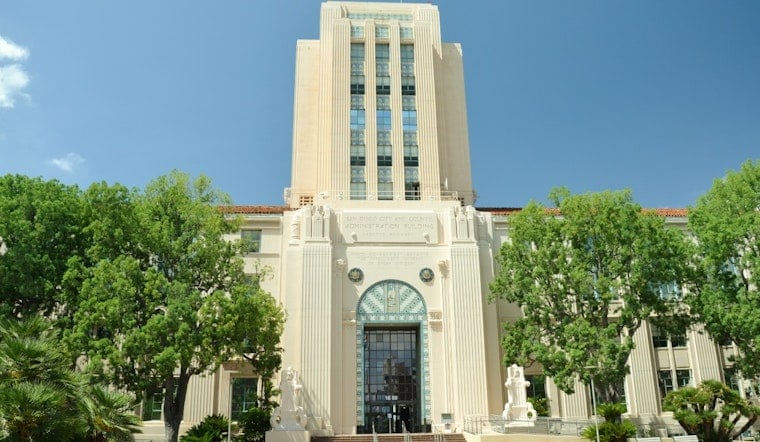
The San Diego County Board of Supervisors voted 4-1 on Tuesday to approve a resolution opposing federal cuts to Medicaid, formally objecting to changes that could strip health coverage from hundreds of thousands of local residents. Supervisor Jim Desmond cast the lone no vote. The county will now send the resolution directly to President Donald Trump and to Health and Human Services Secretary Robert F. Kennedy Jr.
More than 840,000 San Diegans rely on Medi-Cal, California's public health insurance program for low-income residents and those with no income, according to KPBS. Supervisor Terra Lawson-Remer, who introduced the resolution, said the county has long fought for more affordable and accessible health care. Per Lawson-Remer's office, the resolution formally opposes nearly $1 trillion in federal Medicaid cuts and demands the immediate release of more than $2.1 billion in Medicaid funding withheld from California.
Roughly 327,000 local recipients could face new federal work-reporting requirements beginning in January 2027, the station's report notes. Under the changes, able-bodied adults without children must certify eligibility twice a year, and they can qualify for government-funded health care benefits by attending school or volunteering 20 hours a week. Medicaid will remain available to citizens, children and lawful permanent residents, and approximately 280,000 children in the county rely on the program.
A Family's Stake in the Fight
A San Diego mother, Heather Russell, said the county's most fragile residents need to be protected, pointing to her own son, Ethan, who has cerebral palsy and has endured numerous surgeries. She warned that Medicaid or Medi-Cal cuts could harm him directly. Board Vice Chair Monica Montgomery Steppe shared a personal account as well, saying In-Home Supportive Services helped her return to a stable life after she left college due to illness and received the program's help as a seriously ill 20-year-old woman. She said her neighbors deserve the same help she once received.
More than 50,000 San Diegans rely on In-Home Supportive Services connected to the funding dispute, per the same account. A member of the United Domestic Workers union told supervisors that the program allows her daughter to receive consistent care. Unstable funding, according to the resolution's backers, could cause people with disabilities to lose that support.
Fraud Allegations Behind the Federal Freeze
The dispute traces back to July 2026, when the Trump administration paused $1 billion in Medicaid payments to California and Minnesota, citing suspected fraud and noncompliance as the reason. According to Healthcare Dive, the Centers for Medicare and Medicaid Services specifically withheld $867.5 million from California and $199 million from Minnesota, amid concerns about suspected California spending involving in-home services. Robert F. Kennedy Jr. said states seeking the paused money need to provide documentation that the payments are legitimate, and he said the administration suspects much of the questionable California spending involves in-home services. Dr. Mehmet Oz, administrator for the U.S. Centers for Medicare and Medicaid Services, is also among the officials who will receive San Diego's resolution.
During Tuesday's meeting, Supervisor Joel Anderson proposed a friendly amendment noting that the county takes misuse of public funds seriously, saying it would make it easier for him to support the resolution. Lawson-Remer accepted the suggestion. She also said the type of fraud that concerns her most involves wealthy people cheating others, adding that Elon Musk is not paying any taxes at all. Desmond, casting the dissenting vote, said his constituents are tired of fraud in the benefits system, argued that people who genuinely need help will receive it, and said fear was built into the resolution.
The Statutory Squeeze on Local Taxpayers
The stakes for San Diego are magnified by state law. Under California Welfare and Institutions Code Section 17000, local counties are mandated to serve as health care providers of last resort for low-income, uninsured residents, meaning federal Medi-Cal coverage losses automatically shift uncompensated emergency and medical care costs onto local taxpayers, as Hoodline previously reported. San Diego County does not operate a public hospital system and contracts with private hospitals to help fulfill that legal duty — a structural gap that led the Board of Supervisors to vote in March 2026 to overhaul its County Medical Services program, according to Supervisor Montgomery Steppe's office.
The county has already put money behind that concern. In May 2026, the Board Chair's office set aside $68.4 million in the recommended 2026–27 fiscal year budget specifically to mitigate H.R. 1 federal impacts, including nearly $24 million for safety-net support. According to the County of San Diego's budget summary, nearly $24 million in safety-net support helps people keep access to food assistance and health coverage amid federal cuts.
A Statewide Pattern of Local Countermeasures
San Diego's resolution follows a broader pattern of California counties bracing for the fallout of the federal budget reconciliation law known as H.R. 1, or the One Big Beautiful Bill Act, which the Congressional Budget Office projects will cut federal Medicaid spending by roughly $900 billion over 10 years and increase the number of uninsured Americans by 7.5 million by 2034. The California Department of Health Care Services estimates, per KQED, that the changes could cause up to 1.3 million Californians to lose Medi-Cal coverage while costing the state tens of billions of dollars in federal health care funds.
Other counties have responded with their own fiscal maneuvers. Santa Clara County declared a local fiscal emergency and put Measure A, a sales tax expected to generate $330 million annually for safety-net services, before voters, while San Francisco Mayor Daniel Lurie announced a $34 million investment in the city's response, as Hoodline has reported in its coverage of Santa Clara's Measure A. New federal work-reporting rules are scheduled to take effect in January 2027.
Separately, the California Department of Health Care Services instituted an enrollment freeze on January 1, 2026, for newly applying undocumented adults under the state's full-scope Medi-Cal Adult Expansion program, per American Community Media. With San Diego County's resolution now headed to the White House and Kennedy's office, the county joins a growing list of California governments betting that public pressure — and local budget maneuvering — can blunt the impact of cuts working their way down from Washington.





