

























































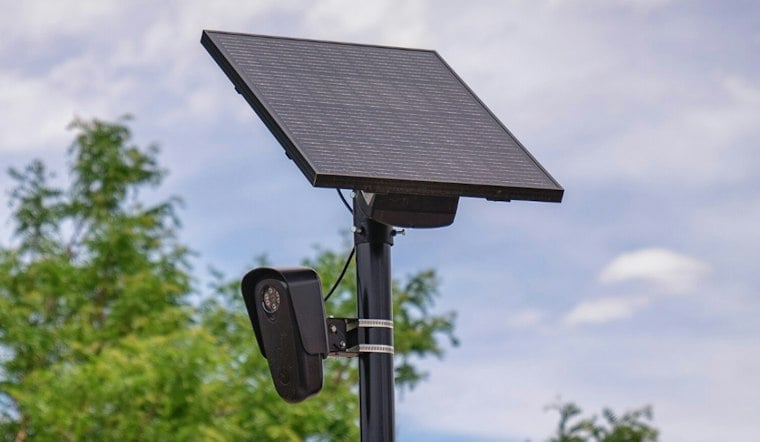
San Francisco police will be required to delete most of the license-plate data they collect after just 30 days, a sharp cut from the year-long retention window the department has used until now. Mayor Daniel Lurie is set to join Assemblymember Matt Haney and District Attorney Brooke Jenkins to announce the new limits on how the San Francisco Police Department can use and store data from its Flock camera network, according to the San Francisco Chronicle.
The retention change is the centerpiece of a broader policy package described by Mission Local, which reports that the city will shorten the length of time police can hold Flock data from one year to 30 days. The rules apply to more than 400 automated license-plate readers positioned throughout the city. Under the new guidelines, officers who want to keep footage beyond 30 days must show it is needed for an active investigation and get a supervisor's sign-off, and every Flock search will now require an accompanying incident report before an officer can pull up the associated vehicle data.
Oversight is also getting an upgrade. SFPD will be required to review its own Flock logs every month, and the city is asking the Department of Police Accountability to conduct annual audits of the system, per the same Mission Local report. The changes come as the department works to rebuild trust after an audit turned up 299 improper inquiries over roughly a year — a figure that, according to Piedmont Exedra, represented just 0.005% of all inquiries during that period.
What Triggered the Tighter Rules
The improper searches prompted Police Chief Derrick Lew to immediately cut off the Northern California Regional Intelligence Center's access to SFPD's ALPR system and open an internal review, the same outlet reported. Officials maintained that no out-of-state or federal agency ever had direct access to SFPD's Flock system, and access for both NCRIC and the Western States Information Network to the ALPR network has remained disabled. Flock Safety, the company that supplies the cameras, said the flagged searches were conducted by authorized users at a California state agency and were later determined to be inconsistent with the state's ALPR data-sharing requirements.
The new measures tighten policies and laws for violations involving SFPD technology. Lurie has framed the changes as a way to keep the cameras while tightening how the data collected by public safety cameras is handled, saying the city will not return to a time when people could commit serious crimes without consequences. He has credited the automated license-plate readers, or ALPRs, with helping keep workers, small business owners and families safe.
A New State Crime for Data Misuse
A state proposal to make improper sharing of license-plate data by California officers a crime could be introduced in December at the earliest. District Attorney Brooke Jenkins initiated the proposal, and Lurie's office is working on it. The push follows a case in San Jose, where, as reported by the Guardian, a police officer was fired for using his department's Flock system to share the location of a woman with the man accused of abusing her.
Flock cameras are used by law enforcement. Flock Safety itself claims its national camera network helped authorities locate more than 10,000 missing people last year and supported roughly 1 million criminal investigations, according to ABC News. That same report notes Flock Safety recently shifted its own default retention period from 30 days down to seven, adding an Evidence Mode specifically for data tied to active investigations.
Public Support Meets National Backlash
Polling suggests San Franciscans are broadly comfortable with the technology even as scrutiny mounts. A Grow SF poll found 64% of likely voters favor police using cameras to target crime hubs such as open-air drug markets, and 72% support using drones and cameras to pursue suspects after a 911 call, according to the San Francisco Standard. The San Francisco Democratic County Central Committee has affirmed its support for continued use of Flock cameras. Voters themselves expanded SFPD's authority to use drones and cameras through a 2024 ballot measure.
Not every city is following San Francisco's lead of keeping the cameras and tightening the rules. Nearly 150 cities and local governments nationwide have deactivated cameras or canceled Flock contracts outright, the Standard reports, and Richmond, Half Moon Bay, Mountain View and Redwood City have all debated pausing or ending their own agreements. Mountain View's City Council went further, voting to terminate its Flock Safety contract entirely and shut off its ALPR cameras after learning that out-of-state agencies had been accessing its data.
The backlash extends beyond the Bay Area. More than 50 cities and counties canceled or deactivated ALPR cameras during 2026, ABC News reports, while Florida's state transportation office revoked local law enforcement's ability to install license-plate readers on state highways. In Georgia, six Savannah police department employees were fired in August over alleged abuse of Flock cameras — part of a pattern of misuse cases that, as the Guardian notes, has fueled concerns nationally about privacy, mass surveillance, false positives and police misuse of the technology. Locally, Oakland and San Jose already require Flock data to be deleted after 30 days, a standard San Francisco is now moving to match.



