

























































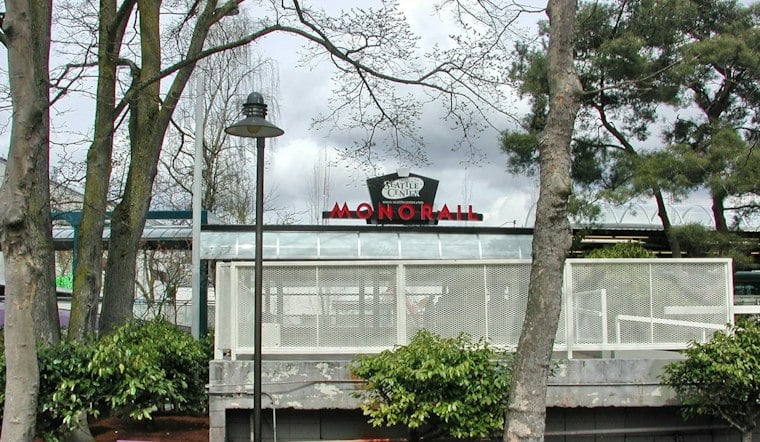
The Seattle Center Monorail station, a landmark that has greeted fairgoers and commuters since the 1962 World's Fair, is undergoing a $23 million modernization that broke ground this month. Crews will spend the next 15 months rebuilding the aging structure while keeping at least one train running at all times, meaning daily riders and event crowds headed to Climate Pledge Arena won't lose service during the work.
The scale of the project reflects just how much the 0.9-mile line has grown beyond its original novelty status. According to Seattle Center, annual ridership topped 2.2 million passengers in 2025, a trend fueled by expanding regional light rail connections and a busier campus event calendar. The 74-acre Seattle Center grounds, home to Climate Pledge Arena, MOPOP, Pacific Science Center and the Space Needle, draw nearly 12 million visitors a year, per the same report.
Randy Engstrom, acting director of Seattle Center, said the project will keep the station safe, accessible, and welcoming as demand keeps climbing. He added that the improvements will help every visitor move through the campus comfortably while preserving its history and character, and that the effort is meant to strengthen the region's cultural life and prepare the campus for growing activity.
What's Actually Being Rebuilt
The scope goes well beyond a cosmetic refresh. Per Seattle Center's Center Spotlight blog, crews will build a new accessible entry ramp from Thomas Street, resurface the platform to narrow the gap between train floors and the boarding area, extend roof coverage, and install updated skylights. The city has also confirmed the work includes removal of lead paint from the aging structure, along with a station layout compliant with the Americans with Disabilities Act, reconfigured ticketing and boarding areas, automatic passenger gates, restoration of the station's original structures, and maintenance to guardrails, according to KIRO 7 News. The city has said the upgrades are intended to increase accessibility and improve safety at the decades-old station.
Timing wasn't an accident. The station's Center Spotlight report notes the September construction start was scheduled so that heavy structural work would begin only after Seattle finished hosting matches for the 2026 FIFA World Cup earlier in the summer, when Seattle Center served as a hub for fan gatherings tied to the tournament.
Who's Footing the Bill
The city has said the project is fully funded through state and federal grants, per its press release. That public financing is anchored by a $15 million federal grant paired with state matching funds the city secured, as reported by KOMO News, meaning the work moves forward without tapping into Seattle's municipal operating budget or local tax increases.
The project also marks the second half of a broader modernization of the monorail line. The downtown terminus at Westlake Station already underwent its own $7 million privately funded renovation in 2021, expanding platform capacity and upgrading ticketing systems ahead of Climate Pledge Arena's opening, according to IMEG Corp, the engineering firm behind that earlier work.
Who's Building It
The city selected GLY Construction as general contractor and construction manager, with STV Consulting serving as owner's representative and Signal Architecture as project architect, according to GLY Construction. The firm's own project materials describe the phased 15-month schedule as designed to avoid disruptions during major summer events while structural rehabilitation proceeds around active train operations.
Despite the public investment in the station itself, the monorail's day-to-day operations remain in private hands. As Wikipedia's entry on the line notes, the City of Seattle owns the elevated monorail but the line is run by private vendor Seattle Monorail Services without public operating subsidies, with fare revenue covering daily operations while capital projects like this one depend on grants and municipal funding. Hoodline has previously covered transit access to Seattle Center events, including SDOT's arena transit guide, though this specific station renovation had not been previously reported.





