

























































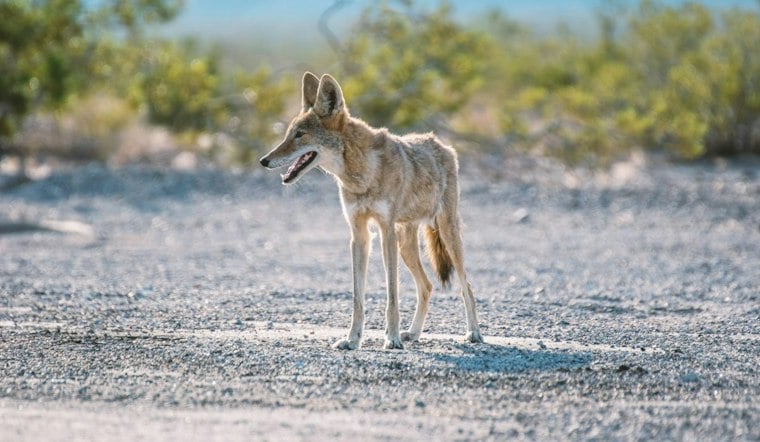
Seattle's parks, cemeteries, and golf courses are hiding a much bigger coyote population than most residents probably realize. Researchers led by University of Washington wildlife ecologist Laura Prugh spent the summer of 2021 collecting 842 scat samples in Seattle and wild study areas near Winthrop and Chewelah, using genetic analysis to identify 261 individual coyotes and estimate that roughly 82 of the animals called Seattle home that season.
The findings, reported by Oregon Public Broadcasting, show coyote density in Seattle running nine times higher than in the state's rural and wild areas, according to the study. Prugh and her team compared Seattle's population against rural Washington study sites, tracking individual animals through fecal genotyping rather than trapping or collaring. Per UW News, researchers walked set transects every two weeks to gather the scat samples that made the genetic count possible.
Why the City Beats the Wilderness for Coyotes
Prugh told OPB that the most important reason for Seattle's higher coyote density is abundant food. Seattle coyotes eat a diet more than twice as diverse as their rural counterparts, one that includes large amounts of berries and other fruit alongside plenty of rabbits, per the same account. Prugh also said coyotes may feel safer in urban environments simply because large carnivores like wolves and cougars are absent or far less common there.
That safety gap cuts both ways. In rural and wild parts of Washington, people are more likely to shoot coyotes because the animals prey on livestock, the study notes. Urban coyotes largely escape that fate, and researchers found they are less likely to be killed or go hungry than their wild counterparts, though the tradeoff comes with different risks, as Gizmodo reports: vehicle collisions and infectious disease have become the primary causes of death for coyotes living inside the city.
Even Within Seattle, People Shape Where Coyotes Roam
The study also found that human population density was the only environmental variable tested that significantly reduced coyote numbers within Seattle itself, outranking factors like tree cover, pavement, income, and pollution. Urban coyotes frequent areas with lower human densities, and within the city they prefer neighborhoods with fewer people, seeking out green pockets, golf courses, and less-built-up blocks while avoiding the densest downtown areas.
That pattern lines up with a public health finding from earlier in the year. An April 2026 University of Washington study detected Echinococcus multilocularis, a parasitic tapeworm capable of causing severe liver disease in dogs and humans, in 37 percent of 100 coyotes sampled across the Puget Sound region — marking the first confirmed detection of the parasite in a wild West Coast host, according to UW Magazine.
Tracking Sightings and the Rural-Urban Legal Divide
Community scientists have their own window into the trend. The Seattle Urban Carnivore Project, a joint initiative between Woodland Park Zoo and Seattle University, maintains the Carnivore Spotter platform, which has logged more than 6,500 sightings of coyotes and other mammalian carnivores submitted by residents, according to Woodland Park Zoo.
Washington law treats coyotes very differently depending on where they live. Under Washington Department of Fish and Wildlife regulations, coyotes are classified as small game and can be hunted statewide year-round with no bag limits, making them the only species in the state open to year-round hunting, though hunters still need a small or big game license and must follow local firearm ordinances. Separately, under RCW 77.36.030, property owners, their immediate family, or employees are legally allowed to trap or kill coyotes without a hunting license if the animals are actively damaging crops or domestic animals, according to PNW Ag Network. Inside city limits, local firearm discharge ordinances make that kind of lethal removal largely moot, leaving urban coyote populations to expand largely unchecked by hunting pressure.
How Seattle Compares to Other Cities
Seattle is far from alone in seeing coyotes thrive downtown. The long-running Cook County Urban Coyote Research Project estimates that between 3,000 and 4,000 coyotes live in the Chicago metropolitan area, and a January 2025 study from Ohio State University found that higher human population density there was linked to longer coyote survival times, as urban infrastructure provided steady food sources and shelter, according to Ohio State News. That study, led by urban ecologist Stan Gehrt and lead author Emily Zepeda, tracked 214 coyotes between 2013 and 2021.
The findings also carry a pet-safety dimension familiar to other West Coast cities. A National Park Service study analyzing more than 3,100 coyote scat samples in Los Angeles found domestic cat remains in 20 percent of urban coyote scat, compared to 4 percent in suburban areas, as Hoodline reported in earlier coverage of a viral LA coyote encounter. Wildlife experts advise keeping cats indoors and supervising small pets outdoors, a caution that echoes recent incidents elsewhere in the region, including a coyote bite reported in Fairfield in September.
The Seattle study is published in Environmental Research: Ecology. Coyote sightings aren't confined to Washington's largest city, either — a coyote was recently photographed walking through a driveway in Portland's Eastmoreland neighborhood on September 2, a reminder that the same forces drawing coyotes into Seattle are playing out across Pacific Northwest neighborhoods more broadly.




