

























































A YouTuber known for breaking down bus lanes and light rail maps for hundreds of thousands of subscribers is headed to First Hill next month, sharing a stage with two of the region's most prominent transit policymakers. The Urbanist is hosting Ray Delahanty, the creator behind the channel CityNerd, alongside Seattle City Councilmember Alexis Mercedes Rinck and King County Councilmember Claudia Balducci for a panel discussion at Town Hall Seattle on September 15.
The event, titled The Urbanist x CityNerd: A Transit-Oriented Puget Sound, will focus on the region's recent light rail expansions and the next round of transit expansion and transit-oriented development, according to The Urbanist. Contributing editor Ryan Packer will join Delahanty, Rinck, and Balducci on stage at the venue, located at 1119 8th Ave in Seattle. Doors open at 6:30 pm and the main program runs from 7 pm to 8:30 pm on September 15, with a separate pre-reception from 5:45 to 6:30 pm that is already sold out, though pre-reception tickets may become available again if refunds occur.
Delahanty built CityNerd into a channel with more than 412,000 subscribers and 48 million views by growing it during the COVID-19 pandemic, following two decades of work as a professional urban planner and traffic engineer, per Passenger Transport. He grew up in Seattle, earned a master's degree from Portland State University, and worked as a traffic consultant before launching his channel in 2021, the outlet's reporting notes.
Two Officials, Two Levels of Transit Power
Rinck, first elected to Seattle City Council in 2024 through a special election for citywide Position 8, has built her platform around housing, transit, and safe streets, according to The Urbanist. She won reelection in 2025 with 81% of the vote, and The Urbanist's elections committee has endorsed her in both of her council races. Rinck has also personally painted a bus lane for Route 8, the same article notes, an on-the-ground gesture tied to her push to accelerate pedestrian safety upgrades.
That push includes the Better Bus Lanes campaign Rinck launched in October 2025 with regional transit coalitions, advocating for dedicated 24/7 bus lanes and pedestrian safety upgrades on corridors including Denny Way, Aurora Avenue, and Rainier Avenue, according to the Seattle City Council. The campaign targets corridors serving some of Washington's busiest bus routes, including King County Metro's Route 8 and the RapidRide E Line. In August, Mayor Katie Wilson signed Executive Order 2026-05 to accelerate Vision Zero outcomes, directing SDOT to expand automated speed enforcement and improve traffic safety dashboards, an order the council says was co-developed with Rinck following persistent citywide pedestrian safety concerns.
Balducci brings a different vantage point to the panel. She has served on the King County Council since 2016 and previously served as a Bellevue City Councilmember and mayor, where she led efforts to route light rail through Bellevue, according to King County. She has also served on the Sound Transit Board of Directors since 2010 and chaired the board's System Expansion Committee. Balducci separately established and co-led the Regional Affordable Housing Taskforce and chairs the King County Affordable Housing Committee, and The Urbanist's elections committee has endorsed her multiple times.
Celebrating Openings While Facing a Funding Gap
The panel arrives at a moment of contrast for regional transit: recent expansions are opening even as long-term funding tightens. Sound Transit extended its 1 Line north into Snohomish County in August 2024, opening four new stations in Shoreline, Mountlake Terrace, and Lynnwood City Center as part of a $3.1 billion light rail and bus rapid transit expansion, according to Seattle Transit Blog. That opening extended continuous rail access from Snohomish County through downtown Seattle to Sea-Tac Airport.
In late March, Sound Transit reached what King County calls a global engineering milestone, opening light rail service across the Interstate 90 floating bridge over Lake Washington and connecting the 1 Line and 2 Line between Seattle and East King County. It marked the first time light rail has operated across a floating bridge, directly linking downtown Seattle and Bellevue. King County Metro also launched the RapidRide G Line in September 2024, providing high-frequency bus rapid transit along Madison Street connecting downtown Seattle, First Hill, Capitol Hill, and the Central District through a $177 million corridor with dedicated center-running bus lanes.
Those openings are unfolding against a far less celebratory backdrop. Sound Transit leadership revealed an estimated $34.5 billion 20-year funding shortfall across its ST3 expansion program this year, forcing agency board members to evaluate scaling, phasing, and deferrals for future extensions to West Seattle, Ballard, and Everett, according to the Lynnwood Times. Unprecedented inflation and surging real estate and construction costs have driven ST3 project cost estimates up by tens of billions of dollars, the outlet reported. Hoodline previously covered a packed forum where the same funding gap dominated public questions to city leaders.
Locally, Seattle voters approved an 8-year, $1.55 billion transportation levy in November 2024 with 67% approval, establishing the city's largest local transportation investment to fund sidewalks, street repaving, bridge repairs, and transit connections through 2032, per the Seattle Department of Transportation. That levy replaced the expiring Move Seattle levy and now funds annual delivery plans managed by SDOT.
Tickets, Access, and How to Volunteer
General admission tickets are $35 while supplies last, with the ticket price retaining approximately 3% for processing fees, according to The Urbanist. Tickets guarantee entry but not a specific seat, since the event has open seating; refunds are available. The venue reserves space for people using wheelchairs and others with accessibility needs, and the event will include ASL interpreters.
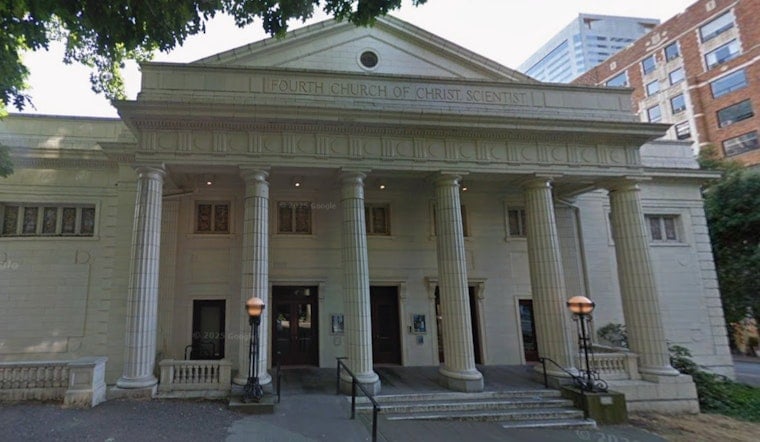
Town Hall Seattle's Great Hall, where the panel will be held, is a former Christian Science church completed in 1922 that seats up to 857 people following a $35 million renovation completed in 2019. The Urbanist notes the venue is served by the 1 Line at Symphony Station, Routes 2 and 60, and the RapidRide G Line, giving attendees several transit options to reach First Hill.
The Urbanist is also seeking volunteers, who will handle check-in and act as ushers in exchange for free event entry after arriving early to help set up. Those interested should email [email protected]. The nonprofit, 501(c)(4) organization was founded in Seattle in 2014 with a mission to inform and influence the public and leaders toward people-centered communities across the Puget Sound region, and the article announcing the panel was written by Urbanist staffer Diego Batres.





