

























































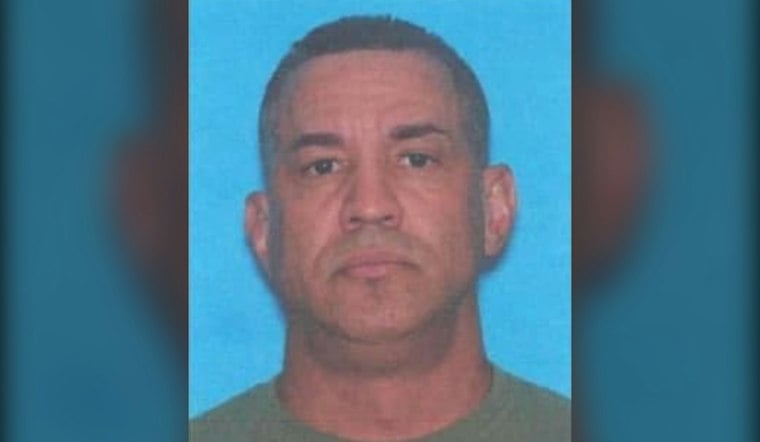
A skull discovered on wooded private property off County Road 18 in Seale, Alabama has been identified as Aldris Ramon Castillo, a 55-year-old Army veteran who vanished on July 4, 2019, ending seven years of uncertainty for his family. His car had been found parked deep in the tree line back in 2019, but investigators say his remains sat undiscovered just a quarter-mile away the entire time.
Russell County Sheriff Heath Taylor announced the identification at a news conference, according to the Columbus Ledger-Enquirer. Castillo, a veteran who had been stationed at Fort Benning before settling into construction work with a local contractor, lived about five miles from the spot where his remains turned up. He also traveled the country for construction jobs, according to the same report.
The property owners who found the skull on September 6 had lived there for only two years and had not walked back into that wooded section since 2019, per the Ledger-Enquirer's reporting. Thick accumulations of pine straw and brush had grown up around the area since Castillo disappeared, obscuring the remains until the owners spotted the skull and called law enforcement. Alongside the skull, investigators recovered Castillo's cellphone and some clothing.
A Car Left Deep in the Woods, Miles From Where He Was Found
Castillo was last seen on July 2, 2019, driving on Macon Road in Columbus, Georgia, before his vehicle turned up parked deep in the wood line in Seale, according to WTVM, which described him at the time as 5 feet 8 inches tall and 188 pounds. Investigators believe he walked directly away from the car after leaving it, based on aerial views showing the vehicle sat roughly a quarter-mile from where his remains were eventually found. The car itself was never far from where he ultimately ended up, but dense rural terrain kept the connection hidden for years.
Castillo's remains had been scattered by animals, and only his skull was recovered — a detail that left the exact manner of death formally undetermined. Still, a forensic physical examination of the skull revealed no signs of trauma or gunshot wounds, according to Now Georgia. That absence of injury gave investigators confidence that Castillo had not suffered a head injury, and the sheriff's office has said it sees nothing indicating foul play.
Family Reported Personal Struggles Before He Disappeared
At the time Castillo went missing, his family told law enforcement he had been dealing with unspecified personal issues, though Sheriff Taylor declined to elaborate publicly on what those issues were, per Now Georgia's report. Despite those struggles, investigators found no evidence pointing to foul play, and officials say the manner of death remains undetermined.
Identifying Castillo required tapping into military medical archives rather than conventional forensic databases. The Alabama Department of Forensic Sciences identified him through dental records obtained from the Department of Veterans Affairs, a process that state forensic agencies regularly rely on when collaborating with the National Personnel Records Center to retrieve military dental charts, according to the National Archives. Federal records centers store outpatient and inpatient dental treatment charts for former service members, making them a critical tool when skeletal remains are too degraded for other identification methods.
Fort Benning's Winding Name History Ties Back to the Region
Castillo's original tie to the Georgia-Alabama border traces back to his service at Fort Benning, the sprawling military post that straddles the two states near Columbus and Russell County. The base was renamed Fort Moore in May 2023 before reverting back to Fort Benning in March 2025 under a directive honoring World War I Cpl. Fred G. Benning, according to the U.S. Army.
The rural stretch of Russell County where Castillo settled after leaving the service spans 641 square miles with a 2020 population of just 59,183, and more than half its workforce commutes out of state, mostly into Columbus, according to U.S. Census Bureau data. Seale itself is an unincorporated community along that commute corridor — the kind of sparsely populated, heavily wooded landscape where a car and its owner's remains could sit undiscovered for years despite being just a few miles from an occupied home.
With the identification confirmed, Castillo's family has now been notified of the investigation's findings. The Russell County Sheriff's Office says the goal throughout the process has been to bring closure to a family that spent seven years not knowing what happened to him.





