

























































San Francisco's municipal golf courses are costing the city $4.9 million more than they bring in annually, while rounds played have dropped 10% over the past two decades. The shortfall has put fresh scrutiny on the public land used for golf, at a moment when the city is also weighing how else that space could serve residents.
A Deficit That Keeps Growing
According to The San Francisco Standard, the city has 10 golf courses within its limits, but the San Francisco Recreation and Parks Department owns and operates six of them, which together account for about 10% of the department's 3,400 acres of recreation and open space. Golf occupies more than 3% of San Francisco's total surface area and more than 1,000 acres citywide, the outlet reports. The five municipal courses it tracked saw a 10% decline in rounds over the past two decades.
The financial strain isn't new. The Standard's reporting cites a 2006 management audit and allegations of mismanagement.
Some Courses Thrive, Others Struggle
The picture varies wildly by course. Harding Park and the nearby Olympic Club are distinct properties, with the latter a private club rather than one of the city's municipal courses. Lincoln Park Golf Course averages about 90 tee-offs per day overall, according to the Standard.
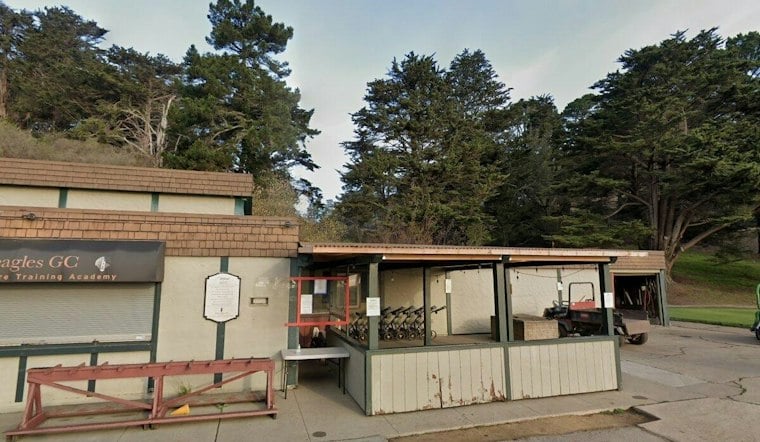
Gleneagles Golf Course, a 9-hole course bordering McLaren Park, tells a starker story: it now averages fewer than 50 tee-offs per day, half as many as it saw two decades ago. Golden Gate Park's course, meanwhile, serves golfers amid one of the city's busiest public parks. The Standard discusses operating agreements at some municipal courses, including Sharp Park and Lincoln Park, while also describing Gleneagles separately.
Industry Voices Push Back on the Numbers
The Standard's reporting describes a proposed process for golf operations and maintenance.
The city already raised green fees in 2025 in an attempt to close the gap. Rec & Park previously proposed dropping general fund support for golf before compromising on the increase, according to the San Francisco Public Golf Alliance, which reported the ordinance added surcharges of $6 per 18-hole round and $4 per 9-hole round at municipal courses. Separately, the golf alliance has raised concerns about financial transparency and infrastructure planning.
Housing and Habitat Complicate Any Overhaul
California lawmakers introduced Assembly Bill 1910 in 2022 to support converting municipal courses into affordable housing and open space, while Assembly Bill 672 was the subject of statewide opposition campaigns from golf industry groups, according to Global Golf Post. Industry groups have also pointed to broader access arguments: municipal courses make up roughly 22% of California's golf facilities, per the Southern California PGA.
San Francisco's own courses support youth programming including First Tee, according to the Standard. That youth mission was on display at Golden Gate Park Golf Course, which reopened in February 2024 after a $5.9 million overhaul combining city bond funding with more than $2.5 million raised by the nonprofit First Tee — San Francisco, per SF.gov.
Other sites carry legal and historical weight that could block redevelopment outright. Lincoln Park sits on the former grounds of a 19th-century municipal cemetery, and thousands of human remains from that burial ground remain beneath the course, a fact that led the Board of Supervisors to unanimously pass a resolution in September 2021 seeking landmark status for the site, according to the Richmond Review/Sunset Beacon. Sharp Park Golf Course in Pacifica is another property included in the discussion of golf-land use.
Precedents From Elsewhere in the Bay Area
Other Northern California properties have been cited in discussions of alternatives to traditional play. Closer to home, San Francisco has also considered how land could be used for other public benefits.
Smaller municipal operators have also been discussed in connection with alternative uses to stay afloat. Meanwhile, statewide, lawmakers considered Assembly Bill 1954 in April 2026 to restrict unauthorized tee-time brokering and bot-driven scalping on municipal courses, after commercial brokers were found reselling public tee slots at inflated prices, according to the California State Assembly Committee on Local Government.
As the department considers golf operations and maintenance, it faces competing claims on the same acreage: a shrinking but loyal base of golfers, youth programs that lean on the courses for access, historical and environmental constraints at specific sites, and a budget shortfall that taxpayers are currently absorbing. How San Francisco resolves that tension remains, for now, an open question the city itself is still working through.



