

























































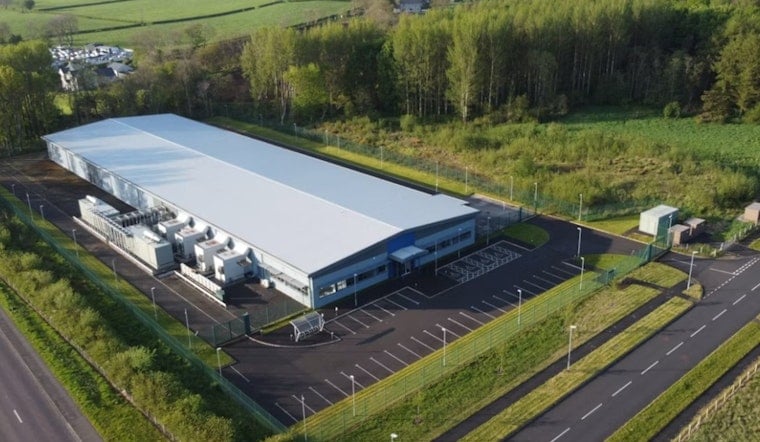
A grassroots petition drive in Shasta County has collected more than 700 signatures in a bid to ban data centers before any company has even proposed building one there. The group behind it, No Data Centers Shasta County, says the county's current zoning rules leave the door wide open for a hyperscale computing facility to move in under standard industrial permitting, with none of the specialized oversight such projects have drawn elsewhere in California.
A Petition Built on a Hypothetical
As reported by Action News Now, there is currently no proposal to build a data center anywhere in Shasta County, and the county has no ordinance that specifically addresses them. That gap matters because, under the county's general zoning framework, a data center could theoretically qualify for the same industrial zoning used for other manufacturing businesses, complete with standard restrictions like setbacks but without any tailored environmental or utility safeguards. Group founder Kathy Grissom said data centers degrade the environment, consume substantial water and electricity, and affect open space, and she believes Shasta County simply is not the right place for the industry. Her concern about the potential environmental impacts of data centers is what led her to organize the group in the first place, according to the same report.
Grissom brings a civic resume to the fight. She previously served as an officer for the Shasta Environmental Alliance, and the Shasta County Board of Supervisors appointed her in March 2023 to the Western Shasta Resource Conservation District Board of Directors, where she has worked on tree planting, trail conservation, and watershed restoration. No Data Centers Shasta County has been gathering support at public events, including the Redding Farmers Market, and the tally has grown fast, climbing from more than 300 signatures in early August to over 700 by early September. The group says it plans to keep collecting signatures before formally asking the Shasta County Board of Supervisors to consider a countywide ban.
A Supervisor Pushes Back on an Outright Ban
Not everyone in county leadership wants to shut the door entirely. Shasta County District 4 Supervisor Matt Plummer, who took office in January 2025, supports establishing an ordinance or similar measure to govern how data centers could operate in the county rather than banning them outright, the station's report notes. Plummer also supports the broader use of artificial intelligence by county government and community members, and artificial intelligence requires data centers to operate. He does not believe, however, that Shasta County must be the one to host the facilities that power it.
Notably, Plummer previously served alongside Grissom on the Western Shasta Resource Conservation District board, meaning the two officials debating the county's approach share a background in local land and resource management. Plummer ran for supervisor on a platform of fiscal responsibility and strategic planning. The tension between his preference for tailored performance standards and Grissom's push for a flat ban mirrors a fight playing out in local governments across the state.
Water, Power and the Case Against Standard Zoning
The stakes behind the debate are not abstract. Data centers can require significant amounts of electricity and water depending on their size and cooling systems, though closed-loop cooling systems can reduce that water consumption. Resident Sherrie Griffin has voiced concern about the effects a large data center could have on Shasta County's landscape and recreation opportunities, per the same account. Supporters of the industry counter that it can bring jobs, investment, and tax revenue to communities, a trade-off local officials elsewhere in the state have weighed as they craft their own rules.
Shasta County would not be alone in confronting this gap. Cities and counties across California, including Escondido, Commerce, and Patterson, enacted moratoriums in mid-2026 after discovering their municipal codes lacked specific definitions or regulations for modern hyperscale computing facilities, according to the Escondido Times-Advocate. Hoodline has previously reported on Commerce's 45-day freeze and on Patterson's extended moratorium, both enacted for similar reasons. California Government Code § 65858 gives counties and cities a legal mechanism to impose temporary 45-day pauses by a four-fifths vote while permanent zoning is studied, a tool neighboring Northern California jurisdictions have already used. Mendocino County and the City of Eureka both enacted 45-day emergency moratoriums in September 2026 under that statute, according to the Lost Coast Outpost.
A Statewide Reckoning Over Water and Power
The environmental argument driving Grissom's group has statewide backing. An August 2026 study by the sustainability nonprofit Ceres found California leads seven major data-center hub states in water withdrawals tied to power generation supporting data centers, at an estimated 1.4 trillion gallons annually, as reported by Newsweek. Most of that water footprint comes from off-site electricity generation, particularly hydroelectric power, rather than the facilities' own cooling systems.
State lawmakers have also moved to address the cost side of the equation. In late August, the California Legislature passed Assembly Bill 2383 and Senate Bill 886, directing the California Public Utilities Commission to build specialized electricity rate structures for large data centers so their energy costs do not get shifted onto general ratepayers, part of a fight Hoodline covered in its report on ratepayer cost bills sent to Newsom. Lawmakers separately approved Assembly Bill 1577, which requires data centers with an electrical capacity of 500 kilowatts or more to report monthly energy metrics and disclose annual water usage during local permitting.
Some California voters have already gone further than moratoriums. In June 2026, residents of Monterey Park passed Measure NDC with 86% approval, establishing the nation's first voter-approved permanent municipal ban on data center construction after pushback against a proposed 247,000-square-foot facility. Whether Shasta County follows that path, adopts Plummer's preferred ordinance route, or lands somewhere in between will depend on what happens once No Data Centers Shasta County brings its signatures before the Board of Supervisors.



