

























































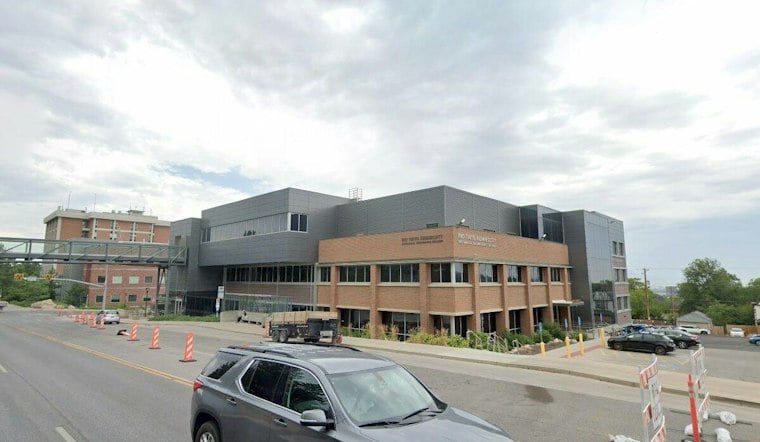
SoftBank Group has invested $225 million in Autonomous Solutions, Inc., a small software company tucked away in Mendon, Utah, that makes work vehicles drive themselves. The two companies are also forming a joint venture aimed at building self-driving machines for large road, rail and airport projects, along with waste sites. It is SoftBank's second major bet on autonomous heavy machinery in just a few months.
ASI's core product, called Mobius, is software that runs entire fleets of self-driving work vehicles, and the company says it works with machines from any major manufacturer rather than being locked to a single equipment brand. ASI plans to use the new investment to sell that platform more widely across the construction industry, according to the report.
ASI founder and CEO Mel Torrie said the partners want to work with firms that build roads, airports and railways, as well as waste sites, per Dealroom's reporting. The joint venture's size, ownership split and even its name remain undisclosed for now. SoftBank is funding the new entity specifically to focus on civil construction and the movement of materials on job sites.
A Company Rooted in University Robotics Research
ASI was founded in 2000 by engineers who spun their work out of robotics research at Utah State University, where founder Mel Torrie had managed NASA Space Shuttle payload experiments and led robotics projects for John Deere and the U.S. Department of Defense, according to Utah State University. Torrie grew up on a farm in Alberta before studying electrical engineering, the university's account notes. Today the company runs Homebase, a 150-acre proving ground (about 61 hectares), and keeps offices in Salt Lake City, Dallas-Fort Worth and Longmont, Colorado, in addition to its Mendon headquarters, per Dealroom. ASI's technology is already deployed on farms, at building sites, in logistics operations and in landscaping.
That agricultural track record is not hypothetical. In May, U.S. Sugar launched what it called the American sugar industry's largest commercial autonomous tractor deployment, with plans to expand deployment across its 255,000 acres over the next decade, beginning with four John Deere 8R tractors and one 9R tractor equipped with ASI's Mobius platform and operating around the clock under single-operator central supervision, according to ASI Robots. That deployment used ASI's Vehicle Automation Kit paired with its central command software, giving SoftBank real-world evidence of ASI's fleet-orchestration abilities ahead of the new partnership.
In July 2024, Epiroc took full ownership of ASI Mining, after holding a 34% stake since 2018.
SoftBank's Widening Robotics Push
The ASI investment is SoftBank's second major move into autonomous heavy machinery in as many months. SoftBank led a $200 million Series A round for Gravis Robotics. Gravis equips machinery from Caterpillar, Volvo and John Deere with AI capabilities, mirroring ASI's brand-agnostic approach to retrofitting existing fleets rather than building new machines from scratch.
SoftBank has also established Roze AI, a robotics venture focused on deploying autonomous robots to construct data centers, with reports indicating the company could eventually pursue a $100 billion public listing, according to Ramp.
A Labor Shortage Driving Demand
The push toward autonomous construction equipment is landing against a backdrop of a persistent labor crunch. Industry surveys by the Associated General Contractors of America found that more than 90% of U.S. construction contractors report difficulty filling open positions, while the Bureau of Labor Statistics projects over 660,000 unfilled construction job openings per month through 2034, according to F5 Hiring Solutions. The report also points to replacement needs from retirements.
That shortage helps explain why investors are pouring money into the sector. Autonomous construction equipment includes earthmoving machinery, while broader construction robotics spans demolition, bricklaying, concrete printing and site monitoring.
Key questions remain open, including the ASI-SoftBank joint venture's ownership structure and total capitalization, how the new platform might work alongside Roze AI's data center construction robots, and how retrofit specialists like ASI and Gravis will compete against equipment giants such as Caterpillar and John Deere as those manufacturers build their own in-house autonomous software.



