

























































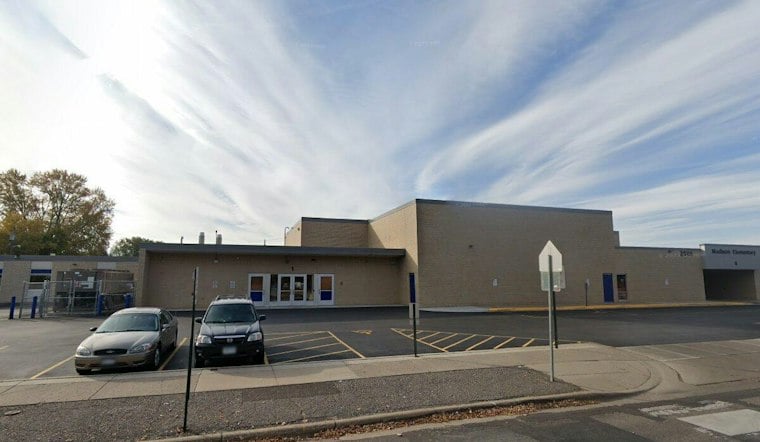
St. Cloud is lowering the speed limit to 20 mph on two roads serving Madison Elementary and South Junior High. The City Council’s unanimous decision reduces the posted limit from 30 mph and follows complaints from parents and neighbors about traffic near the schools.
The City Council approved the changes in a unanimous 7-0 vote Monday, according to KNSI. The Madison Elementary zone will run on 10th Street North from near 26th Avenue North through 31st Avenue North. The South Junior High zone will cover 15th Avenue South from 11th Street South to 15th Street South. Both roads previously had 30 mph speed limits.
KNSI reported that Hudda Ibrahim went door to door in the Madison Elementary neighborhood and heard repeated concerns about vehicle speeds. Mike Conway told the council that residents had been waiting for a fix since the roads were rebuilt. Residents had also sought a parking change near South Junior High as part of the broader effort to slow traffic around the campuses.
Why City Engineers Chose Speed Limits Over a Stop Sign
Not every request from residents made it into Monday's vote. St. Cloud city engineers did not support bringing back an all-way stop at the intersection of 10th Street North and 27th Avenue North, a change some neighbors had asked for after complaints about earlier stop sign changes at that corner. Instead, engineers pointed to the school zone speed limit as one of the most effective ways to protect children walking and biking to school.
What Minnesota school-zone experience shows
State data provides a way to track the broader safety issue, but not a school-zone-specific comparison for St. Cloud. According to the Minnesota Department of Transportation, the state measure counts pedestrian and bicyclist fatalities and serious injuries from crashes involving motor vehicles; first responders classify serious injuries at the scene. Other Minnesota cities have used different approaches to school-zone safety. Bloomington activated 20 mph zones in October 2024 around Kennedy High School, Olsen Middle and Elementary Schools, Poplar Bridge Elementary School, and Oak Grove Middle and Elementary schools; the city said the limit applies when yellow beacons flash or when students are walking to or from school, according to the City of Bloomington. Faribault considered school-zone speed limits in 2019 alongside bump-outs, other traffic-calming measures and truck-restriction signs near 7th Street Northwest and Lincoln Avenue, according to a City of Faribault committee memorandum; that document describes the matter as a consideration, not an adopted policy.
The city has clear legal authority to make that call. Under Minnesota Statutes Section 169.14, Subdivision 5a, local municipalities can set school zone speed limits up to 30 mph below the surrounding posted limit based on an engineering and traffic study, as long as the reduced limit doesn't dip below 15 mph, according to the Minnesota Office of the Revisor of Statutes. That local control dates back to 1975, when the legislature expanded Subdivision 5a and handed municipalities power that had belonged exclusively to the state Commissioner of Highways since 1937, per the MnDOT Digital Library.
Engineers steered the city toward a lower speed limit rather than reinstating the stop sign residents wanted.
How the New Zones Will Be Enforced
The school zones will be marked with school zone signs and could include flashing beacons during drop-off and pickup times, the city said, adding that the cost of the changes is expected to be minimal. Enforcement won't be limited to those hours, either. Minnesota law allows school zone speed limits to be enforced whenever children are present on nearby sidewalks or crossings, as well as during school opening, closing, and recess periods, according to KARE-TV, meaning officers can cite speeding drivers even outside standard pick-up and drop-off windows.
One thing enforcement won't rely on: the city's camera network. During a council work session held the same day, St. Cloud Police Chief Jeff Oxton clarified that while the city operates 10 fixed license plate reader cameras and 39 squad car readers, those devices are used for investigations and do not record or enforce vehicle speed limits. City engineers noted they can revisit the school zones down the road if traffic patterns change.
Madison Elementary serves preschool through 5th-grade students and hosts a Chinese Immersion program, while South Junior High is the other school covered by the new zone.
More Infrastructure Spending on the Same Agenda
The school zones weren't the only big-ticket item Monday. The council also voted to sell $46.5 million in general obligation bonds, putting $43.5 million toward a new Fire Station 6 and training facility that voters approved in a November 2024 referendum, plus $3 million for municipal street reconstruction projects. Separately, the council was scheduled to decide whether to apply for state road funding.
City staff are now planning a comprehensive Safe Routes to School presentation for a future council meeting, which could determine whether Monday's vote becomes the first of several school zone changes across St. Cloud.





