

























































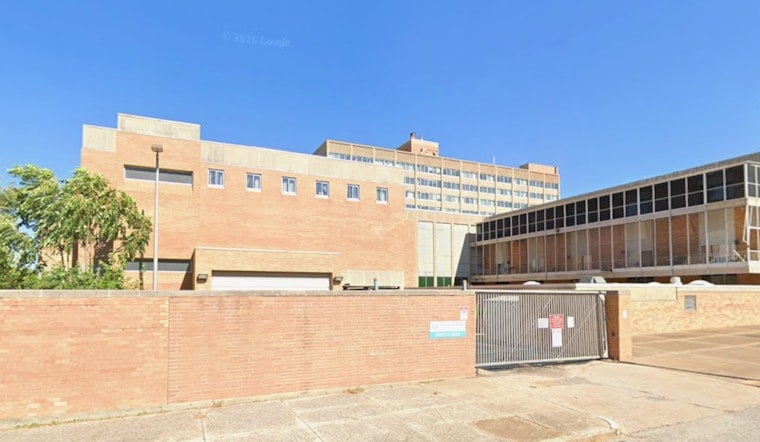
Ian Roehr has a job. He still can't take a shower where he sleeps. Roehr, who was born in St. Charles and returned to Missouri after his grandmother helped him get back on his feet, now considers the Peter & Paul Community Campus at 3225 N. Florissant Ave. his home for now — a facility that shelters people experiencing homelessness but still lacks working showers in some of its units, even a year after a $3 million taxpayer-funded expansion doubled its bed count.
The campus sits inside a former Little Sisters of the Poor nursing home, which opened in 1970 and was vacated by the order almost a decade before 2026, according to KSDK. Peter & Paul Community Services bought the vacant building with $3 million in federal ARPA relief money routed through the city and state, expanding from the 60 beds it operated out of a Soulard church basement to the 100 beds the North Florissant campus now offers. The nonprofit held a ceremony on September 1 marking the milestone, the same day North St. Louis recorded a temperature of 99 degrees.
A Bed With Walls, But No Door
Peter & Paul Community Services CEO Anthony D'Agostino said the new facility gives residents privacy instead of a large open dormitory space, with three-wall rooms that include electricity and storage — an upgrade from the crowded basement setup the agency ran for decades. Those rooms still don't have doors, and Roehr said not everybody chooses to be on the street, a point he made even as he described going without a shower despite holding down a job.
D'Agostino said the campus wouldn't exist without ARPA funding, according to the same KSDK report. The nonprofit's Riverfront Times coverage from April 2024 offers more context on the scale of that investment: the $3 million purchase anchors a planned $20 million multi-phase development that could eventually include an eight-story tower, 15 apartments, and a 26-room convent, according to Riverfront Times. That outlet also reported the 4.5-acre St. Louis Place campus was acquired after a multi-year search to expand services beyond basic emergency shelter, following the agency's 43-year run operating out of the Soulard church basement where it first opened in 1981.
Even With Double The Beds, Hundreds Are Turned Away
Despite the expansion, Peter & Paul turns away 400 to 500 people per month for lack of space, per D'Agostino. The nonprofit held a 24-hour fundraising drive with donations matched 4 to 1 in an effort to close that gap, but the shortfall persists even after the campus doubled its capacity a year ago.
Riverfront Times reported that Peter & Paul's current 100-bed operation for single adult men is only the first phase of a broader $20 million master plan that aims to expand the campus to serve more than 300 individuals through transitional housing, medical respite, and family suites as funding allows. Getting there depends on capital the nonprofit doesn't yet have in hand.
Mayor Warns Winter Could Expose Gaps
Mayor Cara Spencer warned that the city may still face shelter gaps in winter, and said the May 2025 tornado pushed more people to the edge of homelessness. An updated National Weather Service assessment released in August confirmed that storm reached a record width of 1.8 miles, damaged more than 5,000 structures, and caused $1.6 billion in losses, according to the National Weather Service — destruction city leaders say significantly increased regional shelter demand.
The city has already tested how it responds when beds run short. A City of St. Louis After-Action Review published in July found the city spent $3.36 million on its 2025-2026 winter Code Blue emergency shelter response, expanding capacity to more than 700 overflow beds at peak times and helping over 500 unique individuals through transportation rally points. That came after Mayor Spencer established Executive Order 93 last December, creating a Winter Weather Unified Command and a $10 million program for hotel vouchers and emergency rental assistance for unhoused families and seniors, as KSDK reported at the time.
The city has also designated the Peter & Paul campus as a primary walk-up emergency facility during cold weather activations, accepting single men, single women, and families, a role Hoodline detailed in its winter shelter expansion coverage. Zoning reforms signed into law by former Mayor Tishaura Jones under Board Bill 114 in November 2024 were meant to ease the path for nonprofits like Peter & Paul to open shelter space, after years of neighborhood pushback — including opposition from South St. Louis business owners that derailed an earlier proposed relocation site on Sidney Street despite the nonprofit securing a municipal zoning variance there.
A Statewide Pattern of Turn-Aways
St. Louis isn't the only Missouri city grappling with shelter shortfalls. The Salvation Army Center of Hope in Jefferson City doubled its 24-hour emergency shelter capacity from 31 to 62 beds this month to address persistent turn-away rates for unhoused mothers with children, adding private family suites to replace open dormitory layouts.
St. Louis has also invested in tracking who needs help. The city became the fourth in the country to achieve real-time, by-name data tracking for all single adults experiencing homelessness through the Built for Zero initiative, according to Community Solutions — a system meant to help match individuals to specific health and housing resources as demand keeps climbing toward another winter.



