

























































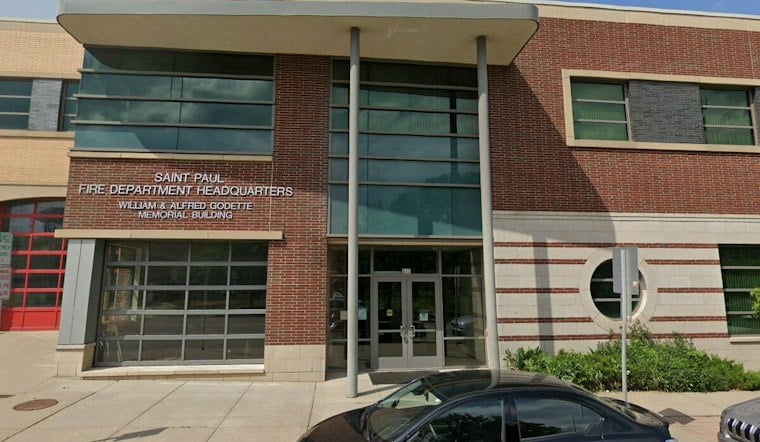
St. Paul is weighing whether to switch its firefighters to PFAS-free turnout gear as a federal lawsuit accuses manufacturers of selling protective equipment containing the chemicals without warning departments about the alleged risks. The debate also has a personal dimension for Steve Shapira, a retired St. Paul fire captain who was diagnosed with non-Hodgkin lymphoma in 2014 and later had to retire.
The lawsuit, filed against 3M and other companies, alleges that cities and fire departments were sold protective gear containing PFAS without being warned about the risks, according to 5 Eyewitness News. The case is part of a broader federal proceeding, MDL-3191, which was centralized on August 18 in the U.S. District Court for the District of Minnesota before Judge Jeffrey M. Bryan, according to mdlupdate.com. Separately, 28 municipalities, fire districts and volunteer fire departments sued 3M, DuPont-related companies, turnout-gear manufacturers, and textile and component manufacturers, as reported by firelawblog.com.
What's Actually Inside the Gear
Turnout gear is built to protect firefighters from heat and flames, and it typically includes three layers: an outer shell, a moisture barrier, and a thermal liner, per 5 Eyewitness News. Litigation materials reviewed by mdlupdate.com describe a durable water-repellent finish on the outer shell and a fluoropolymer membrane in the moisture barrier as potential sources of PFAS. Mike Dobesh, board president of the Minnesota Firefighter Initiative — a group that provides counseling and testing for firefighters — said the vapor barrier is where PFAS is typically found, according to 5 Eyewitness News.
Shapira, who is affiliated with the Minnesota chapter of the Firefighter Cancer Support Network, completed 20 rounds of chemotherapy and is now cancer free. “Any step forward we can make is a good one,” he told the station. He has also questioned whether PFAS-free gear protects firefighters as well thermally and wears the same as the equipment he relied on for years, noting that previous turnout gear was very durable when properly maintained.
What the evidence shows
According to the National Academies of Sciences, Engineering, and Medicine, studies have linked some PFAS exposures to multiple cancers and other health effects, but the evidence varies by chemical and does not establish that PFAS caused any particular person's illness. The National Institute of Standards and Technology notes that studies suggest firefighters have higher cancer rates than the general population, while cautioning that the evidence does not show PFAS exposure specifically caused that difference. That distinction matters in Shapira's case: his lymphoma diagnosis alone cannot identify turnout gear as its cause.
The Cost and Availability Problem
The St. Paul Fire Department is discussing whether to switch to PFAS-free gear, but the shift isn't simple or cheap. Standard turnout gear already costs up to $5,000, and PFAS-free versions run about $1,000 more, per 5 Eyewitness News. PFAS-free gear is also sold by only a limited number of manufacturers, which narrows departments' options as they weigh cost, fit, durability and effectiveness before committing to new equipment.
Dobesh said PFAS-free gear and the technology behind it are still developing and may take time before widespread adoption follows. “The technology is evolving and may take time before it really takes hold,” he said. He added that PFAS-free turnout gear should ultimately remain as effective as current gear, even as new equipment raises questions about fit, durability and long-term performance that departments are still working through. The International Association of Firefighters has issued a safety advisory about PFAS in turnout gear, underscoring the pressure on departments nationwide to reassess what their crews are wearing.
Other Cities Are Already Moving
St. Paul isn't alone in wrestling with this transition. San Francisco's Board of Supervisors unanimously passed an ordinance requiring firefighter personal protective equipment to be PFAS-free by June 30, and the San Francisco Fire Department has since become the largest department in the United States to transition its entire fleet to non-PFAS turnout gear, according to Milliken. Manufacturers have increasingly incorporated non-fluorinated moisture barriers and PFAS-free repellent coatings into new gear lines, per the International Association of Fire Fighters.
Concord, New Hampshire, approved the purchase of 92 sets of PFAS-free turnout gear and hopes to replace all PFAS-containing equipment within five years, the same IAFF report notes. Vancouver, British Columbia, is on track to become the first North American city to fully transition to PFAS-free firefighter gear. Meanwhile, 3M announced back in December 2022 that it would exit PFAS manufacturing entirely by the end of 2025, according to 3M's own announcement, even as the company continues to face litigation over its legacy PFAS products.
For departments like St. Paul's, the decision involves weighing the documented concerns about PFAS against the durability, thermal protection and cost that replacement gear must deliver. Shapira's experience has given the discussion an additional personal significance, but the available reporting does not establish that PFAS exposure caused his lymphoma.





