

























































A 20-year-old St. Paul man has received a sentence of more than 12 years after pleading guilty in a hammer attack that critically injured two fellow residents of a youth shelter. DeMonte Tyvell King had been living at Booth Brown House for several months before the December 2024 assault.
King's case took nearly two years to reach sentencing as it moved through Minnesota's competency and civil-commitment system, according to Pioneer Press. He pleaded guilty in July to one count of attempted second-degree murder and one count of first-degree assault and received a combined 146-month sentence, or just over 12 years, with credit for 643 days already served in custody.
Police Found One Victim Screaming, Another Unresponsive
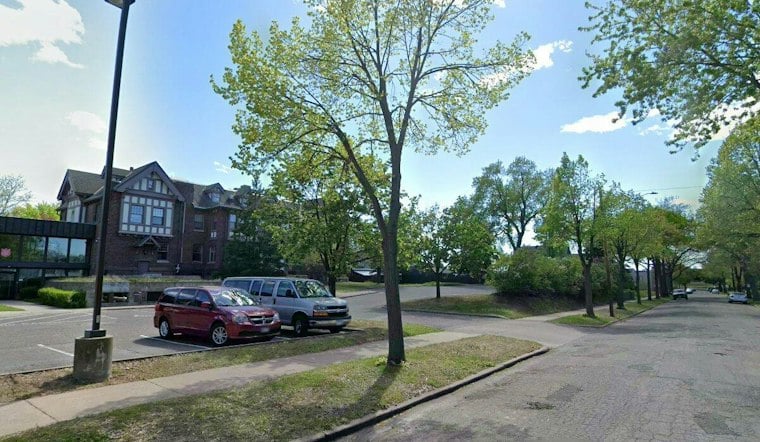
St. Paul police were sent to Booth Brown House, on Como Avenue near Pascal Street, at about 6:30 a.m. on Dec. 18, 2024, after a report of an assault, according to the Pioneer Press account. Officers found one 21-year-old resident semiconscious with multiple skull fractures and a second resident unresponsive beneath a comforter. Both had severe head injuries; the second victim was later intubated and scheduled for neurosurgery.
St. Paul fire medics transported both injured residents to the hospital. Police arrested King at the scene, where the report notes he opened the door for officers and said he was ready to go to the juvenile detention center.
King Described Attacking One Victim While He Slept
According to the Pioneer Press account of police reports, King said he believed a former roommate was bullying him and that he felt antagonized by another resident. He said he had obtained the hammer a few days earlier for protection. King told investigators he struck one man about 10 times in the head and a second man roughly four times while he slept, saying the other man had gotten what he deserved and that he was still angry at one of them.
King said he had not used drugs or alcohol at the time of the attack. He told police he was schizophrenic and had not taken his medication for about a month, the outlet reported. A Booth Brown House employee said King had been staying at the facility for several months and had shown serious mental health issues before the attack.
Competency Fight Delayed Prosecution for Months
King was initially deemed incompetent to face the four criminal charges filed against him, suspending the criminal case and potentially leading to a separate civil-commitment proceeding, according to Keil Defense.
King was civilly committed as mentally ill and dangerous, with his commitment listed as indeterminate, and received treatment at Anoka-Metro Regional Treatment Center before being declared competent to stand trial in August 2025. That facility serves as Minnesota's primary state-operated psychiatric hospital with roughly 96 to 110 budgeted beds, a shortage significant enough that state lawmakers approved $55 million in 2025 for a 50-bed expansion to reduce wait times for civilly committed patients, according to the Office of the Minnesota Attorney General.
Minnesota's treatment system faces rising demand
A 2025 review by the Minnesota Senate's Priority Admissions Review Panel said civil commitments increased by more than 36%, from 1,644 in 2013 to 2,242 in 2023, increasing demand for admissions through the state's Direct Care and Treatment system. The panel also reported that the average wait for admission to Anoka-Metro Regional Treatment Center rose from 19 days in 2010 to 30 days by 2013, according to the Minnesota Senate review. Those figures provide historical context for the competency and civil-commitment process in King's case, but they do not establish a current statewide wait time. In King's case, the Direct Care and Treatment Board will still decide whether he serves his sentence in a prison or in the Forensic Mental Health Program in St. Peter.
Corrections or Secure Psychiatric Care Still Undecided
Court documents indicate that Minnesota's Direct Care and Treatment Board will determine whether King serves his sentence in a Department of Corrections prison or at the state-run Forensic Mental Health Program in St. Peter.
Under Minnesota Statute § 609.221, first-degree assault causing great bodily harm carries a statutory maximum of 20 years in prison and a $30,000 fine, per the Minnesota Revisor of Statutes.
A Century-Old Shelter Serving Homeless Youth
Booth Brown House, run by the Salvation Army, offers shelter and transitional apartments to young people in St. Paul, according to the Salvation Army Northern Division. The facility offers emergency shelter to youth ages 18 to 21 and housing units to young people ages 16 to 25, per The Salvation Army Northern Division.
The attack highlights mental health challenges documented among Minnesota's homeless youth population more broadly. Research from Wilder Research found that 57% of youth experiencing homelessness in the state face serious mental health challenges, including 37% who experience anxiety or panic disorders and 19% who report symptoms of traumatic brain injury, according to The Bridge for Youth.





