

























































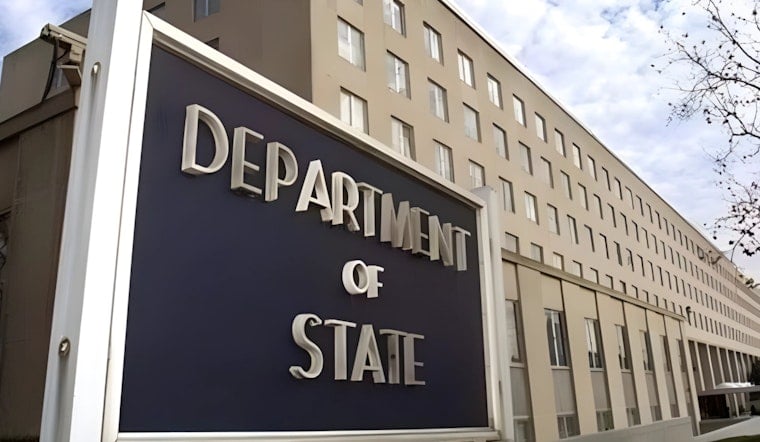
The Trump administration is preparing to spend $4 million to bolster right-wing media outlets across Europe, according to four sources, as part of a broader push that also directs at least $25 million toward conservative civil society groups on the continent. The State Department notified Congress of its intent to allocate the funds on August 21, setting off a mandatory review window before any money can move.
The plan, first reported by Reuters, includes $1 million earmarked to create a consortium of independent journalists in Europe focused on national sovereignty, natural rights, and religious freedom, according to the same sources. Another $3 million would fund a State Department program to document and analyze what officials describe as democratic backsliding in Europe, covering mass and illegal migration, the independent media landscape, and legislative agendas pursued by supranational entities. Reuters reports it could not determine which specific organizations or journalists are likely to receive the grants.
A State Department spokesperson said the Trump administration remains committed to defending democracy and human rights around the world, including in Europe, and the Bureau of Democracy, Human Rights, and Labor has said the funding is meant to strengthen transatlantic ties and promote free speech. The bureau, known as DRL, does not fund political parties, though the administration has broadly backed Europe's populist right-wing and far-right parties, per Reuters. European capitals have already expressed backlash against the funding, the outlet notes, as several countries prepare for elections over the next couple of years.
A $180 Million Package With Global Reach
The European media and civil society funding is embedded in a far larger $180 million foreign assistance notification submitted by the State Department in August, according to Euronext Markets. That package also includes support for civil society groups working to counter judicial overreach and censorship in Brazil, grants documenting abuses against South African minority communities, and traditional democracy-promotion funding focused on China and North Korea. The mix places conservative political advocacy in allied democracies alongside long-standing human rights programming aimed at non-democratic states.
DRL has historically run its discretionary global grants through the Human Rights and Democracy Fund, a flexible vehicle Congress created in 1998 to support human rights defenders and rule-of-law initiatives in non-democratic countries, according to the U.S. State Department. The fund's traditional mission stands in some tension with its now proposed use to support ideologically aligned media in Western European democracies. Congress has also shown it is willing to override the executive branch on this front: in February, lawmakers enacted a foreign assistance package funding the Human Rights and Democracy Fund and allocating $315 million for the National Endowment for Democracy, reversing earlier administration proposals to eliminate both, per the Washington Office on Latin America.
The Congressional Clock and What's Already Public
Under Section 634A of the Foreign Assistance Act of 1961, the State Department must give congressional foreign relations committees at least 15 days' notice before obligating or reallocating foreign assistance funds, according to EveryCRSReport. That statutory window gives lawmakers a chance to review or informally hold up the spending before it becomes legally binding. The State Department has already made roughly $10 million of related funding public through three notices for applicants issued in July and August, the same Reuters sourcing indicates, while the August 21 notification covers at least $15 million in additional funding that three sources say is expected to be finalized by the end of September.
France's Patience Is Already Thin
The proposal lands amid unusually strained relations between Washington and Paris. French Foreign Minister Jean-Noël Barrot wrote that France and the Europeans will not tolerate any attempt at foreign interference in their electoral processes, regardless of where it comes from, a warning issued after French authorities uncovered pro-Russian online campaigns targeting potential 2027 presidential candidates with false health claims and coordinated manipulation, according to A News. Barrot had already restricted U.S. Ambassador to France Charles Kushner from direct access to French government ministers in February, after Kushner skipped a formal diplomatic summons tied to State Department posts commenting on the death of a French far-right activist, as reported by the Associated Press. That friction has continued into the summer: in July, the Trump administration weighed blocking France's designated ambassador to Washington, Aurélien Lechevallier, amid frustration over French criticisms at the United Nations and public warnings against U.S. electoral interference, according to the Jerusalem Post.
A Regulatory Minefield for European Outlets
Any European outlet weighing a U.S. grant faces its own legal hurdles at home. Under the European Media Freedom Act, which took effect in 2024 with mandatory public reporting provisions kicking in in August 2025, media service providers in EU member states must publicly disclose their ownership structures and any state or foreign government funding sources, according to the European Parliament. Press freedom monitors have already logged 154 violations across Europe tied to foreign agent legislation and accusations of foreign media influence between May 2024 and May 2026, including 68 within EU member states, per the International Press Institute. That regulatory backdrop leaves open questions about which organizations would even be willing to accept the money, and how European regulators would classify outlets that do.
For now, the fate of the $4 million media fund and the larger $25 million civil society allocation hinges on whether congressional committees intervene during the review period before the end-of-September deadline. Reuters' reporting, credited to Humeyra Pamuk and Paul Carsten, notes that it remains unclear which specific organizations or journalists might apply for or receive the grants once the window closes.





