

























































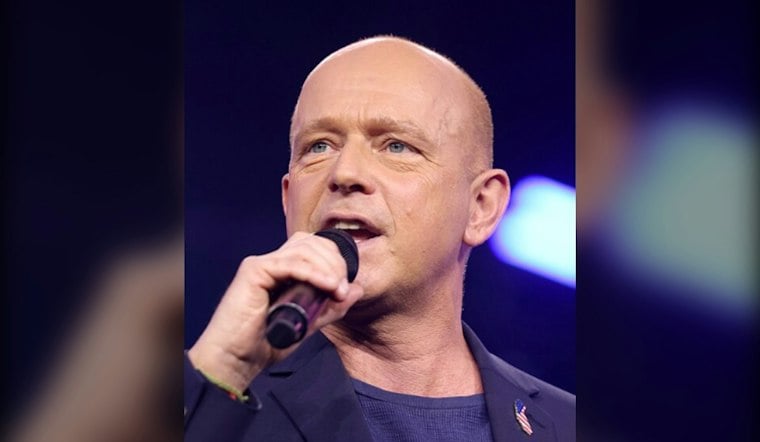
Steve Hilton's campaign against California's street-vending law took shape during a walk through Los Angeles' Westlake neighborhood, where he asked sidewalk vendors whether they had city permits to sell food or merchandise. At least one vendor replied, “I don't know. Sorry.” Hilton, who is challenging Democrat Xavier Becerra in the 2026 California governor's race, used the visit to call for overturning the state law that legalized street vending statewide, citing trash and what he described as drug use in the neighborhood.
The walk was reported by FOX 11 Los Angeles, which described Hilton saying, “Enough is enough. It's too much.” Hilton argued that street vending hurts some legal immigrant-owned businesses, saying those businesses “have been undermined by illegal immigrants.” He also said he had not checked where vendors would go if the law he wants to repeal were changed.
What the Numbers Actually Show
The permit gap is substantial. A 2025 Los Angeles city report estimated roughly 50,000 street vendors operate in the city, including about 10,000 food vendors, and found that fewer than 1.4% held a valid operating permit; the city counted 687 valid street-vending permits that year. The same account said the city issued an average of only 944 sidewalk-vending permits annually in 2024. City rules require sellers of food or merchandise on sidewalks and in city parks to obtain a Sidewalk & Park Vending Permit, renewed every 12 months, according to the Los Angeles Bureau of Street Services.
City leaders have tried to close that gap by making permits cheaper. The Los Angeles City Council voted unanimously in June 2024 to slash the annual sidewalk vending permit fee from $541 to $27.51, according to LA Taco, by removing Bureau of Street Services enforcement costs from the fee calculation. Despite that reduction, low compliance rates have persisted because of lingering administrative complexities, equipment costs, and health code hurdles.
Which permit rules apply?
Los Angeles city and county vending programs cover different jurisdictions. The city's Sidewalk & Park Vending Permit applies to anyone selling food or merchandise on city sidewalks or in city parks and must be renewed annually, according to the Los Angeles Bureau of Street Services. The county's separate Sidewalk Vending Registration Certificate is for businesses operating in unincorporated areas; vendors in the City of Los Angeles are directed to follow city rules, according to the Los Angeles County Department of Economic Opportunity. For vendors seeking to meet health and business requirements, the county program provides access to subsidies covering up to 75% of compact mobile food operation and microenterprise home-kitchen operation permit costs, along with technical assistance and referrals for legal aid and capital, the county says. Those programs supplement the city's lower vending fee but do not replace the separate city and county approvals described above.
Health Permits Remain a Separate, Costly Hurdle
Even vendors who secure a city vending permit still need county health clearance, which is a separate expense. Los Angeles County Department of Public Health permits for compact mobile food operations run between $508 for pre-packaged low-risk food and $1,186 for hot food preparation, though the county offers up to a 75% fee subsidy for qualifying low-income vendors, according to the LA County Department of Economic Opportunity. In January 2026, the county and city jointly launched a $2.8 million program distributing more than 280 free, health-code-compliant food carts to low-income vendors, an effort aimed directly at the equipment costs that have kept vendors out of the legal system despite years of state law updates.
Vendors caught operating without a permit face administrative fines under city enforcement rules: $250 for a first violation, $500 for a second, and $1,000 for a third within a single year, according to the Bureau of Street Services. Those fines exist because former Governor Jerry Brown signed Senate Bill 946, the Safe Sidewalk Vending Act, in 2018, establishing statewide rules for local vending programs and decriminalizing violations by replacing criminal penalties with administrative fines. Under that law, local governments can still require vending permits and regulate vending based on health, safety, and welfare concerns.
Hilton's Repeal Push and a Disputed Origin Story
Hilton has said he would seek to overturn SB 946 if elected governor, describing its original purpose as giving undocumented immigrants an opportunity to earn money. That is Hilton's characterization of the law's intent. The California legislative record instead describes SB 946 as creating a legal framework for sidewalk vending, easing overly restrictive local regulations and eliminating criminal penalties, without tying those purposes to immigration status.
California has continued expanding vendor protections since then. Governor Gavin Newsom signed Senate Bill 972 in September 2022, which modernized the state's Retail Food Code effective January 1, 2023, by creating a “compact mobile food operation” category and easing equipment requirements such as mandatory three-compartment sinks, according to the Long Beach Post. Newsom later signed Senate Bill 635, the Street Vendor Business Protection Act, in October 2025, which took effect January 1, 2026, and established further statewide protections against arbitrary harassment and property seizure, according to the California Street Vendors Coalition. The law was authored by state Senator María Elena Durazo with the goal of standardizing local enforcement behavior.
Local Officials Split, Litigation Already Reshaped the Rules
The city itself has already been forced to retreat from stricter vending restrictions. Los Angeles settled a 2022 lawsuit with street vendors and advocacy groups in July 2024, agreeing to rescind remaining no-vending zones near schools, farmers markets, and major venues including Dodger Stadium and the Hollywood Walk of Fame, while canceling past citations and refunding paid fines, according to the Los Angeles Times. That legal outcome illustrates the core tension facing Hilton's proposal: state law strictly prohibits municipalities from imposing arbitrary bans or criminal penalties, creating a conflict between local enforcement demands and state statutory frameworks.
LA Mayor Karen Bass and City Councilmember Nithya Raman remain divided on the issue themselves. During an August 2026 municipal policy discussion, Bass voiced support for stricter regulations to keep street vendors from setting up directly in front of brick-and-mortar restaurants, while Raman defended the city's existing permitting rules, per FOX 11's reporting. Bass has also publicly criticized Hilton on the Flagrant and Funny podcast, saying a Republican cannot win in California, while Hilton has fired back at Bass over her handling of homelessness and street conditions, asking, “Is that what Karen Bass is all about? Attacking an immigrant with a funny accent?”
Becerra Praises Street Tacos, Skips the Policy Fight
Street vending has become a genuine flashpoint in the 2026 governor's race, with Hilton trailing Becerra 60% to 38% among likely voters in a Public Policy Institute of California poll conducted September 4-10, 2026, as Hoodline previously reported. Becerra has praised street food himself, saying people do not get real street tacos from a long-established establishment but from someone making them from a little cart. His campaign, however, declined to comment on sidewalk vending policy specifically, and FOX 11 said it contacted the Becerra campaign for an interview or statement on the issue.
Hilton, a former senior adviser to British Prime Minister David Cameron and former Fox News host who became a U.S. citizen in 2021, has built his campaign platform around cutting middle-class taxes, deregulation and lowering living costs, according to CalMatters. His Westlake appearance and repeal pledge fit that broader message, while the city's permit figures show that most of Los Angeles' estimated 50,000 street vendors are operating outside the existing permit system.


