

























































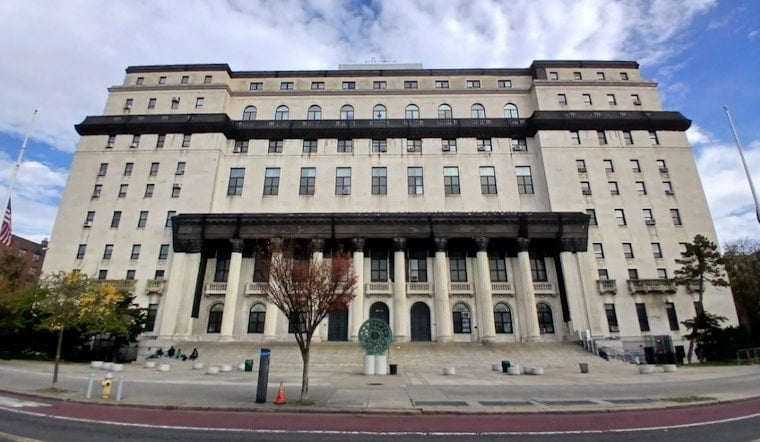
A 63-year-old Suffolk County man says a cup of scalding coffee handed out mid-flight left him with blistered skin and permanent scarring on his leg, and now he's suing Delta Air Lines in Queens Supreme Court over it. Frank Morello claims a Delta flight attendant spilled the overheated coffee on his lap during an October 2025 flight home to JFK from a Puerto Rico vacation, according to the lawsuit.
Morello's attorney, Michael G. Lorusso, told the New York Post that the coffee “must have been pretty hot,” given the immediate blistering Morello suffered. The lawsuit, filed August 31, alleges the coffee was overheated and dangerous, and that it scorched Morello's right leg badly enough to leave lasting scars. Lorusso said his client did not receive treatment for the injuries until after the plane landed at JFK, and Morello is now seeking an unspecified amount of damages. Delta did not immediately return a request for comment, per the Post.
A Legal Framework Rooted in a Famous Coffee Case
Lorusso invoked the granddaddy of all hot-coffee lawsuits in describing why airlines and restaurants need to be careful with what they serve. “Coffee servers must be super careful,” he said, pointing to Stella Liebeck's 1994 case against McDonald's, in which she was hospitalized for a week and needed skin grafts after piping-hot coffee spilled onto her lap. Liebeck initially won a $2.7 million award from a jury, which was later reduced, and she ultimately received a confidential settlement. The coffee in that case was reportedly served between 180 and 190 degrees, while onboard meals are reheated to at least 165 degrees Fahrenheit, according to standards cited by Aldevra, which notes liquids in that temperature band can cause severe burns.
The cited Aldevra source discusses airline food safety, meal preparation, reheating, and equipment. International flights, by contrast, fall under Article 17 of the Montreal Convention, which imposes strict liability for onboard “accidents” without requiring proof of carrier fault, up to a treaty cap that was raised to roughly $216,470 per passenger effective December 2024, according to View from the Wing.
Not the First In-Flight Coffee Burn Case Against a Major Carrier
Morello's suit follows several reported cases involving major airlines. Queens residents Aymara and Giuseppe Corbo sued Scandinavian Airlines for $10 million in July 2025 after a flight staffer spilled coffee on Aymara Corbo's lap during a flight from Copenhagen to Oslo, leaving her with severe burns, pain, suffering, scarring and cosmetic deformity, according to the Times of India. And just months before Morello's lawsuit was filed, Delta itself settled a case in April 2026 brought by passenger Kimberley Hickey, who alleged she suffered permanent second- and third-degree burns when a flight attendant placed scalding water on an unstable, slanted tray table during a 2024 Detroit-to-Amsterdam flight, as reported by PYOK. Delta had initially fought that suit, arguing in a Michigan federal court that Hickey herself was responsible for the spill.
Other carriers have faced comparable claims. United Airlines was sued in March 2026 after a crew member allegedly passed an uncovered cup of 200-degree water across seats during a 2023 Newark-to-Tel Aviv flight, burning a 4-year-old passenger, per View from the Wing. Alaska Airlines faced a lawsuit in April 2026 over an un-lidded hot tea spill that severely burned a child, and Southwest Airlines was sued in 2025 after a flight attendant spilled hot coffee on a 4-year-old boy, according to Resq Legal. The cited reports describe allegations involving hot beverage spills and burns.
Regulatory Gaps and the Stakes of In-Flight Burns
Federal Aviation Administration rules under 14 CFR § 121.577 require beverage trays and carts to be stowed during surface movement, takeoff and landing. Burns accounted for about 2.5% of aviation-injury patients, per Resq Legal, and the outlet says severely burned patients have a case-fatality rate of 13%. Hot beverage burns may require emergency care. According to a 2017 emergency-department surveillance study indexed by the National Institutes of Health's PubMed Central, hot beverages were the leading direct cause of scalds, accounting for 34.1% (292/856; n = 23 missing).
Hoodline previously reported on a similar case involving a toddler's hot coffee burns at a South Boston hotel. Morello's case adds to that list of scald-related litigation now facing Delta and its competitors, with no timeline yet set for how or when the Queens lawsuit will proceed.





