

























































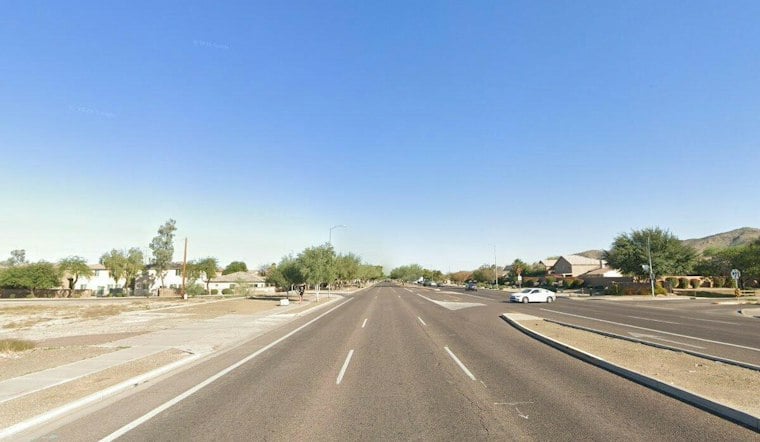
A three-mile stretch of Baseline Road that saw 340 vehicle crashes between 2020 and 2024, including 13 that were fatal or caused serious injuries, is getting a federally funded overhaul designed to slow traffic and protect pedestrians. The Tempe City Council has accepted a federal grant of about $12.5 million for the project, which carries a total price tag of more than $15 million.
The corridor between Hardy Drive and Bala Drive ranks high on Tempe's high-injury network, according to ABC15 Arizona. Tempe Senior Civil Engineer Ellie Volosin told the outlet that Baseline consistently appears as an area with higher instances of serious and fatal injury crashes. The city began working on the federal grant application two years before the project was announced, and Tempe is contributing more than $3 million from bond funding to cover the remainder of the cost beyond the federal award.
This is not Tempe's only major investment in the corridor. In September 2024, the U.S. Department of Transportation separately awarded the city a $12,547,668 Safe Streets and Roads for All implementation grant for a different 3.9-mile stretch of Baseline Road between Priest Drive and State Route 101, where 35 fatal or serious-injury crashes occurred between 2017 and 2021, according to AZBEX. That federal program itself traces back to the 2021 Bipartisan Infrastructure Law, which set aside $5 billion over five years for local and tribal governments to fund projects preventing traffic deaths and serious injuries, per the U.S. Department of Transportation.
What The Redesign Actually Changes
The newly funded project includes wider sidewalks, raised medians, and upgrades to crosswalks and traffic signals aimed at protecting pedestrians and cyclists, the station reports. The raised medians are designed to make Baseline Road appear visually narrower, which the city expects will reduce speeding and crashes along the corridor. Volosin said the medians will also address left-turn crashes by separating pedestrian movements and through-traffic from left-turn decisions at intersections.
Tempe local business owner Adam Allen attributed part of the corridor's congestion to drivers avoiding or trying to access State Route 60, and he welcomed the city's investment in the project, according to the same report. Baseline Road isn't alone in its crash burden — Mill Avenue, Broadway Road, Rural Road, and University Drive have each logged more than 300 vehicle crashes, underscoring how widespread the safety challenge is across Tempe's arterial network.
Timeline For Construction And Public Input
Tempe is now entering the initial project design phase and plans to collect public feedback in the coming months, per ABC15's reporting. The project is due for completion by June 30, 2031, reflecting the multi-year process typical of major roadway reconstruction efforts.
A Pattern Of Deadly Corridors
Baseline Road has been the site of repeated serious crashes reported by Hoodline in recent weeks. A pedestrian was left with life-threatening injuries in a crosswalk crash near Arizona Mills in an August report, and a hit-and-run near Baseline Road and Calle Los Cerros Drive earlier this month left a woman in critical condition with the driver still at large.
Tempe adopted a Vision Zero commitment in February 2018, according to the Daily Independent. Despite that early commitment, citywide numbers have moved in the wrong direction: total annual traffic collisions in Tempe rose from 6,585 in 2022 to 7,299 in 2023, while traffic fatalities climbed from 20 to 30 over the same period, per City of Tempe Data Catalog records.
Interim Tools While Construction Waits
While the Baseline Road redesign works through its design and construction timeline, the city has leaned on shorter-term measures. In May 2026, the Tempe City Council passed an ordinance cutting posted speed limits by 5 mph across seven major arterial corridors, including lowering Priest Drive to 40 mph, after municipal data showed speed was a factor in 21.8% of collisions on those roads. Tempe also designates quarterly rotating traffic safety corridors along high-volume arterials for targeted police enforcement and infrastructure evaluations based on three-year collision data, part of its broader Vision Zero program described by the City of Tempe.
Under Arizona Revised Statutes § 28-792, motorists must yield the right-of-way to pedestrians crossing within marked or unmarked crosswalks when traffic signals are absent or inactive, and drivers approaching from behind are legally barred from passing a stopped vehicle. Statewide, pedestrian deaths remain a persistent problem: the Arizona Department of Transportation's 2024 Crash Facts report recorded 263 pedestrian fatalities statewide that year. Dark conditions accounted for 76% of fatal pedestrian crashes, while the report also recorded that Maricopa County accounted for 73% of all pedestrian collisions statewide.
One tool the city could lose access to is automated photo enforcement. Arizona voters face Proposition 319 on the 2026 ballot, a measure that would require local voter approval to continue existing automated speed and red-light camera programs, while restricting new programs.


