

























































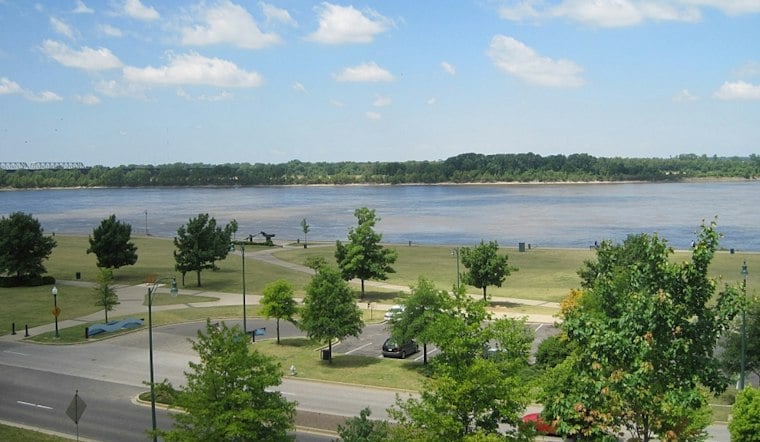
More than 2,000 people walked along the Mississippi River at Tom Lee Park Saturday morning, September 26, 2026, filling the Memphis riverfront for the annual St. Jude Walk during Childhood Cancer Awareness Month and Sickle Cell Awareness Month. The gathering supported ALSAC's push toward a $900,000 local fundraising goal, part of a broader mission to keep treatment free for families at St. Jude Children's Research Hospital.
ALSAC CEO Ike Anand told the crowd the walk is “an incredible movement that saves lives across the globe for children and families,” adding that more than 2,000 people took part locally, according to WREG. The Memphis event also drew participants from communities around the country and some who joined virtually, the station reported.
Money raised through the walk covers medical costs and housing for patient families and funds the hospital's research efforts, per the same report. St. Jude's research has helped push overall childhood cancer survival rates from under 20% when the hospital opened to above 80% today, WREG noted.
A Survivor's Story Anchors the Day
Among the speakers was Emma McNeer, who was diagnosed with hepatoblastoma, a rare liver cancer, according to the station's report. Hepatoblastoma is diagnosed in fewer than one in one million children, but it carries a five-year survival rate above 80% when the tumor is localized and completely removed surgically, according to St. Jude Children's Research Hospital.
McNeer said simply that St. Jude saved her life, and she continues to return to support the hospital and share her story, per WREG's account. Brian Earl, who is associated with Tag Truck Center, told the outlet that supporting St. Jude and caring for its patients is part of Memphis's identity.
Why the Walk Falls in September
The timing is no coincidence — St. Jude's walk series spans more than 30 U.S. cities and virtual events nationwide each September to coincide with National Childhood Cancer Awareness Month, according to a release distributed via PR Newswire. The month was formally designated by presidential proclamation in 2012 to draw attention to the leading disease cause of death among American children under 14, per the same release.
The overlap with Sickle Cell Awareness Month carries its own institutional weight. St. Jude received its first research grant in 1958 to study sickle cell disease, and in 1983 a St. Jude patient became the first person in the world cured of sickle cell disease through a bone marrow transplant, according to St. Jude's own history. Today the hospital runs a pediatric sickle cell program.
The Financial Weight Behind a Zero-Cost Promise
Running St. Jude costs roughly $2.8 million a day, with ALSAC raising an estimated 82% to 89% of that need through public donations, according to St. Jude Children's Research Hospital. That structure sets St. Jude apart from most American hospitals: the institution maintains a strict non-billing policy covering authorized treatment, housing, food, and travel for families, leaning on philanthropy for 74% of its budget compared with about 8% to 10% at typical U.S. hospitals, according to the Philanthropy Roundtable.
The hospital's origins trace back to entertainer Danny Thomas, who founded ALSAC in 1957 after a vow to Saint Jude Thaddeus. St. Jude opened in Memphis in 1962 as the region's first fully racially integrated pediatric hospital, envisioned as a place where children with catastrophic illnesses would be treated regardless of race, religion, or ability to pay. The hospital is now in the middle of a six-year, $11.5 billion strategic expansion running through 2027, which includes $1.9 billion for new Memphis facilities and 1,400 additional staff positions.
A Riverfront Built for the Crowd
Tom Lee Park itself has undergone its own transformation in recent years. The venue reopened in September 2023 following a $61 million redevelopment that turned a 30-acre flat field along the Mississippi River into an ecologically restored park with 1,000 native trees, according to Fast Company. The park is named for Tom Lee, an African American river worker who rescued 32 passengers from a capsized steamboat on the Mississippi in 1925.
This past June, the park added the $10.4 million Memphis Flyway, a 220-foot elevated walkway and treetop overlook above the river's wetlands, according to Memphis Travel. Nearby, the City of Memphis reconfigured Riverside Drive into a two-lane roadway with angled parking and removable traffic dividers, a $2 million project completed to improve pedestrian safety and support large gatherings near the riverfront.
Donations toward the $900,000 goal remain available through St. Jude's fundraising link, ALSAC said.





