

























































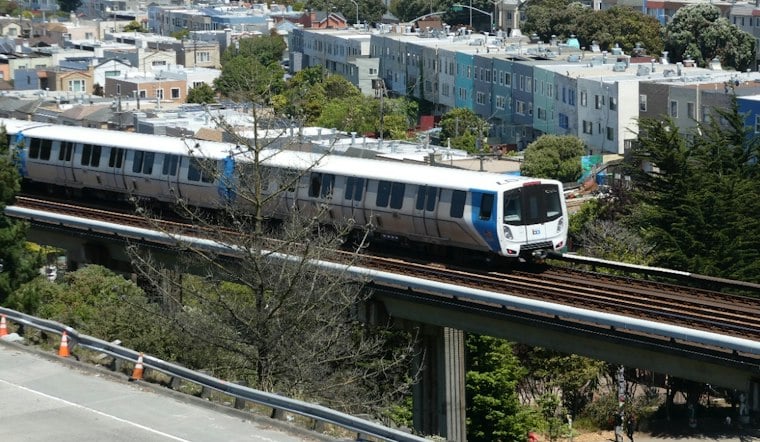
A vacant, 0.06-acre lot tucked onto a steep cul-de-sac in San Francisco's Outer Mission neighborhood is the target of newly filed plans for a three-unit residential building. The property at 8 Orizaba Avenue sits between De Long Street and BART train tracks, overlooking both the tracks and Interstate 280 near the Daly City border in San Mateo County.
The proposal, first reported by San Francisco YIMBY, calls for a roughly 30-foot-tall structure with two three-bedroom apartments and a ground-level, two-bedroom accessory dwelling unit. Millbrae-based Morrico Management owns the property, according to the outlet's report. The design includes parking for one vehicle and three bicycles, an all-electric energy system, and a facade combining stucco with Hardie plank siding.
Massoudi Consulting Engineers is drafting the construction plans, per the same report. The firm has operated in San Francisco since 2012 and specializes in Bay Area seismic retrofits, hillside engineering, and ADU design, technical expertise that matters on a site squeezed onto a small, sloped cul-de-sac.
A Rare Vacant Lot in a Tight Market
The parcel isn't new to the market. In February 2025, the 0.06-acre lot was listed for sale at $299,000, marketed as one of the few remaining undeveloped residential lots left in the Outer Mission, according to The Agency. Vacant infill parcels have grown increasingly scarce across San Francisco's southern residential districts, which makes a project like this one notable even at just three units.
Construction is estimated to cost around a quarter of a million dollars, though that figure does not include all development costs, and the project's report notes there is no shared completion timeline yet. Outer Mission's median single-family home value sits at approximately $1.3 million, with an average rental price of $3,010, according to NeighborhoodScout.
Streamlined Rules Behind the ADU
The ground-floor ADU benefits from state protections that limit how much scrutiny cities can apply. Under California's State Accessory Dwelling Unit Law, local planning departments must process qualifying ADU applications ministerially within 60 days, without discretionary public hearings, according to the San Francisco Planning Department. Separately, state law and city planning codes prohibit municipalities from charging local development impact fees on ADUs smaller than 750 square feet, a rule that lowers soft costs for small infill builders like this one, per PropertyZoned.
California Assembly Bill 1033 also permits Bay Area municipalities to adopt rules allowing ADUs to be sold independently from primary structures as separate condominiums, according to Massoudi Consulting Engineers, a detail that could shape how developers eventually dispose of similar units.
Housing Pressure Across District 11
The Orizaba Avenue filing arrives against a backdrop of citywide pressure to build more housing, and fast. Under California's 6th cycle Regional Housing Needs Allocation, San Francisco is mandated by state housing authorities to approve 82,069 new housing units between 2023 and 2031, per the San Francisco Planning Department's own accounting. Yet historical municipal and federal housing data shows the city has permitted no more than 5,178 residential units in any single year since 2001, according to NBC Bay Area, well below the pace state officials expect.
Mayor Daniel Lurie signed San Francisco's Family Zoning Plan in December, expanding height limits by two to four stories and allowing increased residential density in low-density neighborhoods across the city's south and west sides, as reported by Construction Dive. Small infill projects like the one proposed for Orizaba Avenue reflect how property owners are using both state and local streamlining laws to squeeze more density out of constrained, non-traditional lots.
The stakes are especially visible in District 11, which includes the Outer Mission. Municipal health and housing equity studies indicate that approximately 30% of households in the area pay 50% or more of their total income toward rent, according to the San Francisco Health Improvement Partnership. That rent burden has fueled ongoing community debates over how new market-rate construction affects affordability in the neighborhood, a tension Hoodline has previously covered in past Excelsior housing fights.
For now, the Orizaba Avenue plans remain in the filing stage, with no confirmed construction start date. If built, the project would add three homes, including a family-sized ADU, to a stretch of the Outer Mission where undeveloped land has become an increasingly rare commodity.


