

























































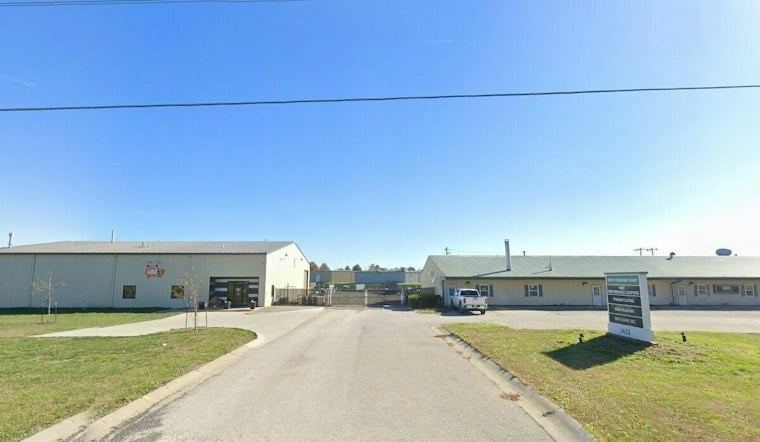
Leavenworth County will hold a special meeting Wednesday at 6 p.m. at the Tonganoxie Fairgrounds Admin Building so residents can weigh in on Project Bluestem, a proposed hyperscale data center and power plant that has grown significantly since it was first pitched to county commissioners in March. The site sits near the Tonganoxie Business Park and would cover roughly 1,000 acres, putting it within one to one and a half miles of Tonganoxie's elementary school, middle school and a nursing home.
Cloverleaf Infrastructure, the developer behind the project, resubmitted its plans after a temporary moratorium on data centers expired in August, and the new version includes a bigger footprint, larger energy usage and an added gas power plant, according to KSHB 41 Kansas City. The station reports that Project Bluestem has doubled its planned electricity usage from the original plan and that the gas plant would sit near local schools. If approved, the station notes, Bluestem would become one of the biggest data center developments in the Kansas City metro.
Descriptions of the project's scale vary by source. The Lawrence Journal-World has described it as a proposed 600-watt data center on more than 1,000 acres near the Tonganoxie/Eudora interchange, while Cloverleaf itself has said the center could require up to 1.2 gigawatts of power — a figure the newspaper reported separately. Bluestemdatacenter.com, the company's own project site, describes a nearly 1,000-acre development and says the plan remains conceptual, with no data-center applications yet submitted to local jurisdictions.
A Moratorium That Came and Went
Leavenworth County commissioners had adopted a shorter temporary moratorium on data centers, but it expired in August before Cloverleaf resubmitted its larger plans. The Journal-World reported that a commission vote to extend that moratorium through Jan. 31 failed 3-2 on Aug. 5, though commissioners later voted 4-1 to consider a separate moratorium aimed at preventing lame-duck decisions before three new commissioners take office. Tonganoxie residents, for their part, submitted a petition seeking an 18-month moratorium of their own.
County planning and zoning regulations for data centers still have not been finalized, and no applications for the project itself have been filed, per the same Journal-World account. The county's planning and zoning board voted 8-1 to hold off on regulation recommendations until a joint work session with the county commission, and Commissioner Mike Stieben has said Project Bluestem would be subject to whatever regulations the county ultimately adopts — but that the county must use due process before moving forward.
Neighbors Voice Health and Wildlife Concerns
Dee Karleskint, who lives near the proposed site, has raised concerns about both health and environmental effects. Her husband, Tonganoxie organizer Jim Karleskint, told The New Lede that he's particularly worried about noise disturbing nearby schools and a nursing home, while Dee is especially concerned about the impact that noise could have on wildlife. The Journal-World separately reported that members of Citizens Against Bluestem have voiced ongoing concerns about noise, air pollution, health effects and strains on local infrastructure.
Rebecca Davis, a member of the Tongie Data Center WatchDog Group — a group made up of Tonganoxie residents — said residents should attend Wednesday's meeting and make their voices heard. The group, which had earlier pushed for the county's original 90-day moratorium passed in May, plans to call on commissioners to reject Cloverleaf's proposal outright.
Cloverleaf Points to Jobs and Tax Revenue
Cloverleaf Infrastructure, described as a real estate developer, has said the project will create quality jobs, generate significant new tax revenue and strengthen resources for schools, first responders and the broader community. According to the company's own project materials, the first construction phase is expected to create more than 1,000 construction jobs over a period lasting more than two years, with more than 50 full-time jobs initially and more than 200 at full build-out. The company has also said it will fund any power or transmission upgrades the project requires, and that Evergy is currently studying the site to help finalize its potential power capacity.
The company has pointed to a closed-loop cooling system meant to greatly reduce water use, along with a plan to set aside 330 acres for permanent land conservation. Cloverleaf has said it remains committed to environmental stewardship and to protecting the community against potential adverse effects, and has encouraged residents to learn more about the project and its benefits, arguing that Leavenworth County and the wider Kansas City region have the infrastructure, strategic location and skilled workforce to attract digital infrastructure investment. The company has not publicly identified who is behind it.
Part of a Wider Kansas Debate
Project Bluestem is not an isolated case. The New Lede reported that Cleanview data identified six active data-center proposals across Kansas, and that a 2.9 million-square-foot data center from Beale Infrastructure is already under construction in De Soto. Nationally, data centers are facing what the New York Times describes as a bipartisan backlash tied to noise, energy costs and water use.
The Times reports that the nonprofit Environmental Protection Network has examined pollution from power plants, gas turbines and diesel generators needed to meet data centers' surging electricity demand, and that academic researchers project such pollution could contribute to roughly 600,000 asthma symptom cases, 1,300 premature deaths and more than $20 billion in annual public health costs by 2028. For Tonganoxie residents heading into Wednesday's meeting, those national numbers sit uneasily alongside a project whose own scale and power needs are still described in conflicting terms even by the parties closest to it.





