

























































Two gorilla sisters from Chicago made their public debut Tuesday at Como Park Zoo & Conservatory in St. Paul, stepping into the outdoor yard at Gorilla Forest for the first time as visitors got their earliest look at the zoo's newest residents. Kamba, who turns 22 this year, and Nora, 12, arrived from Brookfield Zoo Chicago and are still becoming familiar with their new surroundings, using the outdoor space separately from Como's established family troop for now.
The pair were born at Brookfield Zoo Chicago and grew up in that facility's multigenerational gorilla family, according to KARE 11. Kamba and Nora share the same mother, Koola, born in 1995, and count famed gorilla Binti Jua — who gained international acclaim in 1996 for rescuing an injured toddler in her enclosure — as their grandmother, per WTTW. Their move to Minnesota was recommended through the Association of Zoos and Aquariums' Gorilla Species Survival Plan, which supports appropriate social groupings and helps accredited zoos maintain healthy, genetically diverse populations, the station reports.
Behind that recommendation was a specific social dynamic playing out at Brookfield Zoo Chicago: Nora, now 12, had begun testing her position within the Chicago troop's hierarchy, prompting the AZA to recommend relocating the sisters to prevent friction, according to La Grange Patch. Nora is described as having a bold, confident personality, while Kamba is calm and laid-back, per the station's report.
Getting to Know Gorilla Forest
Kamba and Nora are settling in at Como and building relationships with their care team, the station notes. They have already met individual members of the resident family troop behind the scenes, though full-group introductions with Schroeder, Nne and Arlene have not yet happened. Como's established family troop includes Schroeder, the adult silverback, along with females Nne and Arlene, per the same account.
Gorilla introductions are a careful, gradual process with no set schedule, and Como animal care staff will move forward based on the gorillas' comfort levels, the station reports. Jill Erzar said Kamba and Nora are still in charge of the pace, according to KARE 11. Como zookeepers will continue watching the gorillas' behavior and following their cues, and, like all animals at the zoo, Kamba and Nora have the choice to explore outdoors or remain indoors.
A Nose Print Worth Noticing
One distinctive detail may help visitors pick Nora out of a crowd: she has a heart-shaped nose that Brookfield Zoo Chicago duplicated as a life-size 3D-printed model for a tactile exhibit teaching visitors how field researchers identify individual wild gorillas by their unique nose prints, according to La Grange Patch. Because viewing opportunities will vary throughout the day as the gorillas explore their new space at their own pace, that kind of identifying feature could come in handy for anyone hoping to spot her specifically.
A Bigger Space, Built for This Moment
The sisters' new home was built with exactly this kind of multi-troop management in mind. Como's $11 million Gorilla Forest exhibit opened in June 2013, tripling the zoo's previous gorilla enclosure space and adding 13,000 square feet of outdoor habitat alongside North America's largest all-mesh gorilla enclosure, according to MPR News. Schroeder, the more than 500-pound silverback anchoring the resident troop, was born on October 30, 1985, at the San Diego Zoo Safari Park and has lived at Como since June 1991, per Como Park Zoo & Conservatory. He has previously fathered Como gorillas Arlene and Nyati, and in November 2014 he sired the zoo's first homegrown gorilla birth in its 56-year history of gorilla care, when female Alice gave birth to a healthy calf, per MPR News.
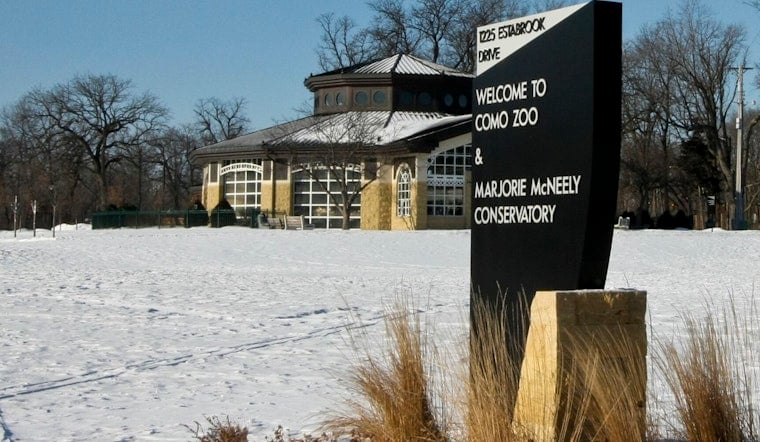
Como Zoo, established in 1897, remains free to all visitors and draws nearly 1.9 million people annually, relying on private funding from nonprofit partner Como Friends, which has raised more than $54 million for campus improvements. Erica Prosser said Como is thrilled to introduce visitors to Kamba and Nora, according to KARE 11, and the zoo is inviting visitors to Gorilla Forest to welcome the pair. Accredited zoos participating in the species survival plan aim to build broader support for species conservation as part of that mission.
Why the Species Survival Plan Matters
The stakes behind these zoo-to-zoo transfers trace back to a species in real trouble in the wild. Western lowland gorillas are classified as critically endangered, and while they remain the most widespread gorilla subspecies, with wild population estimates ranging between 100,000 and 316,000 across West and Central Africa, they have suffered an 80% population decline over 70 years, according to the International Fund for Animal Welfare. Major drivers include commercial logging, illegal bushmeat hunting, and Ebola virus outbreaks that have wiped out up to 90% of gorilla groups in infected areas of Central Africa, per the Gorilla Species Survival Plan. Kamba and Nora, like all western lowland gorillas in the wild, face habitat loss, poaching and disease.
The AZA's Gorilla Species Survival Plan cooperatively manages roughly 350 western lowland gorillas across about 50 accredited North American institutions to preserve genetic diversity and demographically stable populations, according to Zoo Atlanta. For now, that broader mission plays out one cautious step at a time in St. Paul, as Kamba and Nora adjust to a new yard, a new care team, and eventually, a new troop.





.jpg)