

























































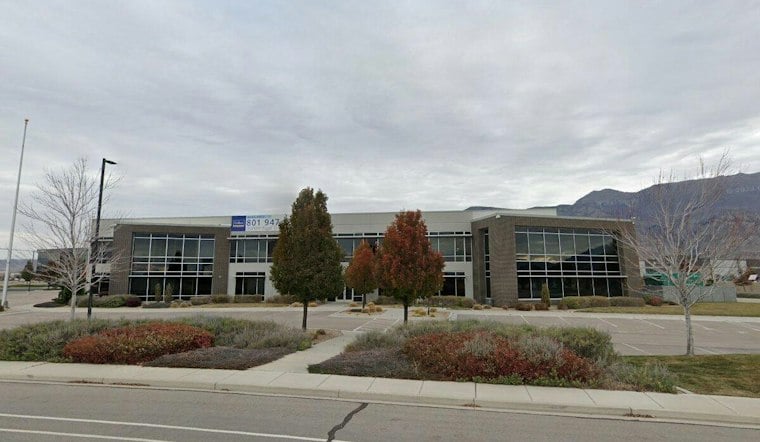
Utah companies are developing two different pieces of the emerging counter-drone system: Fortem Technologies builds radar-guided interceptors that physically capture drones, while Bluffdale startup Vector makes and trains users on systems intended for increasingly autonomous operations. Their work reflects a broader effort to detect, track and neutralize small, relatively inexpensive drones before they can endanger people or disrupt critical sites.
A Radar Company That Became a Net-Firing Drone Hunter
Fortem Technologies began as a company building radar systems for drone delivery before pivoting into compact, high-performance radar and drone autonomy systems, according to KSL.com. That evolution produced the DroneHunter F700, a fully autonomous, radar-guided interceptor that Fortem says has made nearly 5,000 drone captures, per the company's own product materials on fortemtech.com. The system is built around three product families — TrueView sensors, SkyDome Manager software and the DroneHunter interceptors themselves — that work together to spot, track and physically capture threats.
The capture mechanism is more net than missile. The F700 is armed with multiple NetGuns and what Fortem calls a DrogueNet, and KSL reports the aircraft snags drones with a 3-meter-by-3-meter net before flying the captured drone to a safe location. Fortem founder and chief technology officer Adam Robertson described the process to KSL, saying the DroneHunter “pursues evasive targets and captures them with an onboard-radar-guided net.” Fortem's own site adds that large captured drones are forced into a slow, safe descent, while smaller ones are towed to a location the operator selects — a nonlethal alternative to shooting a hostile drone out of the sky.
From International Events to the 2026 World Cup
Fortem's technology has already been used to protect major international events. The company was contracted to intercept attack drones at the 2022 World Cup in Qatar, as reported by both The Salt Lake Tribune and Breaking Defense. For the 2026 FIFA World Cup, the U.S. Department of Homeland Security placed a multimillion-dollar order for Fortem systems at 11 U.S. venues, according to unmannedsystemstechnology.com. Breaking Defense reports that Fortem will deploy DroneHunter systems at 11 World Cup venues starting June 11, 2026.
Robertson told KSL that DroneHunter technology has already been deployed as a security measure around FIFA World Cup sites, and he expects that kind of protection to become more routine. “Drone protection is going to become more fundamental worldwide,” Robertson said, per KSL's report. He pointed to a widening list of potential targets beyond stadiums — dams, power stations, capitol buildings and data centers — as reasons counter-drone systems are moving from novelty to necessity. Fortem also supplies the U.S. military and overseas allies with DroneHunter systems and radar equipment, and the company has received a U.S. government Air Force research grant, KSL reports.
Swarms, Autonomy and a New Kind of Coordination
Beyond single interceptions, coordinated drone defense is an emerging focus in the industry.
That vision lines up with where the broader industry is headed. Andy Yakulis, a Vector co-founder who served roughly 18 years in the U.S. Army as a helicopter pilot and special operations forces member, told KSL that drone warfare technology is moving toward full autonomy. He described future drone operations involving multiple groups of drones at once — a shift toward swarms augmented by artificial intelligence, where AI or autonomy controls multiple groups of drones simultaneously.
Bluffdale's Vector Trains the Operators Fighting Tomorrow's War
While Fortem builds the nets, Vector is training the people who will fly the swarms. Headquartered in Bluffdale and founded in 2024, Vector was co-founded by Yakulis alongside Matt Long, George Matus and Larsen Jensen, KSL reports. The company manufactures drones and was recognized as a top-performing competitor in the U.S. Department of War's Drone Dominance program. Vector also provides tactical and technical training to Department of War users, and Yakulis told the outlet that just under half of Vector's workforce is made up of former military personnel.
Vector's product line leans into a concept the industry calls attritable technology — consumable hardware designed to offer specialized capability at a cost-effective price point, rather than an expensive asset meant to survive every mission. The company tests its Hammer and Dagger attritable drones with drone racers before shipment, according to KSL's report. That approach mirrors what's already playing out on real battlefields: Ukraine and Russia have both leaned heavily on expendable drones armed with explosives, and one-way attack drones have emerged as a relatively recent form of battlefield munition, following decades of drones being used in less lethal battlefield roles.
The Cost Curve Driving a National Buildout
The urgency behind companies like Fortem and Vector traces back to a basic math problem the Pentagon has been grappling with. U.S. officials have pushed to expand counter-drone systems because expensive traditional air-defense systems create a steep cost disparity when the target is a cheap commercial-style drone, a gap defense officials call the cost curve, according to DefenseScoop. That dynamic recently led the Pentagon to award AeroVironment a $500 million contract to procure commercial counter-drone technology over three years, specifically including defenses against small unmanned aircraft systems. AeroVironment CEO Wahid Nawabi said the company is chasing rising global demand across lethal and non-lethal drones and counter-UAS systems, and the firm has touted its LOCUST directed-energy laser as a cost-effective tool with a cost-per-shot as low as $3.
KSL's reporting describes this moment in drone warfare as something close to the democratization of warfare, where offensive drone technology has let outmatched forces punch above their weight on the battlefield, and autonomous drone systems are already being used in Eastern Europe. Drones, KSL notes, can save soldiers' lives by taking on dangerous work that once required a person in harm's way. That combination of cheaper offensive systems and expanding autonomy is driving rapid development on both sides of the contest — including the detection, interception and operator-training technologies being developed by Utah's Fortem and Vector.
What the FAA Records Show
Recent Federal Aviation Administration enforcement actions illustrate that drone restrictions around sporting events are backed by penalties and pilot-credential sanctions, not just venue rules. According to the FAA, the agency imposed a $14,790 penalty for operating a drone near State Farm Stadium in Glendale, Arizona, during the Super Bowl on Feb. 12, 2023, and suspended a remote pilot's license after a drone was operated over people during an NFL game in Baltimore on Nov. 3, 2024. Those unauthorized incidents are distinct from the planned, government-supported counter-drone operation for the 2026 World Cup. In a separate aviation-safety incident, the agency said an operator was fined $36,770 for operating a drone near emergency-response aircraft during a wildfire on April 4, 2023, according to the FAA. The FAA encourages people to report unsafe drone operations.





