

























































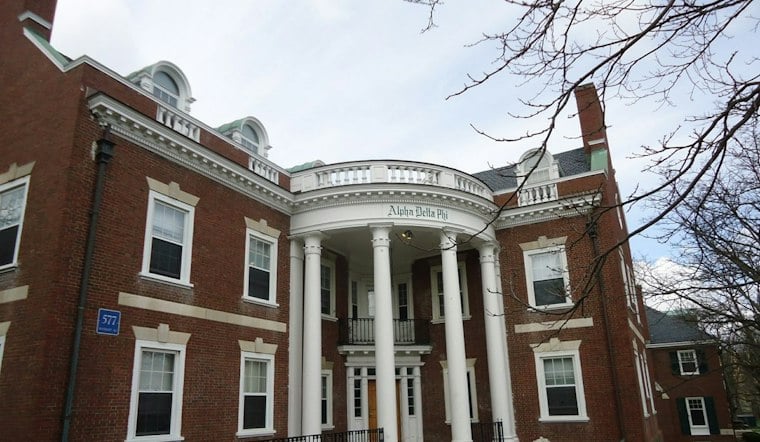
The UC Berkeley fraternity where a 19-year-old student drowned in its pool during a party last November has resumed full operations, throwing rush events and post-football parties again even as a wrongful death lawsuit from the student's family moves toward trial. Alpha Delta Phi remains recognized by both the university and its own student-run Interfraternity Council, despite the fatal incident that drew fire code citations, a public nuisance notice, and a temporary shutdown order from its own national organization.
George Mauricio Salinas, a 19-year-old San Diego student who was not a member of the fraternity, was found unresponsive in the Prospect Street house's pool late on Nov. 14, 2025, and died three days later at Highland Hospital in Oakland, according to Berkeleyside. The chapter's house is the only one on Berkeley's Greek Row with a swimming pool, which is why students have long nicknamed it “Aqua Delt,” as the Los Angeles Times has reported. According to the Daily Californian, the chapter now refers to itself as “ADPhi” on its doorlist rather than its old nickname.
National Org Issued a Cease-and-Desist, Then Let It Expire
Alpha Delta Phi's national leadership immediately suspended the UC Berkeley chapter after the drowning was first reported, a swift disciplinary move that stood in contrast to UC Berkeley's own choice not to issue conduct sanctions, per SFGATE. Per the Daily Californian, national leadership followed up with a formal cease-and-desist letter barring the chapter from holding meetings, social events, or recruitment under the Alpha Delta Phi name — a restriction that lasted only until the end of the previous semester. The chapter did not recruit new members in spring 2026 as a result, the Daily Cal reports, but it has since resumed standard operations, hosting a Rodeo fall rush event, a Cowboy Cookout rush event, and a party after a recent Saturday football game.
Locally, the fallout was more immediate. The Berkeley Police Department posted a civil public nuisance notice on the fraternity house, and the Berkeley Fire Department cited the chapter for violating city fire code by packing in more than 300 attendees at a facility permitted for just 200, according to the Berkeley Scanner's reporting carried by SFGATE. That kind of civil nuisance notice functions as a formal municipal warning, one that triggers automatic monetary penalties if the property racks up repeat violations within 90 to 120 days.
Lawsuit Alleges Soap and Overcrowding Hid Student in the Water
Salinas' parents filed a wrongful death lawsuit in Alameda County Superior Court in December 2025 against both the local chapter and Alpha Delta Phi's national organization, alleging reckless party management, negligence, an overcrowded party, and a lack of safety monitors, according to the Daily Cal. The complaint, detailed by the Berkeley Scanner, claims soap or bubble-forming substances had made the pool bottom slippery, while numerous flotation devices and extreme overcrowding obscured underwater visibility and delayed anyone noticing Salinas in the water.
Separately, the Alameda County District Attorney's Office considered bringing criminal charges against the fraternity's designated safety coordinator over allegations that he supplied alcohol to minors at the party, SFGATE reported in November. At the time, local authorities said heavy alcohol consumption had occurred but that they did not suspect foul play or hazing in Salinas' death. The civil case now has a mandatory settlement conference scheduled for Oct. 6, 2026, and is set for a jury trial on Nov. 11, 2027, if no settlement is reached, per the Daily Cal.
University Left Discipline to Student-Run Council
UC Berkeley has not taken conduct action against Alpha Delta Phi tied to the drowning — no probation, no fines — and has not placed restrictions on the chapter's operations or events, university spokesperson Lindsey Michels told the Daily Cal. Recognized chapters, Michels said, receive resources and education on sexual assault, alcohol abuse, and hazing, and the university maintains it is committed to the safety of all students. That restraint comes even though UC Berkeley updated its Student Hazing Prevention and Campus Response policy in 2025 under the federal Stop Campus Hazing Act, a change that gave campus officials the power to immediately suspend activities or pull recognition from student organizations over safety violations, according to the UC Berkeley Office of Ethics, Risk, and Compliance Services.
Instead, discipline fell to the Interfraternity Council, the student-run body that governs more than 25 housed fraternities and roughly 1,300 undergraduate men within a broader Greek community of over 3,500 students across 55 organizations, per UC Berkeley Student Leadership and Engagement. IFC leader Pavel Karabelov told the Daily Cal the council made dramatic changes to its constitution and risk management policies aimed at preventing a similar incident, and that the IFC considered — then decided against — removing Alpha Delta Phi from its recognition entirely.
Why the Council Chose Not to Cut the Chapter Loose
Karabelov argued that stripping Alpha Delta Phi of IFC recognition would have pushed it outside the council's rules altogether, according to the Daily Cal. Social probation, by contrast, requires IFC communication with both the police and fire departments and prevents a fraternity from hosting events, keeping the chapter inside a monitored system rather than operating as an unrecognized house beyond campus oversight. Fraternity punishments can also include restorative training involving student groups, university groups, city of Berkeley groups, and the Berkeley Police Department, meant to ensure the whole chapter understands what happened and how the community is moving forward, per the same account.
Karabelov told the Daily Cal that IFC members understood the community had, in his words, the blood of a student on its hands, and he acknowledged that freshmen on campus today may not even know what happened. UC Berkeley's All-Greek Social Code already requires recognized fraternities hosting social gatherings to maintain trained sober party monitors and comply with municipal fire and building capacity limits, according to UC Berkeley Student Leadership and Engagement. Tension between off-campus Berkeley fraternities and the surrounding community is not new — a 2010 class-action lawsuit, covered at the time by Courthouse News Service, accused the Interfraternity Council and 35 Greek houses of public nuisances, excessive noise, and overcrowding.





