

























































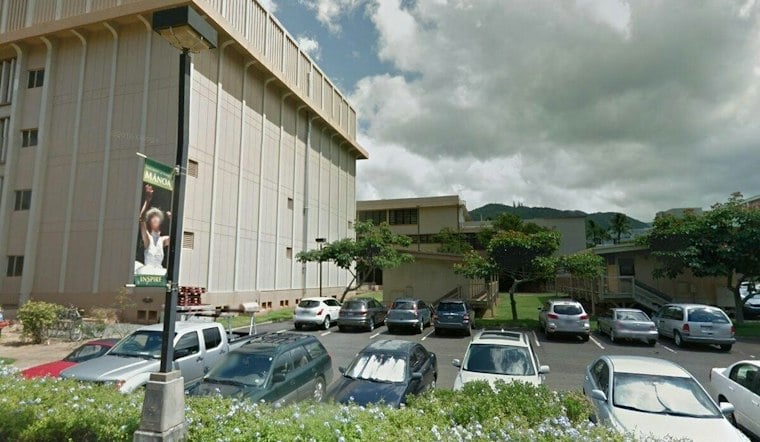
The University of Hawaiʻi at Mānoa has been awarded nearly $1 million from the U.S. Department of Energy to build what officials call a first-of-its-kind research facility in the United States, one designed to unravel exactly how and why chemical reactions happen at the molecular level. The Tunable Photoionization Chemical Dynamics Facility will combine tunable high-power lasers, molecular-beam experiments, and machine learning to chase a very specific target: cleaner fuel production.
The federal award totals $999,997 and will fund new instrumentation along with training for student researchers, according to University of Hawaiʻi System News. As Kauai Now first reported, the lab is billed as the first of its kind in the country, integrating tools that let scientists isolate and observe step-by-step chemical reaction pathways that traditional lab methods simply cannot capture.
Five Technologies, One Lab, One Big Question
The facility folds five core chemical technologies under a single roof: tunable high-power lasers used to precisely study molecules, molecular-beam experiments, isomer-selective photoionization, a chemical microreactor, and AI-accelerated machine learning simulations, per the university's account. That combination is what makes the setup unusual.
Leading the effort is Ralf I. Kaiser, who joined UH Mānoa's Department of Chemistry faculty in 2002 and has directed the campus's W. M. Keck Research Laboratory in Astrochemistry since June 2008, according to the UH Mānoa Department of Chemistry. Kaiser earned his doctorate at the University of Münster and completed postdoctoral work at UC Berkeley before landing in Honolulu. He is leading the first major research project to run through the new facility.
Chasing Cleaner Fuel by Breaking Stubborn Bonds
That inaugural project targets a stubborn chemistry problem: sulfur-containing compounds are widely found in petroleum-derived fuels, and breaking their strong carbon-sulfur bonds is key to cleaner fuel production. Kaiser's team will investigate how hydrogen helps break those bonds, combining laboratory experiments, computer simulations, and machine learning to trace the process. Researchers will also study chemical reactions using controlled clusters of titanium, aluminum, and boron as part of the same push.
“The facility enables questions that are extremely difficult to answer with conventional approaches,” Kaiser said, describing why the integrated setup matters for problems that have resisted simpler methods.
UH Mānoa is collaborating on the project with the Department of Energy's Ames National Laboratory, which is involved in a new $34 million ARPA-E award supporting 12 projects, including Ames Lab’s A-TEAM project, to advance AI-driven autonomous catalyst development for industrial chemical manufacturing, according to Ames National Laboratory. Ames is operated for the DOE by Iowa State University, giving the Mānoa team a federal partner already deep in machine-learning-driven chemistry.
Training the Next Generation of Chemists
Beyond the hardware, the grant is explicitly built around workforce development. UH Mānoa will train undergraduates, graduate students, and postdoctoral researchers in molecular reaction dynamics, laser-based experimentation, photoionization, molecular-beam science, chemical microreactors, and computational chemistry — skills the project says are needed to actually use and advance the new instrumentation over time.
This isn't Kaiser's first large federal award. In August 2024, the National Science Foundation gave $26 million to establish an Engineering Research Center for sustainable cooling, with Kaiser leading UH Mānoa's team modeling the atmospheric impact of next-generation refrigerants, per University of Hawaiʻi System News. Kaiser has also led other federally funded research.
A Mandate That Gives the Research Extra Weight
The new facility's focus on cleaner fuel chemistry lines up with a statutory deadline the state set for itself over a decade ago. In 2015, Hawaiʻi enacted House Bill 623, becoming the first state in the nation to legally mandate obtaining 100% of its electricity from renewable sources by 2045, according to the Database of State Incentives for Renewables & Efficiency. A separate Energy Efficiency Portfolio Standard established an interim target of cutting electricity consumption 40% by 2030.
The DOE grant also lands within a much larger funding picture for the university system. UH secured $647.3 million in total extramural research funding in fiscal year 2026, its second-highest annual total on record and the fifth consecutive year the system topped $500 million in external funding, per University of Hawaiʻi System News. Federal agencies accounted for more than $340.1 million of that total — over half of all extramural awards — according to Hawaiʻi Public Radio.
That reliance on federal dollars has cut both ways for UH researchers recently. In 2025, dozens of research projects were frozen, terminated, or paused, with funding reaching $36 million amid federal funding cuts across the UH system, affecting climate-resilience research. The DOE-backed lab represents support for the chemistry department.




