

























































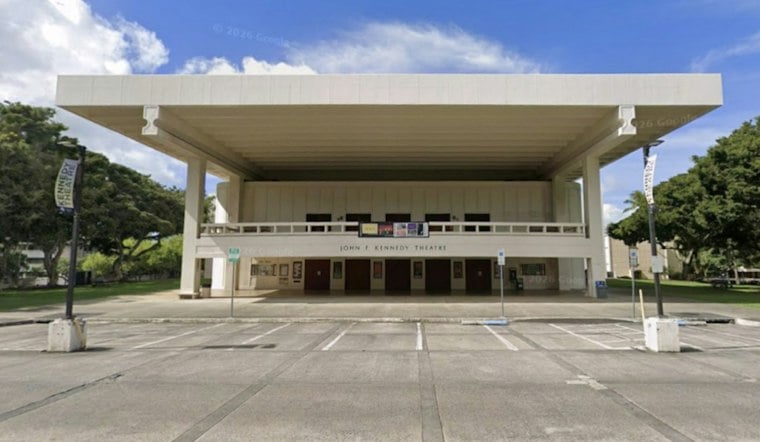
A new museum tracing more than a century of Hawaiʻi's Deaf history opens Monday in the lobby of Hamilton Library at the University of Hawaiʻi at Mānoa, kicking off with sign language performances at Kennedy Theatre and a keynote address from a Deaf descendant of Hawaiian aliʻi. The grand opening events begin at 9 a.m. September 14, with performances on Kennedy Theatre's mainstage, followed by a 10 a.m. visit to the new exhibit itself, according to University of Hawaiʻi News.
According to University of Hawaiʻi at Mānoa, the celebration will open with deaf cultural and sign language performances before media and the public get a first look at the museum. The university notes the new space offers the broader community a chance to learn about the language, experiences, and contributions of generations of Hawaiʻi's Deaf community, whose history has received limited public visibility in the islands. The exhibit itself, formally titled I ʻike ʻia, I loha ʻia: Nā Moʻolelo o ke Kaiāulu Kuli o Hawaiʻi — To be seen, to be heard: Stories of Hawaiʻi's Deaf Community — presents an educational journey through the history and contributions of the state's Deaf community, according to the Center on Disability Studies.
A Keynote Rooted in Royal Lineage
The keynote address will be delivered by Yvette I. Ibarra-Keohuloa, a Deaf descendant of the so-called Royal Twins, Kameʻeiamoku and Kamanawa — high-ranking Kona chiefs who served as key counselors to King Kamehameha I and whose images appear on the coat of arms of the Hawaiian Kingdom, per the same Center on Disability Studies account. The twins are historically depicted on that coat of arms wearing feather cloaks and holding a kāhili and spear, according to Images of Old Hawaii. The pairing of the museum's opening with a keynote from a chiefly bloodline underscores how the university frames the project as intertwined with Hawaiian monarchy history, per the university's own advisory.
The museum project came together through a partnership spanning the UH Mānoa Department of Linguistics, the Center on Disability Studies, Kapiʻolani Community College, the Hawaiʻi School for the Deaf and the Blind, and the State of Hawaiʻi Disability Communication Access Board, per the Center on Disability Studies. That board, known as DCAB, oversees statewide standards for sign language interpreters, communication access, and disability rights policy across public entities in Hawaiʻi, the center notes.
A Language Nearly Lost
The museum's timing carries added weight given the history of Hawaiian Sign Language, an Indigenous sign language that developed independently in the islands long before American Sign Language arrived in the 1940s. In 2013, University of Hawaiʻi at Mānoa linguists and advocate Linda Lambrecht officially documented HSL as a distinct 19th-century Indigenous language, separate from ASL, making it one of only two surviving Indigenous sign languages in the United States, according to Honolulu Civil Beat.
The Hawaiʻi School for the Deaf and the Blind was founded in Honolulu in 1914 under the name School for Defectives, as noted by Hawaiʻi School for the Deaf and the Blind and according to The St. Kitts Nevis Observer. The school underwent several name changes before adopting its current name in 1969, per the same account.
Deaf Awareness Meets Hawaiian History Month
The museum's opening arrives during a dual observance: September is both Deaf Awareness Month and, since 2025, Hawaiian History Month. The Hawaiʻi State Legislature designated the latter under Act 167 to honor Queen Liliʻuokalani and promote public awareness of Native Hawaiian history, an observance that aligns with the queen's September 2 birthday, according to the Association of Hawaiian Civic Clubs. UH Mānoa notes the new Deaf History Museum opens in recognition of both observances at once.
Efforts to weave Native Hawaiian identity into Deaf culture continue beyond the museum walls. Native Hawaiian Deaf advocates have launched ʻŌlelo Hawaiʻi Kuhi Lima, a community-led initiative guided by Deaf kūpuna to establish hand signs rooted in Hawaiian words and cultural concepts, allowing Deaf Kānaka Maoli to express Indigenous identity directly through signed ʻŌlelo Hawaiʻi, as reported by Honolulu Civil Beat.
Scholars and Advocates Behind the Movement
The museum also lands amid recent milestones for Deaf scholarship in Hawaiʻi. In May 2022, Emily Jo Noschese became the first deaf student to earn a doctorate in linguistics from the University of Hawaiʻi at Mānoa, according to the university's Department of Linguistics.
The broader discussion includes inclusive education and literacy strategies for Deaf students.
What to Expect at the Grand Opening
The museum exhibit will feature historical artifacts, stories, and contributions from Hawaiʻi's Deaf and hard-of-hearing community, spanning more than a century of local Deaf history, culture, and community, according to the University of Hawaiʻi at Mānoa. The grand opening's first show will be presented on Kennedy Theatre's mainstage, and media will have the opportunity to visit the new museum exhibit following the performances. UH Communications, reachable at (808) 600-4084, is serving as the media contact for the event.





