

























































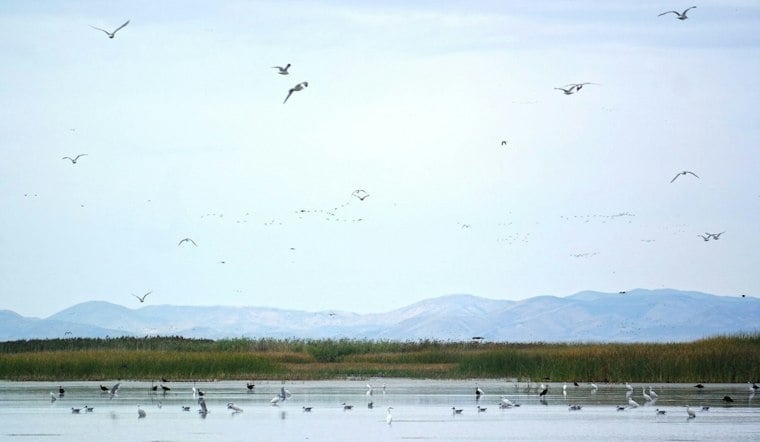
Utah has settled a legal fight over 22,311 acres near the Bear River Migratory Bird Refuge that stretched on for more than two decades, and in exchange the state is set to receive a payout for Great Salt Lake restoration work. Gov. Spencer Cox said the dispute produced $60 million or more for the lake, calling the outcome a big win for its health.
According to Utah News Dispatch, Utah reached an agreement with the federal government to cease the dispute over the 22,311 acres in exchange for approximately $60 million, resolving a conflict with the U.S. Fish and Wildlife Service that has spanned at least two decades. A separate account from Great Salt Lake News describes the state agreeing to sell those 22,311 acres of lakebed to the Bear River Migratory Bird Refuge for more than $60 million, while the Davis Journal later reported the settlement involved roughly 22,000 acres and $66 million coming to the state — the discrepancy in the final dollar figure remains unresolved across these accounts.
A Fight That Started In 2000
The origins of the dispute go back further than most Utahns probably realize. Per Great Salt Lake News, Utah and the federal government began negotiations in 2000, and the state officially filed a lawsuit against the United States government in 2012, setting up more than a decade of additional litigation before any resolution took shape.
That fight finally moved toward closure earlier this year when state lawmakers acted. The Utah Senate voted unanimously to approve HJR30, following a 62-2 vote in the House the same evening, per Utah News Dispatch, sending the resolution on toward the governor. As the Fox 13 News Utah report by Ben Winslow notes in the Great Salt Lake Collaborative section, the state legislature authorized the land swap and settlement earlier this year, and lawmakers required that the settlement money be used for the Great Salt Lake.
Where The Land — And The Money — Are Headed
Under the deal, Utah will transfer the 22,311 acres of land along the Great Salt Lake to the federal government for inclusion in the Bear River Migratory Bird Refuge. The refuge itself is owned and managed by the U.S. Fish and Wildlife Service, according to Great Salt Lake News, and HJR30 clarifies that the transferred acreage is federal land — though the same reporting states it will not change existing access to the land.
The settlement funds are earmarked for projects benefiting the Great Salt Lake, and lawmakers built in a requirement that the money be used exclusively for the lake's benefit, per the same account. Once finalized, the money would go back toward Great Salt Lake projects, the report notes. The settlement's broader funding is intended to benefit the Great Salt Lake.
A Lake Still In Trouble
The settlement lands at a moment when the lake's condition remains precarious. Great Salt Lake News reports the lake teeters on the brink of setting yet another record low following a winter with dismal snowpack, with unsustainable water consumption in the watershed contributing to a long-term trend of decline. The Salt Lake Business Journal found that in mid-April, the lake sat at 36.4 percent of its desired water level and more than 6 feet below its minimum healthy level, with over 53 percent of the lakebed — roughly 1,150 square miles — exposed.
The Davis Journal reported that the state's broader strategic plan for the lake focuses on better coordination, the best available science, increasing water supplies, and managing air quality, water quality and wildlife habitat, and that the state funded $1 million toward building out the Utah Dust Observatory Network.
Other Recent Moves To Boost The Lake
This settlement isn't the only recent effort to shore up water supplies for the ailing lake. The Davis Journal reported that more than 450,000 acre-feet of water have been dedicated to the Great Salt Lake over the past three years, with water rights coming from agricultural leases. Utah News Dispatch also noted the state received a $50 million grant from the Bureau of Reclamation in 2024 for projects aimed at reducing water diversions from the lake or supporting voluntary water donations.
Earlier this year, Utah also finalized a $30 million purchase of the former US Magnesium plant, a deal that, per KSL, secured more than 144,000 acre-feet of water rights for the state. The Salt Lake Business Journal reported that purchase gave Utah control over 4,500 acres of land along with extensive water rights — another piece of a patchwork of deals state officials are stitching together as they try to keep the shrinking lake from sliding further.


