

























































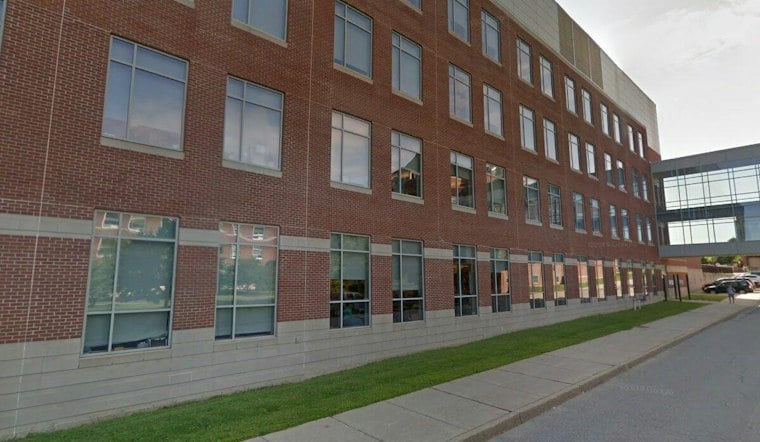
A five-year, $19 million federal grant is turning a research building in Burlington into the coordinating hub for a brand-new national science observatory built to peer inside cells and brain circuits in three dimensions. The National Science Foundation is funding the National Connectomics and Ultrastructure Volume Observatory, or NCUVO, with $15.68 million going to the University of Vermont and $3.32 million going to the University of California San Diego.
The award, announced this month, positions UVM as the national coordinating hub for a national observatory. NCUVO is designed to combine advanced electron microscopy, artificial intelligence and powerful computing networks so scientists can trace structures too small to see with ordinary light microscopes. UVM president Marlene Tromp called it transformative research the university is proud to lead nationally.
A Fruit Fly Brain Map Set the Stage
The project is led by Davi Bock, a neuroscientist and associate professor of neurological sciences at UVM's Larner College of Medicine, whose laboratory acquired the electron microscopy images used to produce the first complete wiring map of an adult fruit fly's entire brain. That achievement, published in Nature in October 2024, compiled 21 million electron microscopy images to trace nearly 140,000 neurons and more than 50 million synapses, according to Vermont Business Magazine. Bock has said the new national center will be globally unique in applying high-throughput volume microscopes across biology, per the News-Medical account.
Doug Taatjes, a co-principal investigator and director of UVM's Microscopy Imaging Center, and Mark Ellisman, a co-principal investigator at UC San Diego, round out the project's leadership. Ellisman has said NCUVO will transform advanced technologies into a shared national capability, the outlet reports. The observatory will integrate high-throughput electron microscopy in Burlington with sample preparation and advanced microscopy in San Diego, feeding data into the San Diego Supercomputer Center for processing and storage.
Burlington Becomes the Physical Heart of the Network
The project's high-throughput electron microscope will be housed in UVM's Firestone Medical Research Building in Burlington, according to the University of Vermont. That microscope will capture details from thousands of ultrathin tissue slices, with data processing and storage supported by the Vermont Advanced Computing Center. On the West Coast, UC San Diego's role draws on expertise at the National Center for Microscopy and Imaging Research, which Ellisman directs, and data management and processing at the San Diego Supercomputer Center.
Artificial intelligence will help identify cell boundaries, trace neurons and distinguish structures within cells, while computing resources support the assembly of microscopy images into three-dimensional volumes.
Four Pilot Projects Span Memory, Vision, Parasites and Single Cells
NCUVO includes four pilot research projects. The first will examine changes in mouse hippocampal connections following learning, drawing on the laboratory of Anton Maximov of Scripps Research.
The second pilot project will compare retinal circuitry across species, pairing David Berson's laboratory at Brown University with Tom Baden's laboratory at the University of Sussex to perform comparative 3D imaging of visual systems, including sharks adapted to varying water clarity, per UVM's announcement. The third pilot project will study how the single-celled parasite Toxoplasma gondii crosses the blood-brain barrier — combining work from parasitologist Bruno Martorelli Di Genova at UVM and neuroscientist Christopher Moore at Brown University.
A fourth pilot project will examine protists and their elaborate internal structures, involving the laboratories of Omaya Dudin of the University of Geneva and Gautam Dey of EMBL Heidelberg. Dudin and Dey were jointly awarded the 2026 EMBO Gold Medal in June, according to EMBO.
Training the Next Generation of Microscopists
Beyond the science, NCUVO will support education using pilot data and undergraduate teaching materials, with UVM assistant professor Molly Stanley coordinating outreach alongside Connectomes for Undergraduate Neuroscience Education and Learning. The five-year effort will design and build an observatory and test an end-to-end imaging path.
NCUVO's broader context includes medical research and questions around safe, responsible AI. Separately, New York startup Flourish secured $500 million in June 2026 to develop low-power AI systems modeled on wet-lab neuroscience, a deal Hoodline previously reported, underscoring growing investor interest in biological brain architecture as a model for more energy-efficient computing.



