

























































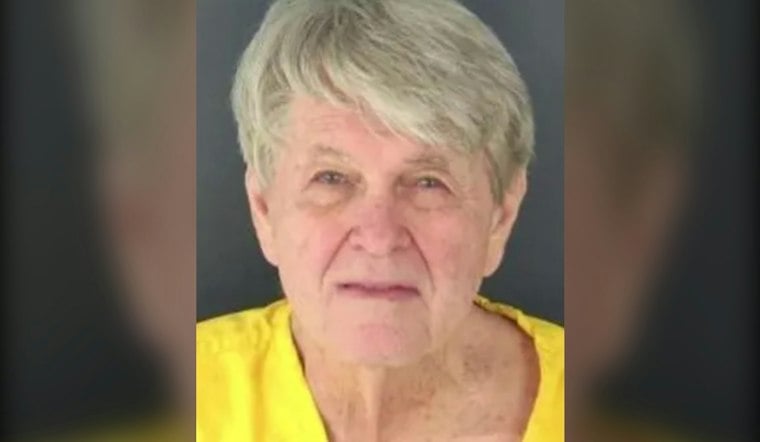
An 83-year-old Venice man is being held without bond on a second-degree murder charge after he called 911 on the night of September 16 and told dispatchers, “believe me she's dead, no CPR is going to help her,” before paramedics found his wife dead in a recliner from a gunshot wound to the head. Walter Edgerton III now faces up to life in prison. The case also has drawn attention to the strains that can accompany caring for an aging or seriously ill spouse.
What Edgerton Told Investigators
According to a probable cause arrest affidavit described by Law&Crime, Edgerton made the call from the couple's Venice home, where deputies discovered Sandra Edgerton with a fatal gunshot wound hidden under a blanket. After waiving his Miranda rights during a police station interview, Edgerton told investigators he placed a .22-caliber revolver against his wife's head and pulled the trigger while rubbing her head with his other hand, according to the report. He also told investigators she had spent 45 minutes begging him to make her pain stop, a detail reported by FOX 13 News.
FOX 13 reported that Sandra Edgerton had suffered from Lyme disease for decades and had recently undergone surgery for a bleeding ulcer, leaving her hospitalized shortly before her death. Edgerton was booked into the Sarasota County Jail early the next morning, the station reported, and has since been assigned a public defender. He has pleaded not guilty ahead of an October 16 arraignment.
A Charge That Leaves No Room for Mercy
Edgerton is charged with second-degree murder. Prosecutors must show an act evincing a depraved mind regardless of human life, but premeditation is not required. Florida law also explicitly bars mercy killing, euthanasia and assisted suicide, meaning a victim's consent or the alleviation of suffering provides no statutory defense against a murder charge, even in cases involving terminal or chronic illness.
The dynamic is not unprecedented in Florida courts. In a 2023 Daytona Beach case detailed by Pumphrey Law, 76-year-old Ellen Gilland was charged with first-degree murder after fatally shooting her terminally ill 77-year-old husband in his hospital room following what she described as a mutual agreement about his suffering. That case, like Edgerton's, underscored how Florida's homicide statutes leave prosecutors little discretion once a spouse takes a life, regardless of the circumstances that preceded it.
Sarasota County's Caregiver Crisis
Sarasota County's demographics provide context for the case's broader caregiving questions. U.S. Census Bureau estimates cited by Sarasota County government show that 38.8% of the county's roughly 487,640 permanent residents are 65 or older, ranking it first among all large U.S. counties for median age — a figure that swells further each winter as an additional 85,000 seasonal residents arrive. Sarasota County became Florida's first community to join the AARP and World Health Organization Network of Age-Friendly Communities in 2015 and has maintained a Seniors Advisory Council and Age-Friendly Action Plan through 2025.
Statewide, the pressure on family caregivers is significant. An October 2025 AARP Florida survey found that more than 4.45 million Florida adults — nearly a quarter of the state's adult population — serve as unpaid family caregivers, with 62% caring for someone with a long-term physical condition and nearly half living with their care recipient. The case has also raised questions about how chronic illness and caregiving pressures can affect families. Those broader findings do not, by themselves, establish a motive in the Venice case.
What Caregiving Data Shows
National data illustrates the scale and complexity of the issue. According to AARP and the National Alliance for Caregiving, the U.S. caregiver population reached 63 million in 2025, nearly 50% more than in 2015. More than 40% of caregivers provide high-intensity care, while only 22% receive training. The figures document the size of the caregiving population and a gap in preparation for complex care, but they do not establish that caregiving caused the shooting or quantify unmet respite and mental-health needs specifically in Florida.
Where Local Caregivers Can Turn
Erin McLeod, president and CEO of Senior Friendship Centers, told FOX 13 that family caregivers should not try to handle overwhelming isolation alone and that asking for help should be one of the first steps a caregiver takes. Senior Friendship Centers' resource center offers one-on-one counseling and emotional support that can expose caregivers to what others in similar situations are going through, McLeod said, adding that support is available to both family caregivers and older adults in the community.
Struggling caregivers can reach Senior Friendship Centers' caregiver resources at 941-955-2122, or contact the Florida Elder Helpline at 1-800-96-ELDER (5337). For food, housing, health care or mental-health assistance, 211 Suncoast can be reached by dialing 211. Anyone experiencing an emotional or mental-health crisis, suicidal thoughts, or feeling there is no way out can call or text 988 to reach the 988 Suicide & Crisis Lifeline.





