

























































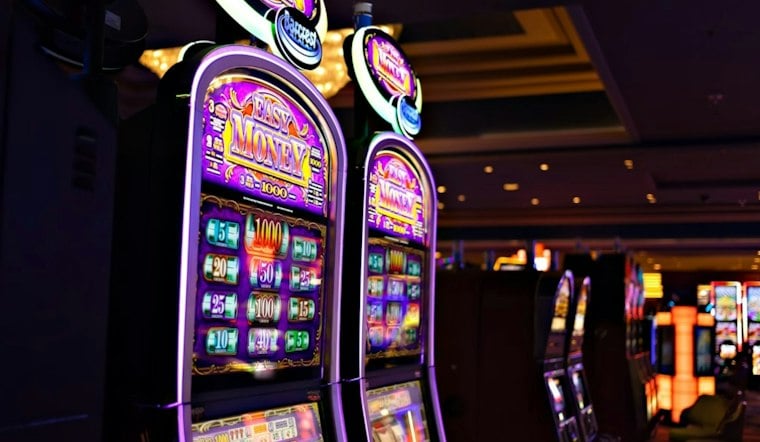
One of the largest operators of online sweepstakes casinos in the country has agreed to pay New York $8 million after state officials say it illegally ran gambling platforms that let residents wager virtual coins exchangeable for cash and prizes. Australian gaming company VGW Holdings Pty. Ltd. reached the settlement with New York Attorney General Letitia James over its Chumba Casino, Global Poker and Luckyland Slots platforms, all of which offered traditional casino games like slots, blackjack and poker to New Yorkers through a dual-currency system.
The $8 million settlement involves VGW's operations in the state, according to NY AG James
, whose office posted that VGW's gambling platforms posed a threat to New Yorkers and that authorities had stopped them from operating in the state. Chumba Casino launched in 2012, Global Poker followed in 2016, and Luckyland Slots joined the lineup in 2018, according to the
New York Attorney General
, which noted that all three let users play with virtual coins redeemable for cash or prizes such as gift cards.
How the Case Against VGW Came Together
Wednesday's settlement traces back to a joint enforcement action the same office notes was launched in June 2025, when the state Attorney General's Office and the New York State Gaming Commission issued cease-and-desist letters to 26 online sweepstakes platforms, halting all sweepstakes coin sales statewide. That crackdown was covered at the time in Hoodline's coverage of the 2025 shutdown.
The legal groundwork extended further when Governor Kathy Hochul signed Senate Bill S5935 into law on December 5, 2025, formally banning dual-currency online sweepstakes casinos and setting civil penalties ranging from $10,000 to $100,000 per violation, per Gaming Intelligence. The law also extended penalties to technology suppliers, game providers, payment processors, platform providers and media affiliates that supported sweepstakes casino operations. New York's underlying legal theory rests on Article I, Section 9 of the state constitution, which prohibits unauthorized gambling, along with Penal Law Section 225.00, which defines gambling as staking something of value on a contingent outcome in exchange for the possibility of receiving value, according to the Office of the New York State Attorney General.
A Multibillion-Dollar Global Business
VGW's New York operations were a small slice of a far larger enterprise. VGW Holdings reported record fiscal-year results ending June 30, 2025, generating A$7.3 billion (roughly $4.76 billion) in revenue and A$656 million in net profit, with Chumba Casino alone accounting for $3.4 billion of that total; founder Laurence Escalante acquired the remaining minority shareholding and took full control in August 2025, according to SweepsKings.
The scale of the industry helps explain why regulators moved so aggressively. Industry research firm Eilers & Krejcik Gaming estimated that sweepstakes casinos generated $10 billion in national sales in 2024, with New York's market alone accounting for approximately $762 million in sales before the state's enforcement actions and legislative bans took hold, per iGaming Business.
Part of a Wider Legal Squeeze on VGW
New York's settlement lands amid a broader, multi-jurisdictional crackdown on VGW. Florida Attorney General James Uthmeier filed a lawsuit against the company in August, a case Hoodline detailed in its report on Florida's suit against sweepstakes casinos, and the City of Baltimore sued VGW and other social casino operators in March, according to Hoodline's earlier coverage of that municipal action.
The New York settlement also fits a pattern for Attorney General James, who in February sued video game developer Valve Corporation over allegations that its in-game “loot boxes” amounted to illegal gambling, according to CBS News. That case targeted randomized in-game items.
States Keep Closing the Loophole
More than ten states had passed new restrictions on these platforms over the preceding two years, including New York and California, according to SweepsKings' research on the sector's contraction. The sweepstakes casino model continues to face state-by-state pressure as regulators nationwide work to dismantle it.





