

























































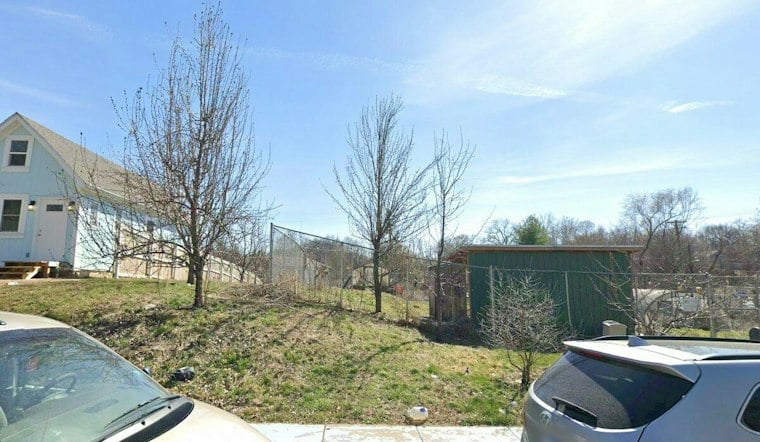
Volunteers and young workers broke ground last Friday on the revival of Splitlog Farm, a once-dormant urban farm along Splitlog Avenue and 11th Street in Kansas City, Kansas' Bethany neighborhood. The project aims to boost the amount of quality free food available to homes across a county that already carries Kansas' highest food insecurity rate.
From Overgrown Lot to Community Hub
Before the pandemic hit, Splitlog Farm produced 1,500 pounds of food in a single year and served families experiencing food insecurity during the COVID-19 crisis, according to The Kansas City Star. The site had since fallen into disrepair, and on Sept. 25, volunteers cleared overgrowth, decaying structures and a greenhouse to make way for its second act. The revived farm is planned to include free public access, an outdoor classroom, and a community gathering and eating space.
Splitlog Farm’s early history includes a partnership between Community Housing of Wyandotte County and KC Healthy Kids. During the pandemic, the farm produced and distributed food. The site also included a community garden shed.
Cornerstones of Care, Build WyCo and Blue Cross and Blue Shield of Kansas City all unveiled plans to bring the farm back, the newspaper's report notes. KC Healthy Kids had also been part of the effort but withdrew from the project after losing funding through the U.S. Department of Agriculture — a gap that underscores how federal funding shifts can ripple through even small neighborhood food programs.
Young Workers Learning Trades While Rebuilding the Soil
Much of the labor is coming through Build Trybe, a vocational workforce program under Cornerstones of Care that trains young adults in conservation landscaping alongside woodworking, metalworking and farming, per the same account. The program also provides job application and transportation support to participants. Theo Bunch, director of Build Trybe, said the groundbreaking followed months of planning and community discussions, and he described the moment as an exciting one.
Build Trybe’s work at Splitlog fits into a broader mentorship and job-readiness program, not just a farm cleanup. Cornerstones of Care describes the program as serving teens and young adults ages 16 to 23, including participants in its transitional-living and educational-success programs as well as community members. Its training paths include building trades, food production and conservation landscaping, with career guidance and mentorship for young people moving toward employment. The program’s structure makes the farm a place where trainees can apply practical skills in a neighborhood setting.
Among those doing the work is Jada, a 19-year-old who works in Build Trybe's conservation landscaping program. Carlanda McKinney, associate executive director at Build WyCo, said everyone deserves to feel at home in the community they love — a sentiment tied directly to the farm's mission of rooting neighbors in a shared space.
A County Where Groceries Are Often Out of Reach
The stakes behind the project trace back to a broader pattern across the region. Food insecurity has risen in Missouri and Kansas since the pandemic, per Harvesters Community Food Network, with roughly 15 percent of people in the Kansas City region and about 20 percent of children at risk of hunger. Wyandotte County residents often lack walking-distance access to grocery stores, and limited public transportation leaves people without cars with few options to obtain basic necessities, the Star reports. Food pantries in the area are struggling to meet demand amid rising prices and cuts to public meal assistance.
Food access is one of the challenges facing residents of Wyandotte County, where some people lack walking-distance access to grocery stores.
Wyandotte County's health outcomes rank among the worst in Kansas and the nation, and a 2022 community health assessment attributed some of the disparity in outcomes among the county's Black residents to systemic racism. Rebecca Anderson, director of community health at Blue Cross and Blue Shield of Kansas City, said improving food access can improve both physical and mental health. Her team works to help community members overcome social barriers to health care.
A Nearby School Already Leaning on the Land
The farm's revival carries particular weight for M.E. Pearson Elementary School, whose students have used Splitlog Farm for mini field trips and lessons about food and soil. Principal Lori Cooper, who has served as principal for 11 years and worked in public schools for 30, said the school opened its own food pantry in 2025 and has allowed families to take home produce during after-school pickup. Cooper hopes to add freshly grown produce from the farm to the school's pantry as the project matures. A new middle school is also set to move in near M.E. Pearson amid a campus realignment, adding more young neighbors who could benefit from the farm down the line.





