

























































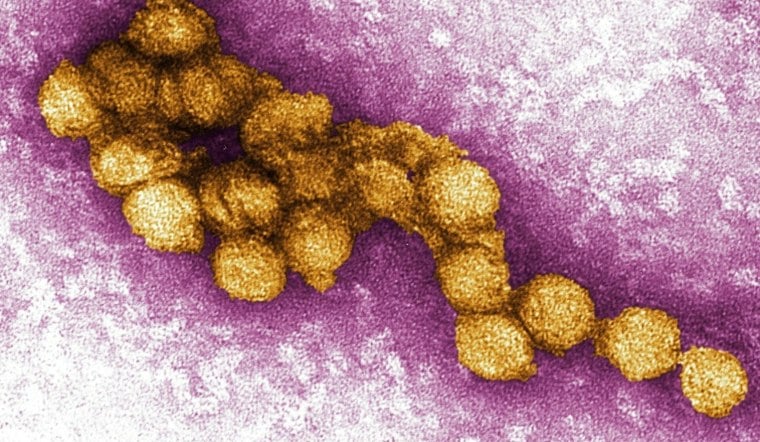
San Diego County has notified Golden Hill residents that West Nile virus has been detected in their neighborhood, though officials have not disclosed the exact location. CBS 8 reported that the alert comes as the county tracks four human West Nile virus cases so far in 2026, along with 45 positive birds and 95 positive mosquito batches this year.
The precautionary notice, sent by the county's vector control program, lays out steps residents can take to protect themselves, according to CBS 8. San Diego County says it sends these alerts to residents living within a quarter-mile of detected West Nile virus cases. The 2026 figures cited in the report already outpace 2025, when the county reported zero human cases, 34 positive birds and 182 positive mosquito batches.
The notice is precautionary, but county officials are urging residents to reduce mosquito exposure and eliminate places where mosquitoes can breed.
What The Rising Numbers Mean
Increased positive mosquito and dead bird tests indicate more West Nile virus circulating, according to health officials cited in the report. The county uses mosquito trapping and testing, along with testing of dead birds, to monitor the virus.
How County Surveillance Works
According to the San Diego County Vector Control Program, officials monitor West Nile virus by trapping, batching and testing mosquitoes and testing dead birds. When feasible, the program notifies businesses and households within a quarter-mile of locations where people or mosquitoes have tested positive, giving residents a defined area in which to take precautions. For longer-term context, the county's Vector Control Program reported that 99 of 657 mosquito batches tested positive in 2016, while none of 1,367 batches tested positive in 2021, according to its 2022-23 report. Those figures also show that the number of batches tested can vary substantially from year to year, an important consideration when comparing surveillance totals.
Dr. Mark Beatty, assistant medical director within epidemiology and immunization services at the County of San Diego, said symptoms of the virus can include fever, headache, fatigue, nausea, rash and swollen glands. That mirrors broader public-health guidance: the Orange County Mosquito and Vector Control District notes that roughly 80 percent of people infected with West Nile virus never show symptoms, while the remaining fifth can experience fever, body aches, nausea, vomiting, swollen lymph glands or a skin rash. The district also notes the virus is most often spread through the bite of an infected mosquito.
West Nile virus is considered a very serious disease for older adults or people with weakened immune systems, according to the county. Johns Hopkins Medicine similarly notes that older people and those with weak immune systems are more likely to develop serious illness from the virus.
How Mosquitoes Spread The Virus
Mosquitoes become infected by feeding on infected birds, which circulate the virus in their blood for several days, according to the World Health Organization. That bird-to-mosquito cycle is why positive bird counts matter to trackers: the San Gabriel Valley Mosquito and Vector Control District, which monitors a different Southern California region, says positive dead birds are an indication that West Nile virus is widespread in an area, and that public health agencies detect the virus every year in neighboring Los Angeles County, where it is considered endemic.
Mosquitoes are most active around dawn and dusk, and they breed in standing water, which is why San Diego County is urging residents to eliminate any pooled water around their homes. That means regularly emptying flower pots, bird baths, pet bowls and pool covers where mosquitoes can lay eggs.
What Residents Can Do Now
Beyond dumping standing water, the county is advising residents to use bug spray and wear long sleeves, particularly during those early morning and evening hours when mosquitoes are most active. San Diego County is also encouraging residents to report increased mosquito activity, unmaintained green pools and dead birds so crews can respond.
Residents with concerns can reach San Diego County's vector control offices by phone at 858-694-2888 or by email at [email protected]. The county says it continues to monitor the West Nile virus situation closely as the numbers for 2026 already surpass last year's totals.





