

























































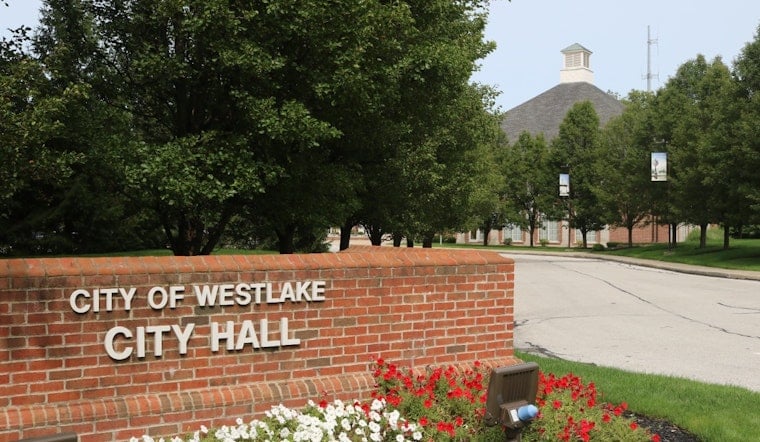
Westlake City Council voted unanimously to adopt a temporary moratorium on new data center approvals, halting the city from accepting or issuing zoning approvals or occupancy permits for such facilities for up to six months. The ordinance, passed during the council's Sept. 3 meeting, comes even though no data center currently operates within city limits.
Council member Duane Van Dyke, who proposed the legislation, said Westlake's zoning code does not directly address data centers at all, according to Cleveland.com. The ordinance itself states that Westlake's planning and zoning codes do not currently permit data centers as a permitted use, and the moratorium was adopted out of what the city described as an abundance of caution while officials consider additional regulations.
No Facilities, But Council Wanted To Get Ahead Of It
Council member Dennis Clough asked during the meeting whether any data centers were currently operating in Westlake. Council member Jim Bedell said he was not aware of any data centers operating in the city, and added that no existing facility matched the nature or scale contemplated by the moratorium, per the same report.
The pause is designed to give Westlake's planning department time to study what data centers actually entail and whether the existing zoning code needs updating to address them. The ordinance defines a data center as a physical facility housing computers or networking equipment principally used for data processing and storage. Council members debated what exactly counts as a data center under that definition, with at least two members expressing concern that the ordinance lacked a clearer definition of the term.
Council member David Greenspan said the general interpretation is meant to capture a third-party commercial data center, and clarified that onsite computer servers used for a business's internal operations would not be considered a data center under the ordinance. Greenspan added that council could later amend the ordinance to include a clearer definition. The moratorium runs for a period not exceeding six months, and council may authorize up to two additional 90-day extension periods if more time is needed.
Part Of A Wider Northeast Ohio Pattern
Westlake is not acting alone. Several Northeast Ohio communities have temporarily stopped some or all approvals for new data centers, and as of July 2026 at least four other municipalities — Cleveland, Twinsburg, Ravenna, and Vermilion — had enacted their own temporary moratoriums while evaluating zoning codes, energy grid capacity, and municipal water impacts, according to reporting cited in regional coverage. Cuyahoga County's sustainability office issued guidance in June 2026 recommending that suburban municipalities avoid signing non-disclosure agreements with data center developers and instead establish explicit zoning restrictions on energy use, water consumption, noise, and setbacks, according to Signal Cleveland.
The regional pushback has a local wrinkle: Westlake-based developer Lakeland Equity Group attempted to build a 150-megawatt, $1.6 billion data center campus in Cleveland's Slavic Village neighborhood earlier in 2026, a permit application that Cleveland officials rejected, according to WYSO Public Radio. That rejection came shortly before Cleveland City Council enacted its own temporary moratorium in July 2026, illustrating that development firms headquartered in the same suburbs now weighing bans are actively scouting sites elsewhere in the region.
State Money Under Scrutiny Too
The municipal caution mirrors action at the state level. Ohio Governor Mike DeWine ordered the Ohio Tax Credit Authority in late May 2026 to pause consideration of all new data center sales tax exemption applications while a legislative Joint Data Center Committee evaluates the industry's economic and energy impacts. Data released by the Ohio Department of Taxation around the same time showed that state sales tax exemptions for data centers cost Ohio an estimated $1.57 billion in calendar year 2025 alone — exceeding earlier state forecasts more than tenfold.
Under Ohio Revised Code Section 122.175, data center projects can qualify for full or partial state and local sales tax exemptions by committing at least $100 million in capital investment over three consecutive years and creating an annual payroll of at least $1.5 million. Other Northeast Ohio communities have taken different approaches than Westlake's pause: Stow City Council had proposed permanent conditional-use zoning rules that, as of September 7, 2026, had not yet been enacted and were still pending a final vote. The proposed rules, described in rules before any developer applied, would require 75-foot residential setbacks and mandatory water consumption disclosures rather than a temporary freeze.
For now, Westlake's planning department will use the moratorium period to determine what data centers entail and whether the zoning code needs to be rewritten before any developer comes calling.





