

























































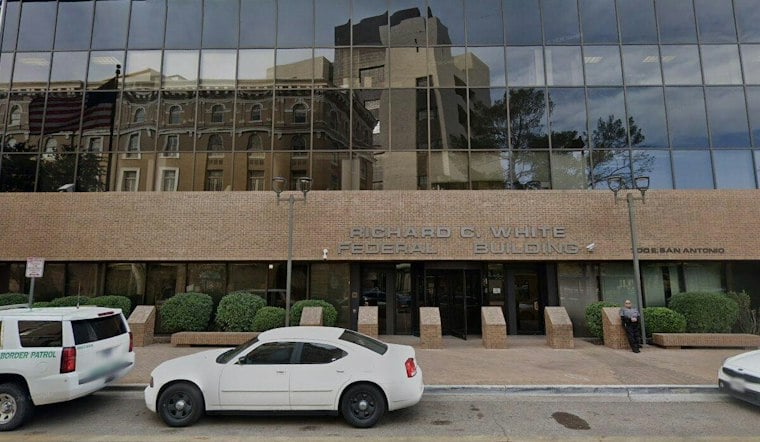
Federal prosecutors in the Western District of Texas filed 500 immigration and immigration-related criminal cases between Aug. 28 and Sept. 10, 2026, making the announcement notable less for any single defendant than for the concentration of filings along the district’s border divisions. The total was reported by KTSA.
The El Paso and Del Rio offices accounted for 449 of the 500 cases, according to KTSA. The Western District covers 68 counties and about 93,000 square miles, including 660 miles of the U.S.-Mexico border, according to the U.S. Attorney’s Office.
The filing count is a caseload measure
The cases include allegations of illegal re-entry and immigration-related smuggling offenses. Prosecutors said some illegal-reentry defendants had previous convictions involving violence, child sex offenses, driving while intoxicated, theft and other crimes, but the filing total itself does not establish how many defendants will plead guilty, go to trial or be sentenced.
That distinction matters when comparing the West Texas announcement with national data. The U.S. Sentencing Commission reported 22,743 immigration cases among 66,662 cases reported to it in fiscal 2025; 80% of the immigration cases involved illegal re-entry. Those are completed federal sentencing data, not a count of cases filed during the two-week period in West Texas.
The same Sentencing Commission data show how central illegal re-entry is to the district’s federal caseload: in fiscal 2025, illegal-reentry offenses made up 70% of the Western District of Texas’s overall caseload, the second-highest proportion among the districts listed in the report. Among people sentenced nationally for illegal re-entry that year, the average sentence was 10 months and 97% received prison sentences.
Border offices have long carried a disproportionate share
The concentration in El Paso and Del Rio also fits a longer historical pattern, although older figures cannot be used to measure the size of the 2026 surge. The Justice Department reported that U.S. Attorneys filed 10,080 immigration cases in fiscal 1998, up 45% from the prior year, and that five Southwest Border offices filed 57% of the nation’s immigration cases. A separate Justice Department report found the same 57% share for cases involving attempted re-entry by previously convicted and deported people in fiscal 1999. Those comparisons show the persistence of border-office concentration, not a direct year-over-year comparison with the latest two-week count.
Examples illustrate the charges, not the outcome
The cases announced in September include repeat-removal allegations. KTSA reported that Jorge Herrera-Vargas had been deported for the ninth time in July 2026 and Santos Gomez-Delacruz for the seventh time in March. Those allegations demonstrate the type of repeat-entry prosecution being emphasized by the office, but they do not by themselves indicate the eventual sentence or disposition.
Prosecutors also highlighted a Venezuelan defendant, Johan Alexander Moncada-Narvaez, who had been convicted in Minnesota of offenses involving sexual conduct with a 14- to 15-year-old before being deported, according to Midland Times. The example underscores that the announced illegal-reentry cases involve defendants with varied prior records; it does not show that every case in the 500-case total involved a comparable conviction.
The available announcement also does not specify the final outcome of the 500 cases, how many defendants were detained, or how the total breaks down by charge beyond the examples described by prosecutors. For now, the clearest conclusion is narrower: during a two-week period, the Western District reported a large immigration-related filing total, with nearly nine in 10 cases attributed to its El Paso and Del Rio offices, continuing a longstanding pattern in which Southwest Border districts carry a substantial share of federal immigration prosecutions.




